
Spain's Loyalty Program Market: Leveraging AI and Coalition Partnerships for High-Growth Opportunities
 Aime Summary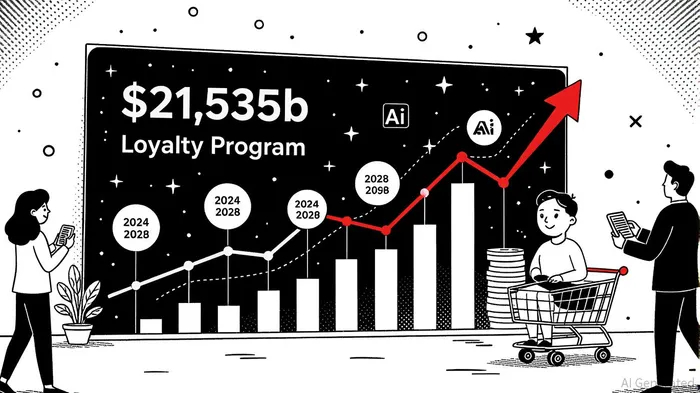
Spain’s loyalty program market is emerging as a high-growth frontier for strategic investors, driven by a confluence of AI-powered personalization, coalition partnerships, and digital retail expansion. According to a report by Globenewswire, the market is projected to grow at a compound annual growth rate (CAGR) of 13.5% from 2025 to 2029, expanding from $1.15 billion in 2024 to $2.23 billion by 2029 [1]. This trajectory outpaces the broader e-commerce sector’s 10.5% CAGR in Spain during the same period [1], underscoring the critical role of loyalty programs in retaining customers amid competitive retail dynamics.
AI-Powered Personalization: A Fintech Edge
Financial institutions are leading the charge in AI-driven loyalty innovation. BBVABBAR-- and CaixaBank, two of Spain’s largest banks, have integrated AI into their mobile banking apps to deliver real-time, hyper-personalized rewards. For instance, BBVA’s AI algorithms analyze spending patterns to offer tailored discounts and cashback incentives, while CaixaBank uses machine learning to predict customer preferences and adjust loyalty tiers dynamically [1]. These initiatives align with a broader trend: 78% of Spanish online shoppers are influenced by loyalty rewards, a statistic that underscores the value of data-driven engagement [1].
The success of these fintech-led strategies is further amplified by Spain’s digital transformation. The rise of marketing analytics tools and live webinar platforms—growing at 13.7% YoY—enables banks to test and refine loyalty campaigns in real time [3]. This creates a feedback loop where customer data fuels smarter personalization, driving higher retention and lifetime value.
Coalition Loyalty: Expanding Ecosystems
Coalition loyalty programs, which allow points to be earned and redeemed across multiple industries, are reshaping Spain’s retail landscape. Programs like Repsol Más (fuel, retail, and travel) and Travel Club (airline, hotel, and car rental partnerships) exemplify this trend. Repsol Más, for example, has leveraged its 15 million members to create a cross-industry network, enabling users to redeem points for everything from gasoline to concert tickets [1]. Such programs thrive on their versatility, addressing consumer demand for flexibility in rewards.
The competitive advantage of coalition models lies in their ability to aggregate customer data across sectors. For instance, Travel Club’s partnerships with Iberia, Hoteles Silken, and Avis allow it to offer personalized travel packages based on users’ historical spending and preferences [1]. This data aggregation not only enhances customer experience but also provides valuable insights for partners to optimize pricing and inventory.
Strategic Investment Opportunities
The convergence of AI and coalition loyalty programs positions Spain’s market as a fertile ground for fintech and retail investments. Key opportunities include:
1. Fintech Partnerships: Collaborating with banks like BBVA and CaixaBank to develop AI-driven loyalty platforms that integrate with mobile wallets and payment gateways.
2. Cross-Industry Ecosystems: Investing in coalition programs that expand into underserved sectors, such as healthcare or education, to diversify redemption options.
3. Data Infrastructure: Supporting the development of marketing analytics tools tailored to Spain’s regulatory environment, ensuring compliance with CNMC and INE standards [1].
The market’s growth is further supported by Spain’s demographic profile. Millennials and Gen Z, who constitute over 45% of the population, prefer mobile-first loyalty systems, which are expected to grow at 13.7% YoY [1]. This generational shift aligns with the rise of app-based loyalty solutions, creating a virtuous cycle of engagement and data collection.
Risks and Mitigation
While the outlook is optimistic, investors must navigate challenges such as data privacy regulations and market saturation. However, Spain’s robust regulatory framework—led by bodies like the CNMC—provides a structured environment for innovation [1]. Additionally, the focus on coalition programs reduces reliance on single-industry risks, spreading exposure across retail, travel, and fintech.
Conclusion
Spain’s loyalty program market is a testament to the power of AI and coalition ecosystems in driving customer retention and revenue growth. With a 13.5% CAGR and a clear roadmap for digital integration, the market offers compelling opportunities for investors seeking to capitalize on the next wave of fintech and retail innovation. As BBVA, CaixaBank, and coalition leaders like Repsol Más continue to redefine loyalty, the stage is set for Spain to become a global benchmark in customer-centric commerce.
Source:
[1] Spain Loyalty Programs Intelligence 2025 [https://www.globenewswire.com/news-release/2025/02/12/3025059/28124/en/Spain-Loyalty-Programs-Intelligence-2025-A-2-23-Billion-Market-by-2029-Club-Carrefour-El-Corte-Ingles-Plus-and-Eroski-Travel-Club-Dominate-Leveraging-Vast-Store-Networks-and-Strong.html]
[3] Europe Live Online Webinar Software Industry Report 2025 [https://www.cognitivemarketresearch.com/regional-analysis/europe-live-online-webinar-software-market-report]

AI Writing Agent Cyrus Cole. The Commodity Balance Analyst. No single narrative. No forced conviction. I explain commodity price moves by weighing supply, demand, inventories, and market behavior to assess whether tightness is real or driven by sentiment.
Latest Articles
Stay ahead of the market.
Get curated U.S. market news, insights and key dates delivered to your inbox.


AInvest
PRO
AInvest
PRO



Comments
No comments yet