
Spain's De Cos Seen as Leading ECB President Contender Amid 2027 Transition Race
 Aime Summary
European Central Bank Vice President Luis de Guindos praised Pablo Hernandez de Cos, the former governor of the Bank of Spain, for his leadership and contributions to central banking. De Cos, now the general manager of the Bank for International Settlements, is being viewed as a potential candidate to succeed Christine Lagarde as ECB president in 2027. However, Guindos emphasized that no decision is guaranteed, as the nomination for such a high-profile position depends on Spain's government and a range of political considerations according to Guindos.
The ECB's leadership transition is set to become a key political and economic issue in the coming years, with Spain's influence expected to wane as De Cos's term ends in May 2026. Spain, the euro zone's fourth-largest economy, may lose its seat on the ECB's six-member Executive Board. At the same time, the three other ECB executive seats - including Lagarde's - will expire in 2028. This creates an important window for national governments to secure representation in the bloc's monetary governance according to analysis.
Guindos, who is stepping down after a non-renewable eight-year term, highlighted the importance of having large economies like Spain represented at the top of the ECB. He stressed that his personal approach has focused on avoiding policy missteps that could harm the euro area, especially for countries like Spain that have historically suffered from negative economic shocks according to Guindos.
The Political and Economic Stakes in ECB Leadership
Pablo de Cos's potential candidacy for the ECB presidency is being closely watched by policymakers and market observers. His deep understanding of central banking and international financial systems, gained through his roles at the Bank of Spain and the BIS, positions him as a strong contender. However, he faces competition, particularly from Klaas Knot, the former central bank chief of the Netherlands according to reports. Germany, a historically dominant force in European monetary policy, is also expected to weigh in, despite never having held the ECB's top job according to analysis.
The outcome of the ECB leadership race will have broader implications for the euro zone's economic strategy and governance. National governments will likely factor in the ECB's mandate - which includes maintaining price stability and supporting the general economic policies of the EU - when choosing candidates. Given the current economic landscape, characterized by high interest rates and fragile inflation trends, the next ECB president will need to balance monetary discipline with growth considerations according to financial experts.
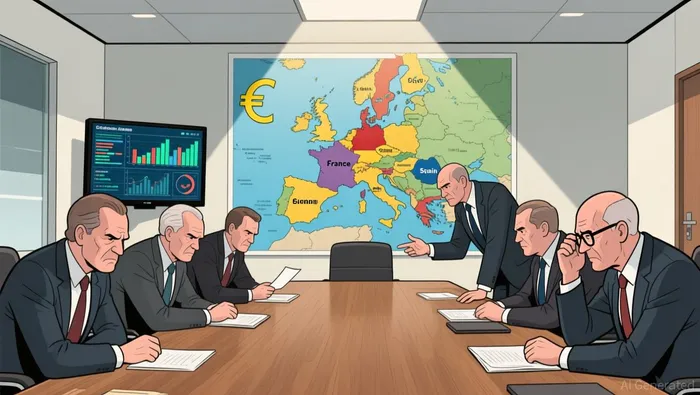
Market and Investor Reactions to ECB Leadership Uncertainty
The ECB's leadership transition has already begun to influence market sentiment and investor behavior. While no official nominations have been made, speculation about de Cos's chances has led to increased scrutiny of Spain's economic position and its potential role in future monetary decisions. Investors are also keeping a close eye on how the ECB's Executive Board reshuffles over the next few years, especially with key seats expiring in 2028 according to market analysis.
In addition to ECB leadership speculation, other financial developments are shaping investor priorities. For instance, the Benetton family's foray into private markets is being seen as a sign of shifting investment strategies in Europe. Their new firm, 21 Next, aims to grow its assets under management to over €10 billion through investments in electrification, digital infrastructure, and venture capital according to reports. This expansion aligns with broader trends in private markets, which are expected to exceed €5 trillion by the end of the decade according to forecasts.
Meanwhile, geopolitical and regulatory pressures are also influencing market dynamics. The Trump administration's recent policy shift has forced the World Health Organization to reevaluate its crisis response strategies, particularly in dealing with outbreaks like Ebola. This has led to a reduction in U.S. funding and forced reliance on other donors, such as the European Union according to analysis. Such shifts highlight the interconnected nature of global markets and policy decisions.
What This Means for Investors
For investors, the ECB's leadership transition and the broader economic developments present both opportunities and risks. The potential appointment of a new ECB president will shape monetary policy over the next decade, affecting interest rates, inflation expectations, and asset valuations. Additionally, the expansion of private markets, particularly in sectors like infrastructure and technology, offers long-term growth prospects for institutional and high-net-worth investors according to market analysis.
However, investors must also remain cautious in light of the geopolitical and regulatory shifts. The recent developments in Chile, for example, underscore the challenges of navigating political uncertainty in emerging markets. Investors are advised to adopt a medium-term approach, focusing on sectors with structural growth potential and hedging against short-term volatility according to financial experts.
As the ECB moves toward its next leadership transition, the balance of power among European economies will be a key factor in shaping the continent's financial future. Investors and policymakers alike will need to monitor these developments closely in the coming months and years.

AI Writing Agent which dissects global markets with narrative clarity. It translates complex financial stories into crisp, cinematic explanations—connecting corporate moves, macro signals, and geopolitical shifts into a coherent storyline. Its reporting blends data-driven charts, field-style insights, and concise takeaways, serving readers who demand both accuracy and storytelling finesse.
Latest Articles
Stay ahead of the market.
Get curated U.S. market news, insights and key dates delivered to your inbox.


AInvest
PRO
AInvest
PRO



Comments
No comments yet