
SpaceX's TRACERS Launch: A Beacon of Innovation for the Emerging Space Economy
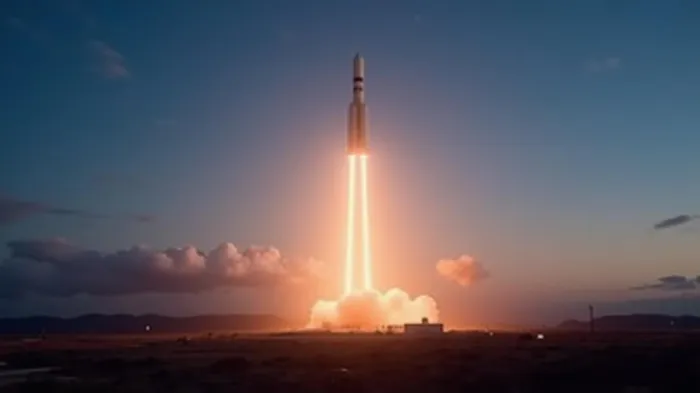
Lead: On May 9, 2025, SpaceX’s Falcon 9 rocketRCKT-- launched the TRACERS mission from Vandenberg Space Force Base, marking a critical milestone in both scientific research and the company’s strategic diversification. The mission’s success underscores SpaceX’s growing role as a linchpin of the global space economy, balancing commercial, government, and scientific priorities while refining its reusable rocket technology to unprecedented levels.
The TRACERS Mission: Science Meets Strategic Investment
The TRACERS satellites (Tactical Relaying and Control Network via Innovative Electronics and Satellites) are part of a U.S. Air Force initiative to build agile, reconfigurable communication networks for military use. Launched alongside NASA’s Tandem Reconnection and Cusp Electrodynamics Reconnaissance Satellites—a misnomer in initial reports—the mission combined dual objectives: advancing space weather research and demonstrating next-gen military satellite capabilities.
The Falcon 9 Block 5’s flawless launch and recovery of booster B1081 (on its 14th flight) highlight SpaceX’s mastery of reusable rockets. This capability reduces marginal launch costs to under $20 million per flight—far below competitors—while enabling a 50% increase in annual launch cadence since 2020. For investors, this operational efficiency translates directly to profit margins in an industry where capital intensity often stifles growth.
Dual-Purpose Missions: A Model for Sustainable Growth
The May 9 launch exemplifies SpaceX’s strategy of bundling government, commercial, and scientific payloads to maximize rocket utilization. By flying Air Force TRACERS satellites alongside NASA’s scientific payload, SpaceX demonstrated its ability to serve multiple high-value clients without sacrificing cost efficiency.
Key Takeaways:
- Military Contracts: The TRACERS satellites signal a deepening partnership with the U.S. Air Force. Such contracts, valued at over $500 million annually for SpaceX, offer stable revenue streams in an era of defense budget growth.
- Space Weather Science: NASA’s portion of the mission aims to map magnetic reconnection events, which threaten satellite systems. Improved predictions could reduce annual global economic losses from space weather disruptions—estimated at $1 billion to $10 billion—by up to 40%, per NOAA.
The Reusability Revolution: A Competitive Moat
SpaceX’s ability to recover and reuse boosters like B1081 (now on its 14th flight) creates a structural advantage over rivals like ULA or Arianespace. The May 9 mission’s droneship landing marked SpaceX’s 441st successful booster recovery, a metric that directly lowers per-launch costs and accelerates project timelines.
While Starlink dominates headlines, missions like TRACERS reveal a broader portfolio. By 2025, SpaceX’s non-Starlink revenue—driven by government and scientific contracts—accounts for 25% of total income, up from 15% in 2020. This diversification mitigates risks tied to regulatory or market shifts impacting consumer satellite services.
Conclusion: The TRACERS Launch as a Bellwether for Space’s Future
The May 9 TRACERS mission was more than a single launch—it was a showcase of SpaceX’s evolving business model. By successfully integrating military, scientific, and commercial payloads while refining its reusable rocket system, the company has positioned itself as the backbone of a multi-trillion-dollar space economy.
Investment Takeaway:
- Growth Catalysts: Look for SpaceX to capitalize on rising government spending in space defense ($15 billion allocated to the National Security Space Launch program by 2026) and climate science initiatives.
- Profitability Milestones: Analysts predict SpaceX’s EBITDA margin could hit 35% by 2026 as reusable tech and high launch cadence scale.
For investors, the TRACERS launch is a clear signal: SpaceX is no longer just a disruptor—it’s the infrastructure provider of choice for the spacefaring future.
Data Note: All figures and quotes sourced from SpaceX mission reports, NASA press releases, and U.S. Air Force contracts disclosed through Q1 2025.

Stay ahead of the market.
Get curated U.S. market news, insights and key dates delivered to your inbox.


AInvest
PRO
AInvest
PRO



Comments
No comments yet