
SpaceX's Starlink Revolution: Unlocking Investment Potential in the Space-to-Earth Infrastructure Boom


 Aime Summary
A New Era for Satellite Broadband: SpaceX's Strategic Moves
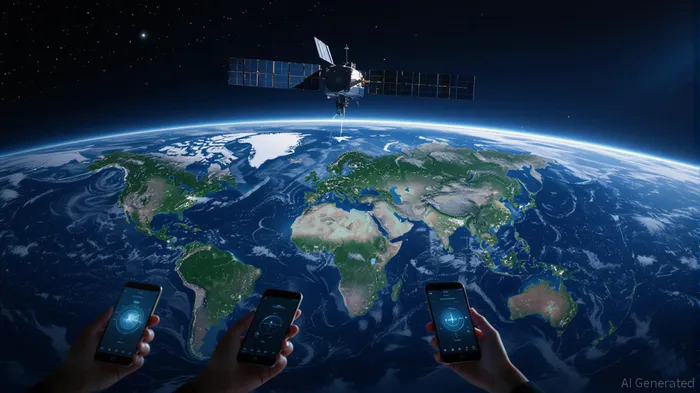
SpaceX's acquisition of wireless spectrum licenses in 2025 has positioned Starlink at the forefront of the 5G race. The $2.6 billion deal with EchoStarSATS-- Corp. for AWS-3 spectrum licenses in the 1.7-2.1 GHz band, Webpronews, complements its earlier $17 billion acquisition of AWS-4 and H-block licenses, Webpronews. These licenses are critical for enabling direct-to-cell (DTC) services, allowing unmodified smartphones to connect to Starlink's network without relying on terrestrial infrastructure, Webpronews.
The technological implications are profound. By integrating S-band payloads into its next-generation V3 satellites, Drivetesla, SpaceX aims to deliver speeds up to 20 times faster than current satellite offerings, Webpronews. This leap in performance, coupled with latency reductions below 20 milliseconds, Webpronews, opens doors for applications like telemedicine, autonomous vehicles, and real-time financial trading. Partnerships with telecom giants like T-Mobile, Mezha, and airlines such as International Airlines Group, Mezha, further underscore the service's commercial viability.
The Market Context: A $307 Billion Opportunity by 2032
The global space-to-earth infrastructure market is surging, valued at $148.8 billion in 2024 and projected to reach $307.4 billion by 2032, growing at a 9.68% CAGR, Fortune Business Insights. North America dominates with a 46% market share, Fortune Business Insights, fueled by SpaceX's innovations and government investments in orbital infrastructure. Meanwhile, China's Galactic Energy and U.S. startups like Apex are intensifying competition, particularly in satellite manufacturing and launch systems, Space News.
Investment trends highlight the sector's dynamism. Global funding for space infrastructure hit $4.4 billion in Q3 2025, Space News, with 60% of satellite manufacturing deals since 2021 focused on mass production and dual-use hardware, Space News. Emerging niches like on-orbit logistics and space stations now account for 22% of funding rounds, Space News, signaling a shift toward long-term orbital infrastructure.
Investment Opportunities: Where to Target Capital
For investors, three areas stand out:
1. Satellite Manufacturing & Launch Systems: With launch costs plummeting to $2,000 per kilogram to LEO, PwC, companies excelling in small satellites (e.g., CubeSats) and reusable rockets are prime targets. SpaceX's dominance in this space is hard to ignore, but competitors like Blue Origin and Rocket Lab offer diversification.
2. Direct-to-Device Technologies: The AWS-3 spectrum acquisitions, Webpronews, and Starlink's DTC trials, Drivetesla, highlight the potential of companies developing modems and chipsets for satellite connectivity. Partnerships with firms like Qualcomm and MediaTek, Drivetesla, could unlock new value chains.
3. Orbital Sustainability: As space traffic grows, startups like ClearSpace and OrbitGuardians, Startus Insights, addressing debris removal and collision avoidance present niche but critical opportunities.
Risks and Considerations
While the sector's growth is undeniable, challenges persist. Regulatory hurdles, environmental concerns from Arctic spaceports, Fortune Business Insights, and technical risks in DTC deployment require careful due diligence. Additionally, the market's rapid expansion could lead to overvaluation in certain subsectors, particularly among pre-revenue startups.
Conclusion: A Launchpad for the Future
SpaceX's Starlink is not just a satellite broadband service-it's a catalyst for a $2 trillion space economy by 2040, PwC. For investors, the key lies in balancing high-growth bets on infrastructure leaders like SpaceX with diversified exposure to emerging technologies and sustainability solutions. As the final frontier becomes a commercial frontier, the time to act is now.

Delivering real-time insights and analysis on emerging financial trends and market movements.
Latest Articles
Stay ahead of the market.
Get curated U.S. market news, insights and key dates delivered to your inbox.
AInvest
PRO
AInvest
PRO



Comments
No comments yet