
SpaceX's Starlink: Pioneering the Low-Earth Orbit Revolution and Unlocking Trillion-Dollar Investment Opportunities
 Aime Summary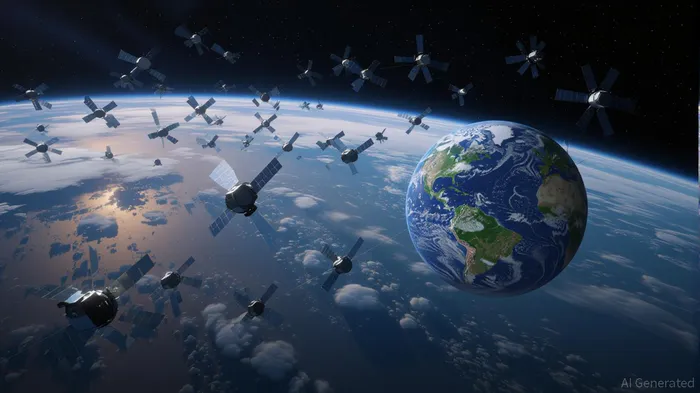
In the next decade, humanity's greatest tech revolution won't be confined to Silicon Valley or Wall Street—it'll be written in the stars. SpaceX's Starlink program is no longer just a moonshot; it's a $10 trillion infrastructure play that's redefining global connectivity and positioning low-Earth orbit (LEO) as the new frontier for tech and telecom innovation. With over 8,000 satellites in orbit as of July 2025, Starlink isn't just building a satellite internet service—it's constructing a digital backbone for the 21st century.
The Starlink Story: From Sci-Fi to Scalable Infrastructure
SpaceX's Starlink constellation now includes 8,000+ satellites, with 7,855 active units providing internet to 115 countries and 6 million customers. This isn't just a numbers game; it's a strategic masterstroke. By deploying satellites in LEO (342 miles above Earth), Starlink delivers 50–200 Mbps download speeds and sub-50ms latency, rivaling terrestrial broadband in remote regions. The secret sauce? Inter-satellite laser links that eliminate the need for ground stations, creating a resilient, self-healing network.
The V2 mini satellites, launched in 2023, are four times more powerful than their predecessors, and the upcoming Starship-powered V3 satellites will scale this further. With 2,300 new satellites added in 2025 alone, SpaceX is building a moat that's nearly impossible to replicate.
The Market Opportunity: A $10 Trillion Frontier
The satellite internet market is projected to grow at 26% CAGR from 2025 to 2030, driven by Starlink's first-mover advantage and the insatiable demand for connectivity. But the real goldmine lies in adjacent markets:
- Direct-to-Cell (DTC) Services: Partnering with T-MobileTMUS--, Starlink has already sent text messages via satellites. By 2026, this could expand to voice and data, targeting the $1.2 trillion mobile telecom market.
- Enterprise and Maritime Use: Airlines like DeltaDAL-- and cruise lines like Royal Caribbean are now paying a premium for Starlink's in-flight and at-sea Wi-Fi, with the maritime segment alone valued at $2.5 billion by 2030.
- Government Contracts: The U.S. government awarded SpaceX $3 billion in 2025 for military and humanitarian uses, from battlefield communications to disaster relief.
Competitive Landscape: SpaceX's Unmatched Edge
While Amazon's Project Kuiper and OneWeb are entering the race, they're playing catch-up. Starlink's $9.8 billion in 2025 revenue dwarfs competitors' combined earnings. Its $7.7 billion 2024 revenue (projected to hit $11.8 billion in 2025) proves the model is scalable. Even in markets like India, where regulatory hurdles persist, SpaceX's partnerships with Reliance Jio and Bharti Airtel are paving the way for a 2026 launch.
The key differentiator? Cost per satellite. SpaceX's Falcon 9 and Starship rockets have slashed launch costs by 90% since 2019, enabling rapid, cost-effective scaling. Meanwhile, competitors like AmazonAMZN-- are still in the launch phase, with no revenue to show for it.
Risks and Mitigations: Navigating the Challenges
No investment is without risks. Regulatory pushback in China, India, and the Middle East remains a hurdle, but SpaceX's $3 billion government contracts and strategic partnerships are softening resistance. Environmental concerns over space debris are also valid, but SpaceX's demisable satellite designs and proactive deorbiting protocols address these issues.
The recent July 2025 global outage (lasting 3.5 hours) highlighted software vulnerabilities. However, SpaceX's rapid recovery and commitment to overhauling its network architecture signal a company learning as it grows.
The Investment Thesis: Buy for the Long Haul
For investors, Starlink is not a speculative play—it's a blue-chip infrastructure stock in the making. Here's why:
1. Cash-Flow Positivity: Starlink turned EBITDA-positive in 2024 and is projected to achieve free cash flow breakeven by 2026.
2. Diversified Revenue Streams: From consumer broadband to enterprise, DTC, and government contracts, Starlink's revenue model is bulletproof.
3. Network Effects: The more satellites deployed, the more valuable the constellation becomes. With 42,000 satellites planned, this is a compounder.
Final Takeaway
SpaceX's Starlink is the digital Silk Road of the 21st century, connecting 6 million users today and laying the groundwork for a $10 trillion global economy by 2030. For investors, this is about more than SpaceX—it's about owning the infrastructure that will power everything from AI to IoT to metaverse applications.
If you're not in Starlink, you're missing the next industrial revolution. The only question left is: How soon can you get in?

Delivering real-time insights and analysis on emerging financial trends and market movements.
Latest Articles
Stay ahead of the market.
Get curated U.S. market news, insights and key dates delivered to your inbox.


AInvest
PRO
AInvest
PRO



Comments
No comments yet