
SpaceX's Starlink Milestones Signal a New Era in Satellite Internet Dominance
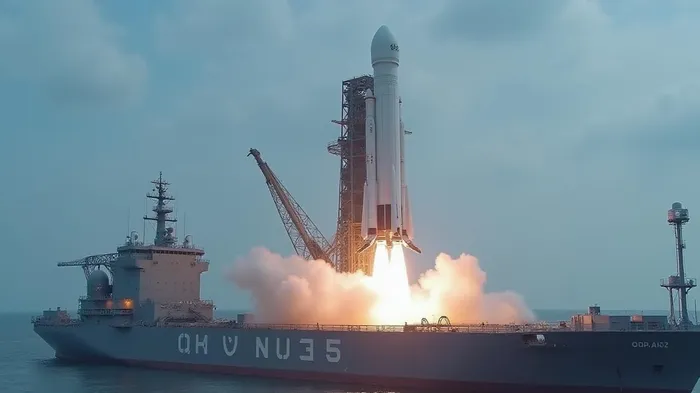
On May 23, 2025, SpaceX launched its Starlink 11-16 mission from Vandenberg Space Force Base, marking a pivotal moment in the company's relentless push to dominate the global satellite internet market. This mission, which carried 23 Starlink V2 Mini satellites and achieved the 450th successful Falcon 9 booster landing, underscores SpaceX's technical prowess and strategic ambition. As the company accelerates its deployment of low-Earth-orbit satellites, investors must recognize the profound geopolitical and economic implications of this infrastructure race—and the opportunities it presents.
Technical Milestones: Cost Efficiency and Scale
The May 23 launch highlighted two critical advancements. First, the reused Falcon 9 booster B1075 completed its 18th flight, underscoring SpaceX's ability to reduce launch costs through rocketRCKT-- reusability. The 450th landing milestone is a landmark achievement, as it reflects a 98% recovery rate for Falcon 9 boosters since 2015. This capability allows SpaceX to deploy satellites at a fraction of the cost of traditional launch providers, enabling a rapid expansion of its constellation.
Second, the Starlink V2 Mini satellites featured “Direct to Cell” capabilities, allowing users to connect directly to satellites without ground infrastructure. By May 2025, SpaceX had deployed over 234 such satellites, signaling its intent to bypass regulatory and logistical hurdles in remote regions. With over 7,000 operational satellites as of this launch, Starlink now provides global coverage except near the poles—a critical step toward its goal of 12,000 satellites by 2027.
Competitive Landscape: SpaceX's Unrivaled Lead
SpaceX's rivals, such as OneWeb and Telesat, face an uphill battle. OneWeb, backed by the UK and Indian governments, has deployed around 700 satellites but struggles with funding and regulatory alignment. Telesat's Lightspeed system, while technically advanced, trails significantly in scale. Meanwhile, SpaceX's launch cadence—61 Falcon 9 missions in 2025 alone—ensures it maintains a 2:1 satellite count advantage over all competitors combined.
The geopolitical stakes are equally high. Starlink's role in Ukraine's defense and communication networks during the war has galvanized Western allies to prioritize satellite internet as a strategic asset. The U.S. government's $1.5 billion investment in Starlink's Arctic coverage (Project Polar Star) further highlights its strategic value.
Geopolitical Imperatives: Connectivity as Power
Starlink's global reach is rewriting the rules of international influence. By providing affordable, high-speed internet to regions like Africa, Southeast Asia, and the Pacific Islands—areas underserved by terrestrial infrastructure—SpaceX is positioning itself as a de facto global utility. This creates economic and diplomatic leverage: governments reliant on Starlink may align more closely with U.S. interests, while competitors like China's Hongyan system face logistical and regulatory hurdles.
Moreover, Starlink's “Direct to Cell” technology bypasses the need for local partnerships, enabling SpaceX to operate in countries with restrictive regimes. This capability, combined with its unmatched scale, could cement U.S. technological dominance in the 21st century.
Risks and Considerations
Investors must weigh risks against rewards. Regulatory pushback—from the EU's Digital Markets Act to China's outright ban—could limit Starlink's market access. Technical challenges, such as orbital debris management and signal interference, remain unresolved. Additionally, the high capital expenditure required to sustain deployment could strain even SpaceX's resources.
Yet these risks are tempered by SpaceX's track record. Its vertically integrated supply chain, including in-house rocket production and automated launch facilities, minimizes cost volatility. The Pentagon's reliance on Starlink and its partnerships with NATO allies further insulate the company from geopolitical headwinds.
Investment Thesis: A Bet on the Future of Connectivity
While SpaceX remains a private company, its success directly benefits investors through spin-offs, partnerships, and suppliers. Companies like Aerojet Rocketdyne (AJRD), which provides propulsion systems, or Maxar Technologies (MAXR), a satellite manufacturer, stand to gain from SpaceX's growth. Additionally, the Global X Space Exploration & Tech ETF (SPEX) offers exposure to the sector's broader potential.
The satellite internet market is projected to grow from $10 billion in 2023 to over $50 billion by 2030. With Starlink's 80% market share in LEO satellite launches, it is poised to capture the lion's share of this growth.
Conclusion: The Write-Off Risk of Ignoring Starlink
The May 23 launch was more than a technical milestone—it was a declaration of intent. SpaceX's ability to scale, innovate, and dominate its market leaves little room for competitors. For investors, the choice is clear: engage with this transformative infrastructure now, or risk falling behind as Starlink reshapes global connectivity and power dynamics. The stars are aligning for those bold enough to act.
This analysis emphasizes the urgency of capitalizing on SpaceX's strategic advantages. The data and milestones outlined above make a compelling case for investors to prioritize satellite infrastructure—before the window of opportunity closes.

Delivering real-time insights and analysis on emerging financial trends and market movements.
Latest Articles
Stay ahead of the market.
Get curated U.S. market news, insights and key dates delivered to your inbox.


AInvest
PRO
AInvest
PRO



Comments
No comments yet