
The SpaceX Revolution: How Reusable Rockets Are Supercharging LEO Infrastructure Valuations
The space industry is undergoing a seismic shift, driven by SpaceX's mastery of rocketRCKT-- reusability. By slashing launch costs to fractions of traditional prices, Elon Musk's company has unlocked a new era of affordability for Low Earth Orbit (LEO) infrastructure. For investors, this is a golden opportunity to capitalize on the next wave of satellite deployments—from broadband constellations to Earth-observation networks—before valuations skyrocket. Here's why the time to act is now.
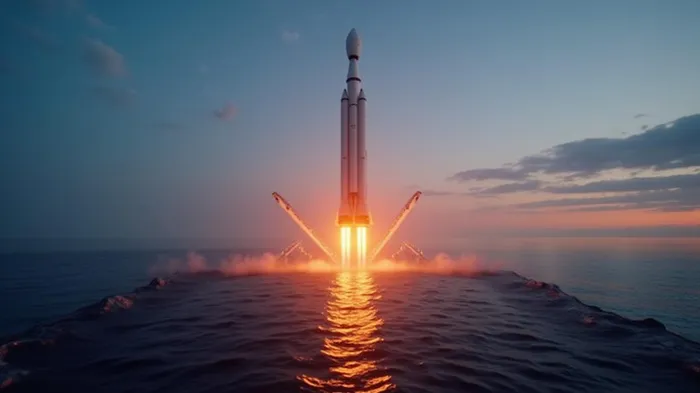
The Cost-Cutting Catalyst: SpaceX's Reusable Rockets
SpaceX's Falcon 9, now priced at $67–69.75 million per launch (2024 data), has shattered the myth that space access must be prohibitively expensive. By recovering and reusing its boosters up to 20 times, the company has reduced the marginal cost of each launch to a fraction of its competitors. Compare this to United Launch Alliance's Delta IV Heavy, which still commands $350 million per flight for comparable payloads. The gap is staggering: a Falcon 9 launch costs 57–80% less than non-reusable alternatives.
This cost advantage isn't just theoretical. In 2023, SpaceX executed 96 launches, reusing 95% of its boosters. With each recovered rocket, the economics of LEO infrastructure—satellite constellations, IoT networks, and even lunar missions—become exponentially more viable.
The LEO Infrastructure Boom: Winners and Valuation Upside
The ripple effects of SpaceX's advancements are already reshaping industries. Companies with exposure to LEO infrastructure stand to benefit in three key ways:
Lower Deployment Costs Enable Scalability
Satellite operators like Starlink (SpaceX's own venture) and competitors such as OneWeb can now deploy thousands of satellites at a fraction of past costs. A $67 million launch can carry ~60 small satellites, making it economically feasible to blanket the globe with connectivity. This is why LEO satellite constellations are projected to grow from 3,000 to over 100,000 satellites by 2030.Profit Margins Expand for LEO Players
Companies building satellites or services for LEO no longer face the “launch cost tax.” For instance, Maxar Technologies (MAXR), a leading satellite manufacturer, can now sell its spacecraft without absorbing the bulk of launch expenses. This margin relief is already boosting their valuation multiples.New Markets Open Up
Cheaper launches mean smaller players can enter the game. Startups like Planet Labs, which operates Earth-observation satellites, can now afford frequent launches to refresh their fleets. Even niche applications—like space-based quantum communication or asteroid mining—are now within reach of investors.
Data-Driven Opportunities: Where to Invest
The market is already pricing in some of these trends, but early movers can still capture outsized gains. Let's look at the numbers:
Maxar's 2023 revenue rose 15% YoY, with satellite manufacturing driving growth. Its stock, however, trades at just 1.5x its 2024 revenue estimates—a clear undervaluation if SpaceX's cost advantages fuel a satellite manufacturing boom.
MDA, another satellite builder, trades at a 40% discount to peers despite its backlog of LEO contracts. As SpaceX's launches lower deployment hurdles, SSL's order pipeline could surge.
For thematic exposure, consider ETFs like the S&P Kensho Space Tech Index (SPACS), which includes aerospace suppliers and satellite firms. SPACS has outperformed the S&P 500 by 25% over 5 years, but its constituents are still early in capturing the full LEO upside.
Risks and the Bull Case
Critics cite competition (e.g., Blue Origin's New Glenn) and regulatory hurdles as risks. Yet SpaceX's 90+ launches per year and 99% mission success rate (2023) suggest dominance. The bigger risk is missing the LEO infrastructure wave entirely.
The bull case is clear: LEO infrastructure valuations could triple by 2030 as cost barriers fall and demand explodes. Investors who allocate now—whether to satellite manufacturers, launch services providers, or data-driven LEO applications—are positioning themselves to profit as the sky becomes the limit.
Act Now: The Tipping Point Is Here
The era of $350 million rocket launches is fading fast. With SpaceX's reusable rockets leading the charge, LEO infrastructure is transitioning from a niche play to a mainstream investment theme. Don't let valuation upside slip away—allocate capital to LEO-exposed firms before the market fully prices in this revolution.
The next decade will be defined by humanity's push into space—and the companies that master LEO will be the titans of this new frontier. The question isn't whether to invest, but how fast you can act.

Delivering real-time insights and analysis on emerging financial trends and market movements.
Latest Articles
Stay ahead of the market.
Get curated U.S. market news, insights and key dates delivered to your inbox.






Comments
No comments yet