
The SpaceX Revolution: How Lower Costs and Reliability Are Unlocking the Final Frontier for Investors
The commercial space industry is undergoing a seismic shift, driven by SpaceX's relentless pursuit of reusable rocketRCKT-- technology and its ambition to slash launch costs to unprecedented levels. Over the past two years, the company has demonstrated that cutting-edge engineering and a willingness to embrace calculated risks can transform the economics of space exploration. For investors, this is more than a technical footnote—it's a golden opportunity to capitalize on a sector poised to redefine global industries, from telecommunications to lunar mining. Let's dive into the numbers and the implications.
The Cost-Cutting Tsunami: SpaceX's Groundbreaking Advancements
SpaceX's recent strides are nothing short of revolutionary. The Falcon 9 rocket, already a cost leader, now achieves marginal launch costs of just $15 million per flight when reusing boosters—a fraction of competitors' prices. Analysts estimate this translates to payload costs as low as $857/kg to LEO, with customer pricing starting at $62 million per Falcon 9 launch. But the real game-changer is Starship, Elon Musk's Mars-bound behemoth. Its target of $10/kg to orbit—if even partially realized—could reduce launch costs by an order of magnitude compared to today's standards.
Citi analysts project Starship could bring costs down to $150/kg initially, with potential declines to $30/kg by 2040. This isn't just theoretical: Starship's test flights have already demonstrated flawless engine performance, and its reusable design aims to land both booster and spacecraft, slashing operational expenses further.
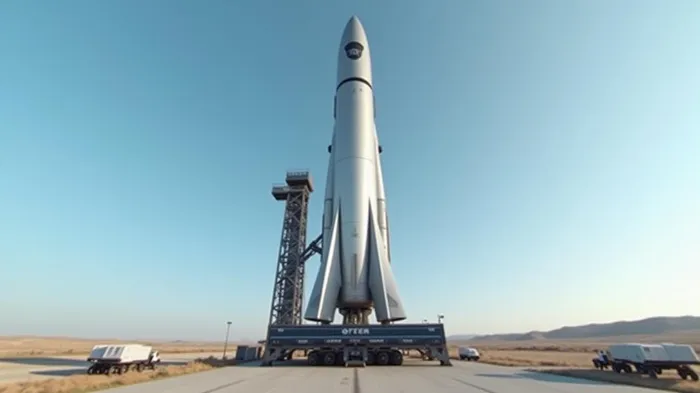
Meanwhile, SpaceX's Starlink constellation—now over 6,000 satellites strong—has become a cash flow engine. With 2 million subscribers and plans to reach cash flow breakeven, Starlink's growth is directly tied to Starship's ability to accelerate satellite deployment.
Reliability Meets Ambition: Why Investors Should Trust the Rocket Factory
SpaceX's advancements aren't just about cost; they're about reliability. The Falcon 9 has achieved a 99.18% mission success rate across 352 launches, with boosters reused up to 20 times. Even after a rare July 2024 malfunction, the company swiftly resumed operations—a testament to its iterative “fail fast, learn faster” philosophy.
Starship, while still in testing, has already made strides. Four test flights showcased flawless engine performance, and its use of Starlink terminals to collect reentry data has provided unprecedented insights into atmospheric dynamics. This data-driven approach isn't just for engineers—it's a competitive moat.
In contrast, legacy players like ULA (United Launch Alliance) face headwinds. Its Atlas V rockets cost $100–$200 million per launch, translating to $8,185–$11,126/kg—a staggering premium. Even ULA's newer Vulcan Centaur, at $4,044/kg, struggles to compete with Falcon's economics. While ULA's 100% mission success rate over 161 launches is impressive, its reliance on expendable rockets in a reusable world makes it vulnerable.
The Competitive Landscape: ULA's Struggles and the Rise of New Players
SpaceX's dominance is forcing competitors to adapt—or perish. ULA's Vulcan Centaur, though capable of lifting 27,200 kg to LEO, faces a market increasingly focused on LEO-centric missions like satellite constellations and space tourism. ULA's 11 planned 2025 launches and 70 Vulcan contracts offer some stability, but its parent companies (Boeing/Lockheed Martin) struggle with bureaucratic inertia.
Meanwhile, SpaceX's Starship ambitions—targeting lunar landings and Mars—open new frontiers. NASA's Artemis program is already betting on Starship as its lunar lander, while SpaceX's 2026 goal of daily launches could make space access as routine as air travel.
Risks and Opportunities: Where to Invest Now
Investors must weigh SpaceX's risks alongside its potential. Technical hurdles like Starship's booster recovery and radiation shielding for deep space remain. Regulatory scrutiny over workplace safety and Starlink's role in conflicts also looms large.
Yet the upside is colossal. Lower launch costs democratize space access:
Satellite Operators: Companies like Maxar Technologies (MAXR), which builds satellites for imaging and communications, benefit directly from cheaper launches.
Space Tourism: Virgin Galactic and Blue Origin's ventures could thrive as SpaceX's infrastructure reduces overhead.
Lunar/Mars Missions: Firms involved in resource extraction (e.g., asteroid mining) or life-support systems stand to profit as SpaceX paves the way for colonization.
Conclusion: The Clock is Ticking—Act Now Before the Frontier Fades
SpaceX's advancements are not incremental—they're existential for the commercial space industry. While ULA and others cling to legacy systems, Musk's vision is rewriting the rules. Investors who ignore this shift risk missing out on a trillion-dollar opportunity.
The time to act is now. Whether through direct investment in SpaceX's ecosystem (via partnerships or supply chain stocks) or through ETFs like the ARK Space Exploration ETF (ARKX), the path to profits is clear. The only question is: Will you be an early adopter of this revolution—or a relic of the past?
Final Note: The stars are no longer distant—they're within reach. But the window to capitalize won't stay open forever.

Stay ahead of the market.
Get curated U.S. market news, insights and key dates delivered to your inbox.






Comments
No comments yet