
The SpaceX Revolution: How Lower Costs and Faster Launches Are Rewriting the Aerospace Sector
SpaceX's relentless march toward space dominance is no longer a distant dream—it's a present-day reality. With a record-breaking 138 launches in 2024 and a blistering pace of 47 launches by May 2025, the company has redefined operational efficiency in aerospace. This isn't just about numbers; it's a seismic shift in how the world accesses space, and investors ignoring this trend are leaving opportunities on the table.
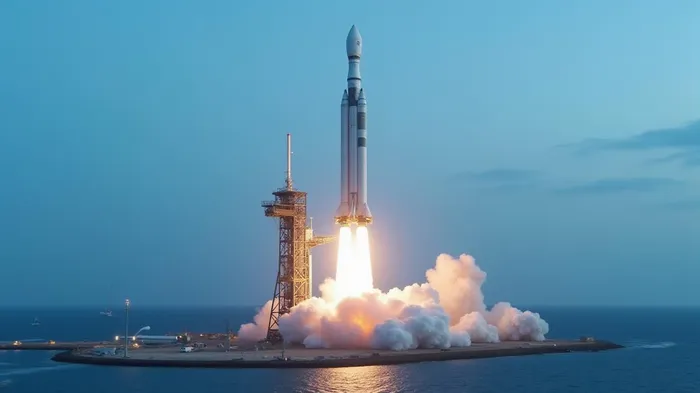
The Operational Cadence: Launching at Lightning Speed
SpaceX's launch frequency is staggering. In 2024, it executed 138 missions—more than double the combined output of its nearest competitors. By May 2025, it had already completed 47 launches, with a 100% success rate for Falcon 9 missions this year. Crucially, 98% of Falcon 9 boosters are reused, slashing costs and enabling a launch every 2.4 days. This cadenceCADE-- isn't just about speed; it's about reliability. Even Starship, despite two high-profile test failures in early 2025, is now cleared for a return to flight with upgraded hardware.
This data shows an exponential trajectory: from 26 launches in 2020 to 138 in 2024—a 5.3x increase in five years. The trend line points to 170+ launches in 2025, underscoring a shift from "rocket science" to a scalable, industrialized process.
The Cost Revolution: Reusability as a Disruptive Force
The real game-changer is cost. Traditional launch providers like Boeing and Lockheed Martin charge $10,000–$25,000 per kilogram to orbit, while SpaceX's Falcon 9 now operates at $2,720/kg—a fraction of the cost. With Starship targeting $100/kg, the economics of space are being rewritten. This isn't incremental; it's a collapse of barriers to entry.
The gap is stark. Lower costs mean more companies can afford to deploy satellites, governments can fund ambitious projects, and new markets—from Earth observation to lunar mining—can finally scale. The result? A gold rush for tech that leverages this accessibility.
Market Disruption: The Old Guard Can't Compete
Traditional aerospace giants are scrambling. Boeing and Lockheed Martin's joint venture, United Launch Alliance (ULA), recently announced layoffs and cost-cutting measures as SpaceX's dominance grows. Meanwhile, SpaceX's partnerships—NASA's $2.9 billion Artemis contract for Starship lunar landers, or its 4,400+ Starlink satellites—highlight its dual role as a government contractor and a commercial innovator.
The customer pipeline is booming. In 2025 alone, SpaceX has already executed 17 non-Starlink missions, including commercial satellite launches (Thuraya 4-NGS, WorldView Legion) and crewed missions (Crew-10). With Starship poised to handle larger payloads, the company is positioning itself as the go-to for everything from satellite constellations to lunar tourism.
Investment Opportunities: Riding the Rocket Wave
The aerospace sector isn't just about rockets. Here's where to look for winners:
Satellite Manufacturers: Companies like Maxar Technologies (MAXR), which builds advanced satellites for imaging and communication, stand to benefit from the surge in demand. With SpaceX enabling cost-effective launches, the satellite market is primed for growth.
Space Infrastructure Firms: Companies like Relativity Space, which uses 3D printing for rocket parts, or Blue Origin's New Glenn rocket, could carve niches in specialized markets.
Data Services: The explosion of satellites (Starlink alone aims for 42,000 satellites) creates opportunities for data analytics firms like Planet Labs or Spire Global, which turn satellite data into actionable insights for industries from agriculture to finance.
Space Tourism: Private missions like Fram2 (a Chinese-funded lunar trip) signal demand for tourism infrastructure. Companies enabling space habitats or life-support systems could be early movers.
Risks to Consider
Starship's 2025 test failures (both ended in explosive debris incidents) remind us that innovation is risky. Regulatory hurdles, such as the FAA's expanded hazard zones and liability requirements ($500 million per launch), add complexity. However, SpaceX's iterative approach—learning from each failure—suggests these are speed bumps, not roadblocks.
Conclusion: Act Now or Be Left Behind
SpaceX isn't just winning the space race; it's creating a new industry. The data is clear: lower costs, higher cadence, and technological leadership are reshaping aerospace. Investors who bet on this trend—whether through satellite manufacturers, data firms, or SpaceX's eventual IPO—will reap rewards.
The question isn't whether SpaceX will dominate space—it's already doing so. The question is: Are you positioned to profit from it? The answer is yes—but only if you act now.
This visual starkly illustrates why traditional players like Boeing/Lockheed's SLS (costing $2 billion per launch) are obsolete. The future belongs to those who can scale, innovate, and lower costs—traits SpaceX has mastered.

Stay ahead of the market.
Get curated U.S. market news, insights and key dates delivered to your inbox.


AInvest
PRO
AInvest
PRO



Comments
No comments yet