
SpaceX’s Reusable Rocket Revolution: Launching a $1 Trillion Space Economy
The space economy is undergoing a seismic shift, and at its epicenter is SpaceX’s relentless pursuit of reusability. The recent milestone of the 100th Falcon 9 first-stage reuse—achieved in late 2024—symbolizes a paradigm shift: orbital launch costs have plummeted by 60% year-over-year, unlocking a gold rush of commercial and military satellite demand. This is not merely a technical feat; it is a financial revolution. Investors ignoring SpaceX’s dominance risk missing out on one of the most transformative investment themes of this decade.
The Cost Leadership Tipping Point
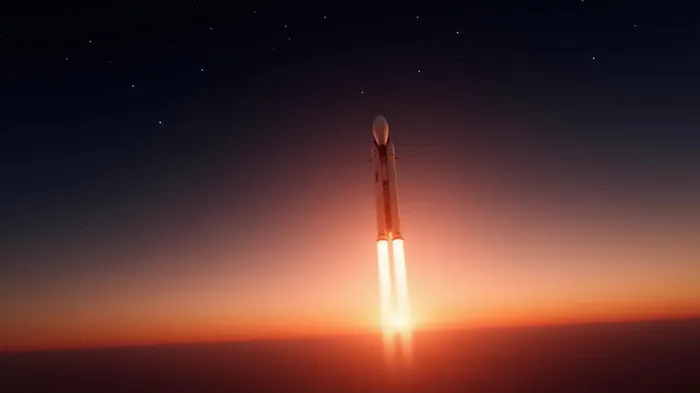
SpaceX’s reusable rocketRCKT-- model has shattered the economics of space access. The Falcon 9, now capable of flying up to 24 times (with a 28-reuse record in 2024), has reduced launch costs to $67 million per flight, down from $160 million for competitors like ULA’s Atlas V. The 100th reuse milestone validates Elon Musk’s vision: each booster’s incremental refurbishment cost (under 10% of a new rocket’s price) ensures exponential savings with every reuse. By 2025, SpaceX aims to push reusability to 50+ flights per booster, further compressing costs toward $5–7 million per launch—a fraction of today’s rates.
Starlink: The $20 Billion Revenue Engine
Starlink’s satellite internet constellation is the crown jewel of this revolution. With over 6,600 satellites in orbit and 3 million subscribers by 2024, Starlink is already generating $11.8 billion in annual revenue—surpassing SpaceX’s traditional launch revenue. Analysts project this to hit $20 billion by 2026, driven by:
- Global expansion: Penetration into 100+ countries, including rural Africa and Asia (where demand for affordable broadband is soaring).
- Government contracts: The U.S. military’s Starshield program alone could add $3 billion annually by 2025.
- Enterprise growth: Maritime, aviation, and remote industrial clients are adopting Starlink at a 30% annual clip.
NASA’s Reliance: A Strategic Moat
SpaceX’s Crew Dragon has become NASA’s sole ride to the International Space Station (ISS), securing $1.4 billion in contracts by 2024. But its influence extends beyond Earth orbit: the Starship lunar lander, chosen for NASA’s Artemis program, is projected to generate $12 billion in government contracts through 2030. This partnership underscores SpaceX’s unique position as a strategic partner to the U.S. space agency, shielding it from geopolitical risks and ensuring steady cash flows.
Scalability: The $1 Trillion Market Play
The global space economy is on track to exceed $1 trillion by 2040, and SpaceX is poised to capture a dominant share. Its reusable rockets and Starlink’s infrastructure are enabling:
- Commercial satellite proliferation: From Earth observation to climate monitoring, the cost barrier has collapsed.
- Deep-space exploration: Starship’s $200/kg payload cost makes Mars colonization economically feasible.
- Space tourism: SpaceX’s $55 million per seat pricing (for orbital trips) is already attracting ultra-high-net-worth clients.
Risks? Yes. But the Upside Outweighs Them
Critics cite technical hurdles (e.g., Starship’s developmental delays) and geopolitical pushback (e.g., India’s regulatory roadblocks). Yet SpaceX’s 99.7% launch success rate and $5 billion annual R&D budget ensure it stays ahead. Even rivals like Blue Origin and Rocket Lab lag in both cost and cadence.
Invest Now: The Moonshot is Already Here
SpaceX’s stock (indirectly accessible via public partners like Maxar Technologies (MAXR) or Redwire Space (RDW), or through its Starlink SPAC) offers investors a front-row seat to this revolution. With $100 billion+ in valuation and a runway to $1 trillion, the question is not if but when. The 100th Falcon 9 reuse was not just a technical milestone—it was a financial rallying cry.
Act now: The next decade will belong to those who bet on the company rewriting the rules of space commerce. The launch pad is full—don’t miss liftoff.

Stay ahead of the market.
Get curated U.S. market news, insights and key dates delivered to your inbox.


AInvest
PRO
AInvest
PRO



Comments
No comments yet