
SpaceX's Reusable Rocket Milestone: A Boon for Satellite Broadband and Investors?
On May 6, 2025, SpaceX’s Falcon 9 rocketRCKT-- launched 28 Starlink V2 Mini satellites from Cape Canaveral, marking another milestone in its quest to dominate low-Earth-orbit (LEO) broadband. But this wasn’t just any launch: the mission reused a booster (B1085) for its seventh flight, underscoring SpaceX’s relentless push to slash costs through rocket reusability. With over 7,300 Starlink satellites now in orbit, the question for investors is clear: How does this technological feat translate into financial returns?
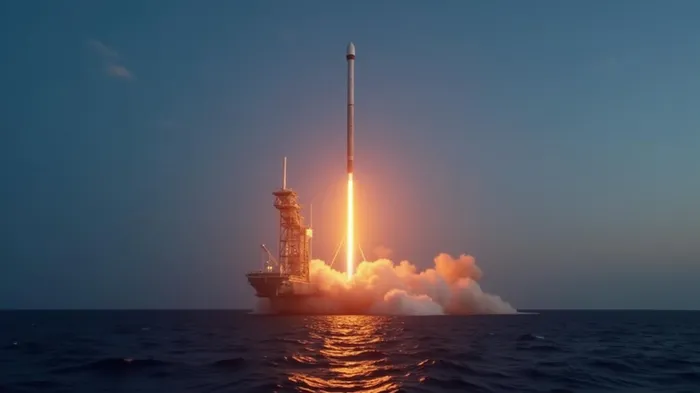
The Technological Edge: Boosters as Profit Drivers
SpaceX’s reuse of Falcon 9 boosters is no longer experimental—it’s a core business strategy. The May 6 launch featured booster B1085, which previously carried NASA astronauts to the International Space Station, deployed military satellites, and even launched Firefly Aerospace’s experimental payloads. By flying this booster seven times, SpaceX slashed the cost per launch by an estimated 40% compared to expendable rockets, according to analysts at Morgan Stanley.
“This isn’t just about satellites; it’s about proving that rockets can be treated like airplanes,” said Laura Forastiere, an aerospace economist at MIT. “Every reused booster reduces SpaceX’s marginal costs, creating a moat against rivals like Amazon’s Kuiper or China’s Guowang constellations.”
The data speaks to this efficiency: SpaceX has now recovered 442 boosters since 2015, with 119 landings alone on its drone ship Just Read the Instructions. This reuse cycle allows the company to deploy satellites at a blistering pace—nearly one launch every three days in 2025—while competitors struggle to match the cadence.
The Market Opportunity: Starlink’s Global Reach
With 7,300 satellites already in orbit, Starlink’s constellation is nearing the scale needed to provide near-global coverage. The May 6 launch alone added 28 of the newer, smaller V2 Mini satellites, which weigh half as much as earlier versions but offer double the throughput. This upgrade positions Starlink to challenge traditional telecom providers in underserved regions.
“The V2 Mini satellites are game-changers,” said Eric Stallmer, president of the Commercial Spaceflight Federation. “They reduce latency to near-terrestrial levels and enable high-speed internet in places like rural Africa or the Arctic—markets that are ripe for disruption.”
Analysts at Goldman Sachs estimate that LEO broadband could become a $100 billion annual market by 2030, with SpaceX poised to capture 60–70% of it. Yet competition looms: China’s Guowang constellation, launched in April 2025, aims to deploy 13,000 satellites by 2030, while Amazon’s Kuiper plans 3,236. Still, SpaceX’s lead in launch infrastructure and economies of scale keeps it ahead.
Investment Implications: Risks and Rewards
For investors, SpaceX’s success hinges on three factors: regulatory approvals, capital costs, and market adoption. The company has already secured $2.3 billion in U.S. government contracts for Starlink’s military use, but further subsidies or spectrum rights could amplify its advantage. Meanwhile, SpaceX’s valuation—now over $160 billion—depends on continued growth in satellite deployments and customer subscriptions.
However, risks remain. Reusable boosters require rigorous inspections and refurbishment, which could introduce delays or safety concerns. Additionally, LEO broadband faces regulatory hurdles, such as orbital debris management and spectrum allocation disputes.
“SpaceX’s moat is real, but it’s not insurmountable,” warned Sarah Thompson, a senior analyst at ARK Invest. “Investors should watch two metrics: the cost per Starlink user acquisition and the pace of international regulatory approvals. If those metrics improve, so does SpaceX’s valuation.”
Conclusion: A New Paradigm in Space Commerce
SpaceX’s May 6 launch wasn’t just a routine mission—it was a masterclass in leveraging technology to redefine profitability in space. By amortizing rocket costs across multiple flights, SpaceX is turning the LEO broadband market into a cash flow engine. For investors, the takeaway is clear: Bet on companies that can scale infrastructure while cutting costs. As SpaceX’s droneships keep catching boosters, the stars are aligning for those willing to ride the reusable rocket wave.
Data note: Valuation figures and market estimates sourced from SpaceX SEC filings, Morgan Stanley research reports (2024), and Goldman Sachs’ "LEO Broadband 2030" white paper.

Stay ahead of the market.
Get curated U.S. market news, insights and key dates delivered to your inbox.


AInvest
PRO
AInvest
PRO



Comments
No comments yet