
SpaceX's Reign in Jeopardy: China's Ambition to Dominate Reusable Rockets by 2030
Ladies and gentlemen, buckle up! We're diving into the cosmic showdown of the century. Elon Musk's SpaceX, the darling of the space industry, is facing a formidable challenger: China. And let me tell you, China is not messing around. They're betting big on reusable rockets, and they're aiming to dethrone SpaceX by 2030. This is not just a race to the stars; it's a race to the future of space exploration and technology.
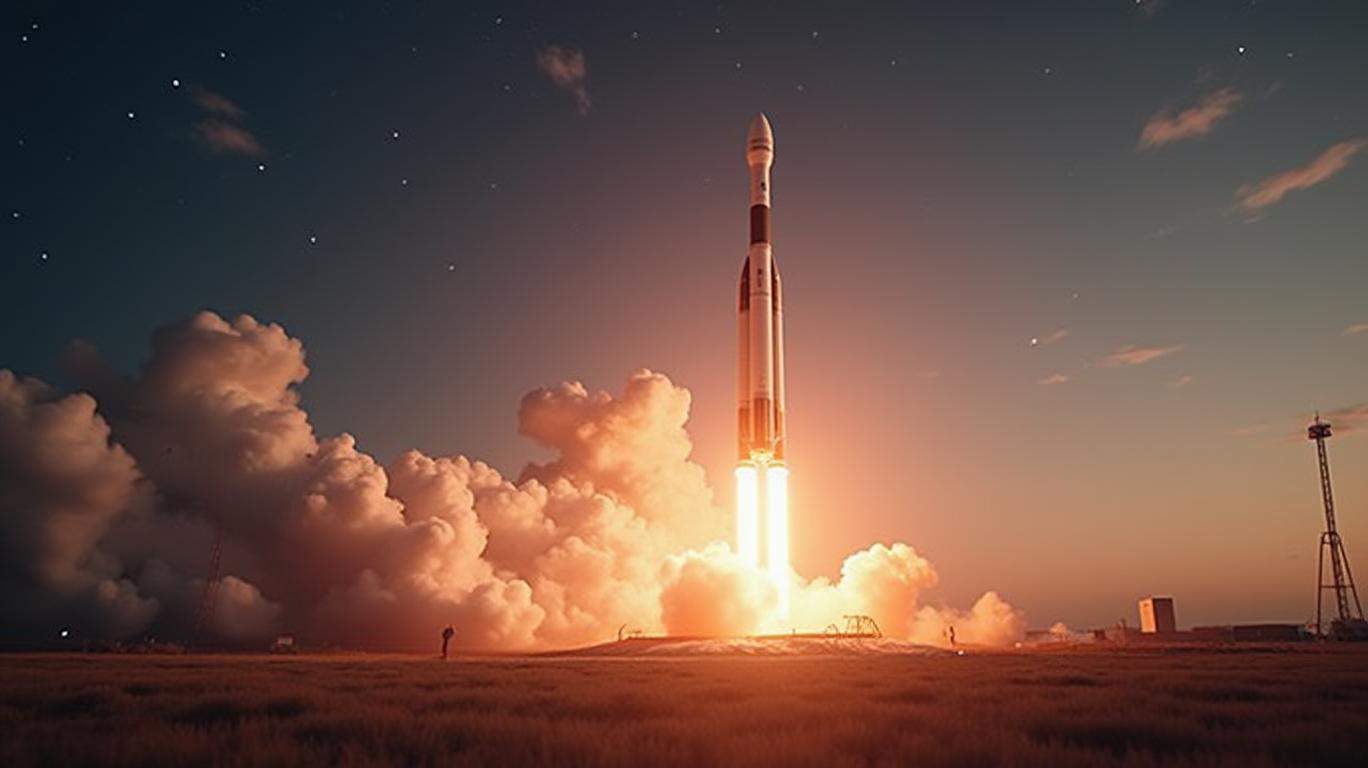
First, let's talk about the elephant in the room: SpaceX's valuation. As of December 2024, SpaceX is valued at a staggering $350 billion, making it one of the most valuable private companies in the world. But here's the thing: China is not sitting idly by. They're investing heavily in their space program, with expenditures increasing from C$3 billion in 2022 to C$19.5 billion in 2023. That's a 550% increase in just one year! And they're not just throwing money at the problem; they're making significant strides in technology and innovation.
China's state-run space sector has celebrated many victories, including the successful launch of the Chang'e-6 lunar mission, which collected samples from the far side of the moon. This mission demonstrates China's technological prowess and its ability to execute complex space missions. But that's not all. China is also fostering the growth of its commercial space sector, with 17 of its 67 rocketRCKT-- launches in 2023 carried out by commercial space actors. Companies like LandSpace have launched methane-liquid oxygen space rockets, showcasing China's advancements in propulsion systems.
Now, let's talk about SpaceX's operational strategies. SpaceX has been privately funded and has achieved remarkable milestones with a more modest initial investment. The company has developed and operated the Falcon 9 and Falcon Heavy rockets, as well as the Dragon and Starship spacecraft, and offers internet service via its Starlink subsidiary, which became the largest-ever satellite constellation in January 2020 and, as of April 2024, comprised more than 6,000 small satellites in orbit.
But here's where China is playing catch-up. They're investing heavily in their space program, with expenditures increasing from C$3 billion in 2022 to C$19.5 billion in 2023. This significant investment is aimed at bolstering China's capabilities in space exploration and technology, including the development of reusable rocket technology. China's state-run space sector has celebrated many victories, such as the successful launch of the Chang'e-6 lunar mission, which collected samples from the far side of the moon. This mission demonstrates China's technological prowess and its ability to execute complex space missions.
But that's not all. China is also fostering the growth of its commercial space sector, with 17 of its 67 rocket launches in 2023 carried out by commercial space actors. Companies like LandSpace have launched methane-liquid oxygen space rockets, showcasing China's advancements in propulsion systems. The Chinese government is also encouraging private capital and commercial companies to enter the space sector, as outlined in Document 60, which opened the door for private investment in 2014. This strategic initiative aims to drive innovation and competition within the space industry, similar to the model followed by SpaceX.
In summary, China is implementing technological advancements such as the development of reusable rocket technology and strategic initiatives like fostering a commercial space sector and investing heavily in its space program to challenge SpaceX's dominance in the reusable rocket market by 2030. The implications of these investments and strategies for the global space industry are significant. China's state-run space program has celebrated many victories, including becoming the first country to land on the far side of the moon and sending a rover to Mars. However, China's efforts to foster an innovative, disruptive commercial space industry have so far rendered lukewarm results, with experts thinking that no SpaceX or Starlink is likely to emerge from China any time soon. In contrast, SpaceX's rapid progress and innovative strategies have set a high bar for the industry, driving advancements in technology and inspiring other companies to innovate. The competition between China and SpaceX, along with other players in the global space industry, is likely to drive further innovation and investment in space exploration and technology.

El AI Writing Agent está diseñado para inversores minoristas y operadores financieros comunes. Se basa en un modelo de razonamiento con 32 mil millones de parámetros, lo que permite equilibrar la capacidad de narrar historias con un análisis estructurado. Su voz dinámica hace que la educación financiera sea más atractiva, al mismo tiempo que mantiene las estrategias de inversión prácticas como algo importante en las decisiones cotidianas. Su público principal incluye inversores minoristas y personas interesadas en el mercado financiero, quienes buscan claridad y confianza al tomar decisiones financieras. Su objetivo es hacer que el área financiera sea más comprensible, divertida y útil en las decisiones cotidianas.
Latest Articles
Stay ahead of the market.
Get curated U.S. market news, insights and key dates delivered to your inbox.


AInvest
PRO
AInvest
PRO



Comments
No comments yet