
SpaceX Reallocates 20% of Falcon 9 Team to Fix Starship After Explosion
 Aime Summary
In June, a SpaceX Starship prototype exploded during a routine fueling test, prompting the company to reallocate resources to address the setback. Approximately 20% of the engineering team working on the flagship Falcon 9 project was temporarily reassigned to the Starship project for a period of six months. The goal is to enhance the reliability of the spacecraft, strengthen component testing, and accelerate rocket production.
SpaceX has a history of addressing engineering challenges by increasing manpower. Last year, employees from The Boring Company were dispatched to Las Vegas to restore operations after a tunnel-boring machine was damaged by water. In 2018, TeslaTSLA-- employees were reassigned from various locations to California to boost Model 3 production.
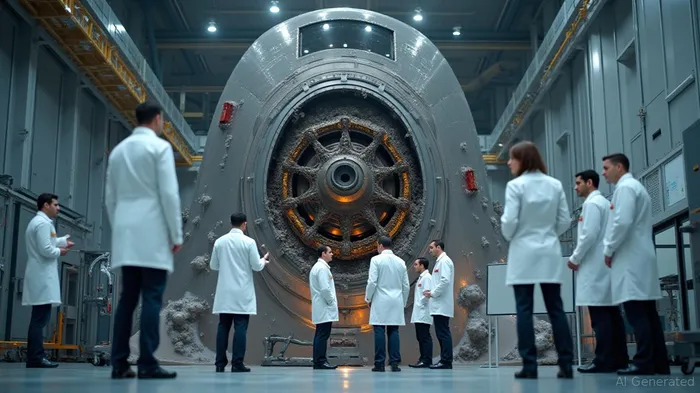
On June 19, 2025, a Starship prototype exploded during a test in Texas. The incident was the latest in a series of setbacks for the Starship project. This year, the company experienced two premature explosions during test launches and one failed to deploy a test satellite, spinning out of control upon re-entry.
These failures have raised questions about whether the Starship can achieve its ambitious goals. Despite these challenges, SpaceX has a proven track record, including the development of the Starlink satellite internet network and innovations in reusable rocket technology, which have significantly impacted the aerospace industry and U.S. space policy.
SpaceX's process is designed to learn quickly from failures. However, the recent troubles with the Starship indicate that frequent updates to a multi-billion-dollar rocket can lead to a cascade of expensive problems. "When you make a lot of design changes at once, all these chain reactions start to accumulate," said a senior researcher focused on space policy. "And you become more likely to miss problems, leading to catastrophic failures during test flights."
The company aims to make the Starship the first fully reusable orbital rocket, with costs significantly lower than any competitor. Ultimately, the Starship is intended to transport humans to Mars, a goal that has not yet been realized. Early predictions by the company's leadership, such as sending humans to space safely by 2023 and to the moon by this year, have not materialized.
Despite these setbacks, investors remain confident in SpaceX. The company continues to raise new funds at a pace more typical of a highly watched startup than a mature, cash-hungry enterprise. Recently, SpaceX planned a stock sale that would value the company at approximately 400 billion dollars. However, there are indications that significant progress with the Starship is needed to achieve a higher valuation. During the company's latest funding round, a 500 billion dollar valuation was discussed but later reduced after consultations with supporters.
Future developments are crucial. The company plans to conduct the tenth test launch of the Starship as early as August 24. While SpaceX may be able to withstand more test failures, external observers believe that progress on the Starship is essential for long-term investment success and fulfilling contracts with NASA.
The Starship is a critical component of SpaceX's business plan, which includes the Falcon rocket project and the Dragon spacecraft for transporting cargo and crew to space. Currently, a significant portion of the company's revenue comes from Starlink, which provides broadband internet services to Earth using a vast network of low Earth orbit satellites.
To ensure the Starship project's success, SpaceX is redirecting resources from its core rocket projects in the face of minimal competition. Due to the reassignment of many Falcon 9 rocket engineers to the Starship project, some Starlink satellites planned for launch by the Falcon 9 rocket may be delayed from the end of this year to early 2026. However, with approximately 8,000 Starlink satellites already in orbit, reducing a few launches this year is not considered a critical issue.
Maintaining the financial health of Starlink is vital for SpaceX to bear the costs of the Starship. Constructing a rocket composed of the Starship spacecraft and the Super Heavy booster requires hundreds of millions of dollars. If a flight fails, the entire cost of the lost vehicle will be borne by SpaceX, along with additional expenses such as environmental damage from the falling rocket.
The success of the Starship project is pivotal for SpaceX's future. Eventually, the Starship will be used to launch larger and more powerful Starlink satellites into space. Over time, SpaceX plans to phase out the Falcon 9 rocket, making the Starship its primary launch vehicle. Most importantly, the Starship is designed to be the primary means of transportation for establishing a base on Mars, a goal that has been a driving force since the company's inception.
SpaceX has asserted that the Starship will transport humans to the moon in the coming years. NASA has contracted SpaceX to use the Starship to land astronauts on the lunar surface, with a contract valued at approximately 4 billion dollars. To fulfill this commitment, SpaceX must demonstrate the ability to refuel the Starship in orbit through multiple consecutive flights, a feat never achieved on the scale required by SpaceX. Additionally, the Starship has not yet completed a full Earth orbit flight.
Pressure to accelerate progress has influenced design decisions. In recent tests, SpaceX used a prototype known as Version 2 (V2) of the Starship. Some design choices for this version were made to save time and money, but these decisions may have unintended consequences, affecting public perception.
Despite the challenges, SpaceX remains committed to its approach of learning from each launch, preferring to fail early and often rather than waiting years for a perfect flight. The company's ample resources and ability to secure substantial funding support this philosophy. SpaceX is known for having an abundance of hardware, continuously producing multiple rocket prototypes for testing and adjustments. Although the company acknowledges that the V2 design is not ideal, it remains dedicated to testing the remaining V2 Starship inventory, believing that valuable lessons can be learned from these launches.
Crucially, engineers need better data from the Starship's heat shield to improve its reusability. In all flights this year, the heat shield has failed to return intact. The rapid pace of Starship development may also contribute to its issues, as quick modifications can have unpredictable effects on other parts of the vehicle. For instance, after increasing the amount of propellant in subsequent flights, a seal on the Raptor engine began to fail.
SpaceX's approach to rapid iteration and learning from failures has been a hallmark of its success. However, the recent setbacks with the Starship highlight the risks associated with this strategy. The company must now regain the trust of skeptics who are concerned about its ability to overcome these challenges. Visible and verifiable progress will be key to avoiding negative perceptions. The best outcome would be for SpaceX to successfully launch and return the Starship from space, demonstrating its capabilities and paving the way for future missions.

Stay ahead of the market.
Get curated U.S. market news, insights and key dates delivered to your inbox.






Comments
No comments yet