
SpaceX Prepares for Crucial Starship Launch Amid Engineering Challenges and NASA Collaboration
 Aime Summary
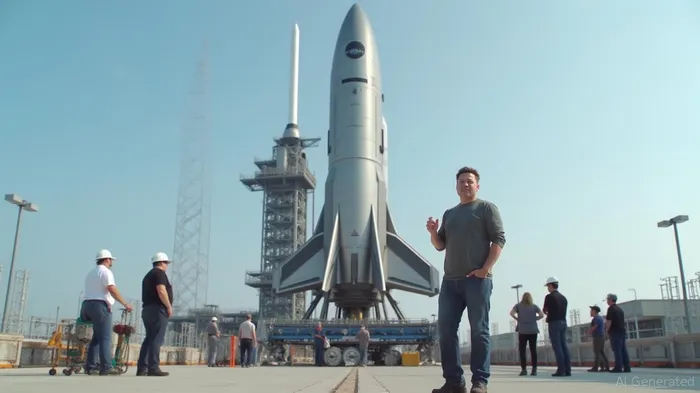
SpaceX is advancing preparations for its next monumental launch, as the Super Heavy booster makes its way to the launch pad at the company’s Starbase site in South Texas. Scheduled for liftoff on August 24, this mission marks the tenth test flight of the Starship rocket, a fully reusable vehicle designed to eventually transport people to lunar and Martian destinations, taking humanity deeper into space than ever before.
Starship, renowned as the most formidable and powerful rocket ever constructed, comprises two segments: the Super Heavy booster, equipped with 33 next-gen Raptor engines, and the Ship, the 171-foot tall upper stage powered by six Raptor engines. The immense rocket is largely crafted from stainless steel and aims to revolutionize space travel with its reusable design. As preparations intensify, both the Ship and Super Heavy have successfully completed engine tests, paving the way for assembly on the pad using a sophisticated launch tower mechanism termed "chopstick" arms.
The August 24th flight represents the fourth attempt in 2025 to validate Starship’s capabilities. So far, all three launches this year have encountered setbacks, with premature loss of the Ship on each occasion. Notably, these challenges have included explosions during reentry and unforeseen engineering failures during flight. Despite these trials, SpaceX envisages a successful mission where the Super Heavy booster will execute a controlled splashdown in the Gulf of Mexico while the Ship will finish its mission with a landing in the Indian Ocean.
As the countdown to launch continues, SpaceX is focused on fulfilling multiple mission objectives that have been elusive in prior flights. The forthcoming venture aims to deploy simulated Starlink satellites and conduct several in-flight tests on the upper stage’s return journey. Successful achievement of these milestones would demonstrate significant progress towards Starship’s operational readiness for future cargo deliveries and human habitation on lunar and Martian surfaces.
The path toward operational success has not been without hurdles. Earlier tests of the Starship witnessed mechanical failures attributed to pressurization issues within the vehicle’s main fuel tank, resulting in explosive outcomes during the ascent phase. Recent anomalies, such as the uncontrolled reentry of Ship 35 during the ninth flight test, highlighted critical structural failures linked to pressure systems that SpaceX engineers have since rigorously addressed through comprehensive ground testing and design adjustments.
Moreover, preparations have been temporarily stymied by a devastating ground explosion during a static fire test in June, pointing to vulnerabilities in the pressure vessels storing gaseous nitrogen in the Ship’s payload section. In remediation, SpaceX has instituted enhanced inspection protocols and pressure constraints to safeguard against recurrence of such mishaps.
Anticipation mounts for a smooth progression through the planned flight sequence for both the Ship’s innovative heat shield materials and the robustness of its landing catch systems, slated for rigorous tests amid this upcoming mission. Concurrently, SpaceX endeavors to refine the Super Heavy booster’s descent characteristics to guarantee stability and mitigate aerodynamic stresses during touchdown maneuvers.
Despite the visible progress and technical refinement seen thus far, questions loom over the prospective timeline for Starship missions, particularly as SpaceX eyes ambitious goals for celestial exploration. Elon Musk’s vision proposes the leap to Mars by 2026; however, procedural setbacks in the preceding test flights underscore the technological intricacies inherent in achieving rapid, reliable reuse—elements crucial to actualizing extensive travels to other planets.
Given the historic implications of Starship’s deployment, these launches are closely monitored by NASA as part of the agency's strategic partnership that anticipates utilizing Starship for Artemis lunar missions by 2027. The interagency objectives hinge upon successful validation of key missions, including propellant transfer demonstrations in Earth orbit—a milestone critically tied to the timeline for crewed lunar landings. Hence, stakeholders from SpaceX and NASA are collaboratively navigating engineering challenges, affirming confidence in the program’s trajectory towards readiness for deep-space logistics.
In summation, the imminent flight tests mark a significant chapter in SpaceX’s space exploration chronicles. With calculated enhancements and methodical preparatory actions, the 24th’s launch could illustrate profound advancements in engineering and operational mechanisms vital for Starship’s eventual role as a cornerstone of extraterrestrial mission infrastructure—a cornerstone that might transform the science fiction vision of multiplanetary habitation into concrete reality.

Stay ahead of the market.
Get curated U.S. market news, insights and key dates delivered to your inbox.






Comments
No comments yet