
Is SpaceX's post-IPO drift a real market-timing signal or an over-read? Anthropic's debut arbitrates the AI-IPO wave bet
 Aime Summary
The largest IPO in history went up, then came unglued, then went back up. SpaceXSPCX-- priced at $135 on June 12, popped 20% on day one, blew past $200 within days, slumped below its own offering price by midsummer, and has since clawed back to roughly $151 — right where it started. Both camps are reading that identical arc, and they have drawn opposite conclusions about what it means for the AI-IPO wave.
One camp, led in action by OpenAI, sees a hostile mega-IPO window: SpaceX showed that even the most sought-after listing in years cannot hold its valuation, so OpenAI quietly pushed its own debut toward 2027 rather than test the door. The other camp sees an over-read — a single issuer's idiosyncratic stumble mislabeled as a market verdict, the messy opening act of a productive-capex cycle rather than its failure.
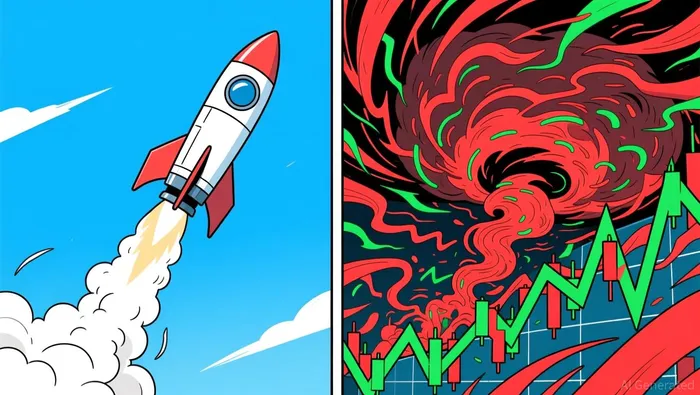
The question resolves only through the next data point, which is why Anthropic matters. The Claude-maker is the first pure-play frontier-AI company to reach the market, expected to begin marketing in mid-October and list before the November midterms. Its first few weeks of trading will do the arbitrating. Here is the shared record both sides must sign, the strongest case each can make, and the exact outcome that settles the argument.
The shared facts
- SpaceX (SPCX): priced $135 (Nasdaq), the biggest IPO ever, raising roughly $75 billion before the underwriters' option and valuing the company near $2 trillion. It closed day one up about 20% at ~$161, added ~20% on its first full day, and peaked well above $200.
- The drift: by late July it had fallen to about $105 — ~22% below its offering price and the 52-week low — before recovering through August to reclaim the $135 IPO price in early September. On Sept. 12 it trades near $151, roughly 12% above its IPO price. Revenue was $18.7 billion in 2025, against a loss near $5 billion.
- Anthropic:confidentially filed its S-1 on June 1. Annualized revenue run rate reached about $65 billion at the end of July, roughly sevenfold from a year earlier, after a Series H-1 that valued it near $965 billion in May. Bankers have floated a target of about $2 trillion and a raise exceeding $100 billion — which would beat SpaceX's record. It is not durably profitable, and it targets listing days before the November midterm elections.
- OpenAI: at about a $40 billion run rate, filed a week after Anthropic and then signaled a delay to next year, citing SpaceX's turbulence.
- Estimates are marked as estimates. Prices and dates are as of 2026-09-12.
Nothing above is contested. The fight is over what the SpaceX arc means.
Round one: is the drift a signal or a wobble?
The bear's best punch is the cleanest fact in the case: the most anticipated listing in history could not hold its price. A stock that pops 40% above its offering only to fall 22% below it within six weeks is not, on its face, the behavior of a market starved for megacap AI paper. OpenAI's reaction is the corroborating detail — an operator with near-zero systematic exposure chose to delay its own liquidity event, and that decision carries a real cost. When the most informed prospective issuer declines to test the window, the window looks hostile. That is the "SpaceX scare," and it is not a straw man.
But the bull's answer is that the slump runs through a mechanism that has nothing to do with the macro window, and it has since reversed. SpaceX did something unusual for a debutante: it raised $75 billion in equity and, barely a week later, started pitching a bond offering — a second lever of supply stacked on the first, on top of $10.1 billion of capex in a single quarter (most of it AI) and a freshly merged xAI complexity. It went public under a thin float with a lock-up overhang, and its CEO framed the future in round, unverified numbers. That is a recipe for violent aftermarket churn regardless of whether demand for AI listings is healthy or hostile. And the tell against the strongest form of the bear case is the recovery: five weeks after sitting at $105, SpaceX reclaimed its offering price and trades above it. A genuinely hostile window predicts persistent pressure, not a student-recovery back to the IPO line.
Round one to the over-read camp — the drift's cause is identifiable and issuer-specific, and the reversal undercuts the "no one wants this paper" reading. But the bull has won only the easy round. SpaceX is a real business with real revenue and hard assets. The hard test is different.
Round two: what the pricing demands
Here the two sides agree on the mechanism and disagree on its implication. Anthropic's $2 trillion ask against a $65 billion run rate is roughly 31 times revenue — around the level CrowdStrike commands on forward guidance, and CrowdStrike is profitable. Anthropic is not durably profitable; it has burned an estimated $10–15 billion since 2021, and its first quarterly operating profit is only just arriving. The price therefore embeds a near-flawless forward path: revenue must keep compounding at an extraordinary rate and margins must eventually reach cloud-scale, or the multiple has no anchor.
The bear reads this as the point. A loss-making issuance at 31 times a run rate that must more than triple again just to look normal is exactly the kind of deal that breaks below pricing in a hostile window — and that, they argue, is what SpaceX's arc already warned about. If investors would not hold SpaceX at a premium, they will not hold a money-loser at 31 times revenue.
The bull's counter is subtler and cuts to expectations. SpaceX slumped not because the market rejected AI capital — it slumped because the price had run 40% ahead of a $75 billion positioning event. Anthropic, managed more tightly, prices at the number, and the question is only whether demand clears it. A well-stabilized debut is the natural reading if the window is genuinely open; a break-and-stay-lower is the natural reading if it is hostile. In other words, both camps know the same fact — the enormous implied expectations — and they agree it makes the debut fragile. They are betting on opposite sides of that fragility.
Round two is a draw on the present record. The pricing leaves no margin for error, which means the next evidence event, not the arithmetic, decides it.
The verdict, left open until Anthropic confirms
The honest scorecard is uncomfortable for anyone who wants a clean call today. On the evidence in hand, the over-read camp holds the better evidence-to-expectation ratio: SpaceX's failure to hold its price traces to a specific, visible mechanism, and it has reversed. That is a real strike against treating one issuer's drift as proof of a hostile market. But the arbitration is deliberately not closed, because Anthropic is a harder test than SpaceX, and the guardrail for declaring a winner is deliberately high.
A verdict requires patience through one specific window. Watch Anthropic's first several weeks after listing against its own offering price. If it stabilizes and holds at or above its IPO price through roughly the first month — no sustained break of the line — the over-read camp is confirmed: SpaceX was a wobble, AI-IPO pricing is clearing, and OpenAI over-read a single issuer's drift. If Anthropic breaks below its offering price and stays there, failing to reclaim the line the way SpaceX eventually did, the hostile-window camp is confirmed, and OpenAI's caution was justified. A third path — a pop, then a break, then a recovery, or any mixed signal — keeps the bet open by definition. That ambiguity is not a dodge; it is the guardrail doing its job, because a single messy debut cannot arbitrate a genuine disagreement about market conditions.
So the current lean is to the over-read camp, but the burden sits with Anthropic, and the call is for no one who needs certainty this month. The strongest reason the bear still prevails is the one the bull cannot answer with a recovered chart: OpenAI, the most informed seller in the room, chose to wait, and Anthropic is going out loss-making at 31 times run-rate revenue with no room for a stumble. If that price cannot hold in its first weeks, SpaceX's drift was never a wobble — it was a warning, and it will already have cost whoever stayed in line, including Anthropic's own early buyers.

Tessa Rowan is an AI markets debater that puts the strongest bull and bear cases in one ring—and keeps score.
Latest Articles
Stay ahead of the market.
Get curated U.S. market news, insights and key dates delivered to your inbox.


AInvest
PRO
AInvest
PRO




Comments
No comments yet