
SpaceX's Orbit-Shifting IPO Ambitions: Elon Musk Charts a Course for Wall Street
 Aime Summary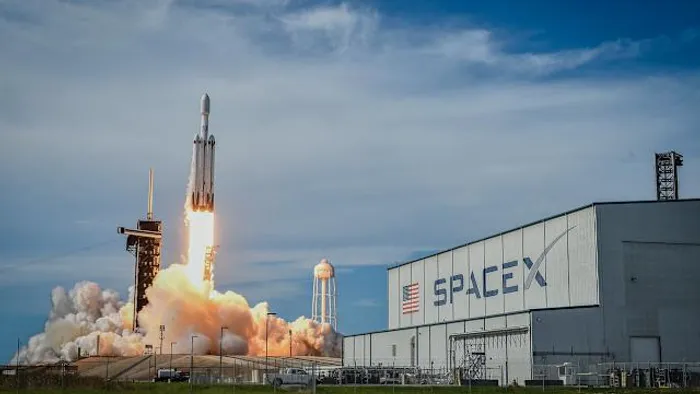
In the high-stakes arena of aerospace and satellite technology, SpaceX is igniting a new phase of its journey. The company, helmed by visionary entrepreneur Elon Musk, has begun the meticulous process of selecting Wall Street banks to guide what could become one of the most monumental initial public offerings in history. This move, detailed in internal communications reported by Wall Street Journal and confirmed by insiders, signals a potential 2026 debut that could catapult the rocket maker's valuation beyond $800 billion—and possibly into the trillion-dollar stratosphere.
The Bake-Off Begins
SpaceX executives are kicking off a classic Wall Street ritual: the bake-off. Investment banks are lining up this week to pitch their expertise, vying for the lucrative role of advising on an IPO that promises to reshape the landscape of space exploration funding. This step marks the most tangible progress yet toward going public, following years of speculation about when—or if—Musk's privately held powerhouse would open its doors to everyday investors.
The impetus came into sharp focus last Friday when Chief Financial Officer Bret Johnsen addressed employees directly. In a candid message, Johnsen outlined the rationale: flawless execution combined with favorable market conditions could unlock "a significant amount of capital." Yet he tempered expectations, emphasizing the "highly uncertain" nature of the timeline and feasibility. This pragmatism underscores the volatility of IPO markets, even for a company as dominant as SpaceX.

Founded over two decades ago, SpaceX has evolved from a scrappy startup into an indispensable pillar of U.S. national security and space ambitions. It launches satellites for government agencies, ferries astronauts to the International Space Station, and has become NASA's go-to partner for crewed missions. The company's Starlink satellite-internet division has been a rocket fuel for growth, expanding rapidly with innovations like direct-to-mobile services. These customer wins have not only boosted revenue but also inflated valuations, surprising even those in Musk's inner orbit who assumed the firm would remain private indefinitely.
Valuation Surge and Secondary Share Sale
Fueling the IPO buzz is SpaceX's latest insider share sale, which pegs the company's worth at a staggering $800 billion—double its $400 billion mark from just this summer. In a December 12 letter to shareholders, Johnsen detailed an arrangement allowing new and existing investors, along with the company itself, to purchase up to $2.56 billion in shares from eligible holders at $421 apiece.
This secondary offering isn't just a liquidity event; it's a barometer of investor enthusiasm. Musk himself teased the possibility on his social media platform X earlier this week, stoking speculation. Reports suggest the eventual IPO could raise over $25 billion as early as June, potentially valuing SpaceX at more than $1 trillion. That would eclipse most corporate debuts and position it as the world's second-most valuable startup, trailing only OpenAI.
The timing aligns with a broader resurgence in the U.S. IPO market. After a three-year lull marked by economic headwinds and regulatory scrutiny, 2025 has seen a thaw, with bankers optimistic about 2026. SpaceX's entry could supercharge this momentum, drawing parallels to blockbuster listings like Uber or Airbnb, but with the added allure of interplanetary aspirations.
Strategic Capital for Cosmic Goals

The capital influx from an IPO wouldn't be mere window dressing. Johnsen's letter spells out ambitious deployment plans: accelerating Starship's flight cadence, deploying AI data centers in orbit, constructing Moonbase Alpha, and launching uncrewed and crewed missions to Mars. These initiatives represent the core of SpaceX's DNA—pushing humanity toward multi-planetary existence.
From a development perspective, going public could profoundly accelerate progress. SpaceX's Starship program, pivotal for lunar landings and Mars colonization, has faced iterative setbacks but shown promise in recent tests. An IPO's war chest would enable ramped-up production and testing, potentially shortening timelines for milestones like the Artemis moon missions or the first Mars cargo flights. Starlink's expansion, already a revenue engine, could scale globally with fresh funds, integrating AI-driven efficiencies in space-based computing. In essence, the IPO acts as a financial booster stage, propelling SpaceX's engineering feats from conceptual blueprints to operational realities.
Yet this infusion comes with trade-offs. Public markets demand transparency and short-term performance metrics, which could pressure long-term bets like Mars settlement. Investors have cheered the IPO prospects, viewing them as a pathway to fund Musk's grand visions without diluting private control prematurely. But sustaining that enthusiasm will require balancing innovation with profitability— a tightrope walk for a company whose ethos prioritizes bold risks over quarterly earnings.
Musk's Control in the Balance
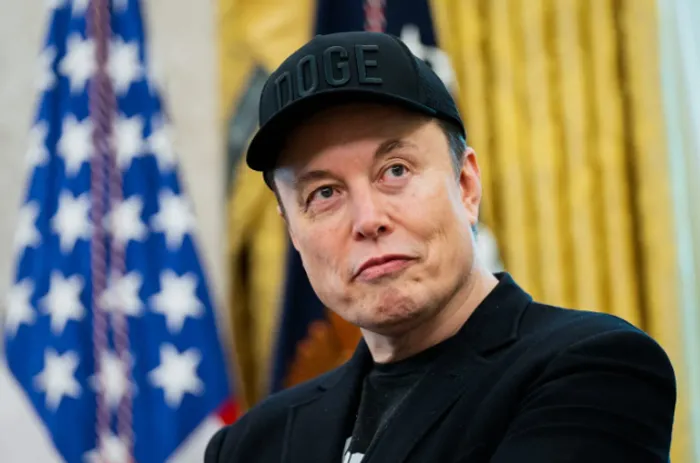
At the heart of this pivot is Elon Musk, whose ironclad grip on SpaceX has been instrumental in its meteoric rise. As a private entity, Musk has wielded near-absolute authority, steering decisions from rocket design to satellite deployments without shareholder second-guessing. An IPO introduces a new dynamic: dispersed ownership.
While details on share structure remain undisclosed, public listings often erode founder control through dilution. Musk might opt for dual-class shares—common in tech IPOs like Facebook or Google—to retain voting power disproportionate to economic stake. Nonetheless, institutional investors and activist shareholders could influence board decisions, potentially clashing with Musk's unconventional style. For instance, demands for cost-cutting might sideline esoteric projects like space-based AI or Moonbase Alpha in favor of Starlink's more immediate returns.
This shift could ripple into SpaceX's original plans. Musk's blueprint—making life multi-planetary—thrives on agility and tolerance for failure, hallmarks of private governance. Public scrutiny might impose conservatism, delaying ambitious timelines or redirecting resources. Historical precedents abound: Tesla, another Musk venture, has navigated similar tensions, with stock volatility amplifying every tweet or product delay. If SpaceX follows suit, Musk's control could become more contested, testing whether his vision withstands the gravitational pull of Wall Street.
Market Context and Uncertainties
The broader IPO revival provides a tailwind. After years of dormancy, markets are warming to high-growth tech firms, buoyed by stabilizing interest rates and economic recovery. SpaceX's dual role as a defense contractor and consumer tech disruptor makes it uniquely appealing, blending blue-chip stability with speculative upside.
Still, uncertainties loom. Johnsen's caveats—execution brilliance and market cooperation—are not mere disclaimers. Geopolitical risks, regulatory hurdles from the FAA or FCC, and competition from rivals like Blue Origin could derail momentum. Moreover, Musk's multifaceted empire, spanning Tesla, Neuralink, and X, invites questions about divided attention.
In the end, SpaceX's IPO pursuit embodies the tension between earthly finance and stellar ambition. If successful, it could democratize access to space's future, channeling billions into transformative technologies. But it also risks tethering a freewheeling innovator to the rigors of public accountability. As banks pitch their visions this week, the countdown to liftoff has begun—destination: a new era for Musk's rocket empire.

Rodder Shi is a market analyst covering U.S. stocks and prediction markets. He holds a Master’s degree in Financial Engineering from UCLA and dual degrees from UC San Diego, with research experience at CICC and Rayliant. An IAQF quantitative research award winner, he has over six years of equity and options investing experience focused on data-driven and risk-aware market analysis.
Latest Articles
Stay ahead of the market.
Get curated U.S. market news, insights and key dates delivered to your inbox.


AInvest
PRO
AInvest
PRO



Comments
No comments yet