
SpaceX's O3b mPower Launch Scrub: Implications for Satellite Broadband and Space Tech Markets
 Aime Summary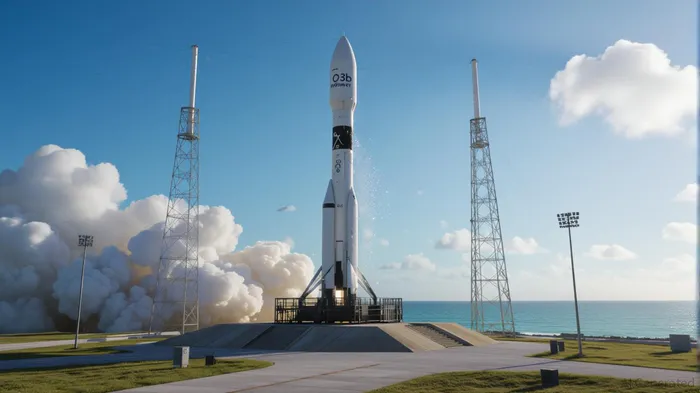
The July 21, 2025, scrub of SpaceX's O3b mPower satellite launch—halted just 11 seconds before liftoff—offers a critical case study for investors assessing the strategic and financial resilience of space tech firms. While the delay was attributed to weather concerns and unspecified operational factors, its implications ripple across the satellite broadband and aerospace sectors. This event underscores the delicate balance between innovation, operational rigor, and market expectations in an industry still maturing.
Strategic Resilience: Navigating Delays in a High-Stakes Ecosystem
SpaceX's decision to abort the launch highlights the industry's prioritization of safety and reliability over schedule. The O3b mPower constellation, a joint venture between SpaceX and SESSES--, is designed to deliver low-latency, high-speed internet via medium Earth orbit (MEO) satellites. The mission's rescheduling to July 22, despite a 25% favorable weather outlook, demonstrates the sector's growing maturity in risk management. For investors, this reflects a strategic shift: companies are no longer solely racing to launch but are instead embedding contingency planning into their operational DNA.
The O3b mPower program itself is a testament to this resilience. Despite early technical challenges, including electrical issues in the first four satellites, SES has adapted its launch strategy—reducing the number of satellites per mission to align with market demand. This flexibility is crucial for firms in the satellite broadband space, where customer needs and technological advancements evolve rapidly. Investors should monitor how companies like SES and SpaceX recalibrate their timelines and budgets in response to setbacks, as this adaptability often separates enduring players from transient ones.
Financial Resilience: Cost Implications and Risk Mitigation
Operational delays inevitably incur costs, but the financial health of space tech firms reveals how well they can absorb such shocks. SES, for example, reported a negative €51 million cash flow in Q1 2025, partly due to O3b mPower-related expenses. However, the company's ability to recover $58 million through insurance claims illustrates the importance of risk diversification. For investors, this duality—high upfront costs versus insurance and contingency mechanisms—is a key metric.
SpaceX's financials, meanwhile, remain robust. The company's reusability-focused model (evident in the Falcon 9 booster's sixth flight for this mission) ensures that even delayed launches are cost-effective. The broader space tech sector, however, is less uniform. Smaller firms without SpaceX's scale or SES's insurance partnerships may struggle to maintain liquidity during prolonged delays. Investors should scrutinize companies' balance sheets and debt structures to identify those with the financial bandwidth to weather operational hiccups.
Market Implications: Confidence and Competition
The O3b mPower launch delay also has broader implications for the satellite broadband market. With competitors like Amazon's Project Kuiper and OneWeb vying for dominance, delays can create opportunities for rivals to capture market share. However, the rescheduling of this mission to a later date—rather than a permanent cancellation—signals confidence in the technology's eventual success. This confidence is mirrored in investor sentiment: the satellite broadband sector has seen a 12% average growth in market capitalization over the past year, according to industry analysts.
For space tech firms, the key is to communicate transparency during delays. SpaceX's vague explanation for the July 21 scrub could have spooked investors, but its swift rescheduling and live coverage plans helped mitigate uncertainty. This approach—balancing secrecy with stakeholder reassurance—is critical for maintaining market trust.
Investment Advice: Where to Position in a Dynamic Sector
For investors, the O3b mPower launch scrub serves as a reminder that space tech is a high-risk, high-reward arena. Here's how to approach it strategically:
- Prioritize Diversification: Avoid overexposure to single companies. Instead, invest in a mix of firms with proven operational resilience (like SpaceX) and those with innovative but less mature technologies.
- Focus on Financial Metrics: Look for companies with strong cash reserves, low debt, and insurance partnerships. Avoid firms relying heavily on venture capital with no clear revenue streams.
- Monitor Launch Cadence: Track how frequently a company executes missions. A high launch rate, even with occasional delays, often indicates robust infrastructure and market confidence.
- Evaluate Strategic Adaptability: Companies that adjust their strategies—such as SES's shift to smaller satellite batches—are better positioned to navigate industry shifts.
The space tech sector is at a pivotal inflection pointIPCX--. While delays like the O3b mPower scrub are inevitable, they also highlight the sector's capacity to innovate and adapt. For investors with a long-term horizon, this volatility is not a deterrent but a signal of the industry's transformative potential.
In conclusion, the July 2025 launch scrub underscores that space tech is as much about financial and strategic resilience as it is about technological prowess. Investors who recognize this duality—and act accordingly—will be well-positioned to capitalize on the sector's next frontier.

Delivering real-time insights and analysis on emerging financial trends and market movements.
Latest Articles
Stay ahead of the market.
Get curated U.S. market news, insights and key dates delivered to your inbox.




Comments
No comments yet