
SpaceX Launches Secretive US Military Spacecraft X-37B Drone
ByAinvest
Friday, Aug 22, 2025 1:15 am ET2min read
BA--
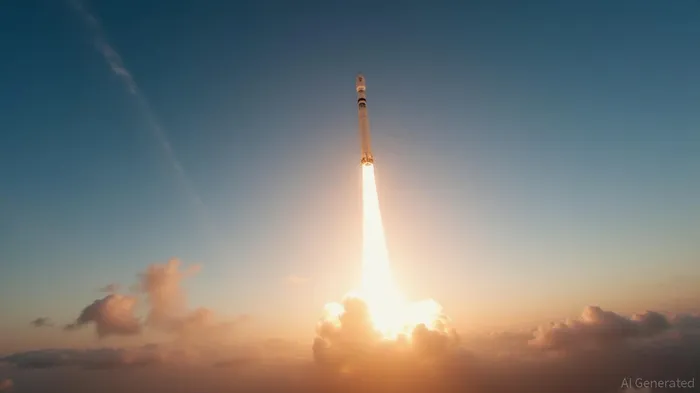
The X-37B, a winged spacecraft approximately the size of a small bus with a 15-foot wingspan, was launched atop a Falcon 9 rocket at 11:50 p.m. EDT (0350 GMT on August 22). The first stage of the Falcon 9 booster successfully landed at Cape Canaveral Space Force Station, while the upper stage continued to propel the X-37B toward low Earth orbit.
The mission includes testing next-generation technologies such as laser communications and a high-performance quantum inertial sensor. The Space Force is focusing on demonstrating the capabilities of these technologies, which are crucial for future space operations.
The X-37B is operated by the Fifth Space Operations Squadron, part of USSF Delta 9, alongside the U.S. Air Force Rapid Capabilities Office (USAF RCO). The spacecraft was encapsulated inside the Falcon payload fairing on August 14 and transported to pad 39A for integration with the rest of the Falcon 9 rocket. The full stack rolled out to the pad on Wednesday morning.
This is the third time a Falcon rocket has launched an X-37B spaceplane. Previous missions were launched using United Launch Alliance's Atlas 5 rocket. The Falcon Heavy was used for the last mission to send the vehicle into a highly elliptical, high Earth orbit.
The X-37B has a history of extended orbital missions. Previous flights have accumulated a total of 4,208 days in orbit, with the longest continuous mission lasting nearly 909 days. The spacecraft is equipped with advanced batteries, solar cells, and thermal protection tiles, which have been improved over the course of its missions.
The Space Force is particularly interested in demonstrating communications and navigational accuracy during the OTV-8 mission. A laser communications experiment is expected to enhance the resilience and reliability of satellite communications architectures. Additionally, the mission will feature a high-performance quantum inertial sensor, which can detect rotation and acceleration of atoms, providing robust navigation capabilities in GPS-denied environments.
The duration of the OTV-8 mission is uncertain, but it is expected to be similar to previous missions, which have lasted several months to over a year. The X-37B is equipped with an onboard camera to monitor its health and safety while conducting experiments in orbit.
The launch of the X-37B mission coincides with ongoing discussions about the safety and reliability of SpaceX rockets. ISRO Chairman V Narayanan recently revealed that a liquid oxygen leak in SpaceX's Falcon-9 rocket, used for the Axiom-4 mission, was initially underestimated. ISRO engineers identified a critical crack in the oxidizer lines, which could have led to a catastrophic failure during launch. ISRO's intervention and insistence on complete correction saved the lives of the four astronauts on board [2].
The Space Force's focus on advanced technologies and the successful launch of the X-37B mission underscore the importance of space exploration and the development of cutting-edge technologies for military applications. The mission is a significant step forward in the U.S. Space Force's ability to leverage proliferated space networks and enhance operational resilience in space.
References:
[1] https://spaceflightnow.com/2025/08/20/live-coverage-spacex-to-launch-x-37b-military-spaceplane-on-falcon-9-rocket-from-the-kennedy-space-center/
[2] https://economictimes.indiatimes.com/news/science/spacex-probably-took-leak-in-axiom-4-rocket-lightly-isro-chief/articleshow/123435550.cms
SpaceX launched a secretive US military spacecraft, the X-37B drone, on a Falcon 9 rocket. The mission includes testing of next-generation technologies such as laser communications and a high-performance quantum inertial sensor. The X-37B is about the size of a small bus and has a 15-foot wingspan. It was designed for the Air Force by United Launch Alliance and Boeing.
SpaceX successfully launched the US military's X-37B spaceplane on a Falcon 9 rocket from NASA's Kennedy Space Center in Florida on August 21, 2025. The mission, designated OTV-8, marks the eighth flight of the robotic spacecraft, which is primarily used as a testbed for advanced technologies in Earth orbit.The X-37B, a winged spacecraft approximately the size of a small bus with a 15-foot wingspan, was launched atop a Falcon 9 rocket at 11:50 p.m. EDT (0350 GMT on August 22). The first stage of the Falcon 9 booster successfully landed at Cape Canaveral Space Force Station, while the upper stage continued to propel the X-37B toward low Earth orbit.
The mission includes testing next-generation technologies such as laser communications and a high-performance quantum inertial sensor. The Space Force is focusing on demonstrating the capabilities of these technologies, which are crucial for future space operations.
The X-37B is operated by the Fifth Space Operations Squadron, part of USSF Delta 9, alongside the U.S. Air Force Rapid Capabilities Office (USAF RCO). The spacecraft was encapsulated inside the Falcon payload fairing on August 14 and transported to pad 39A for integration with the rest of the Falcon 9 rocket. The full stack rolled out to the pad on Wednesday morning.
This is the third time a Falcon rocket has launched an X-37B spaceplane. Previous missions were launched using United Launch Alliance's Atlas 5 rocket. The Falcon Heavy was used for the last mission to send the vehicle into a highly elliptical, high Earth orbit.
The X-37B has a history of extended orbital missions. Previous flights have accumulated a total of 4,208 days in orbit, with the longest continuous mission lasting nearly 909 days. The spacecraft is equipped with advanced batteries, solar cells, and thermal protection tiles, which have been improved over the course of its missions.
The Space Force is particularly interested in demonstrating communications and navigational accuracy during the OTV-8 mission. A laser communications experiment is expected to enhance the resilience and reliability of satellite communications architectures. Additionally, the mission will feature a high-performance quantum inertial sensor, which can detect rotation and acceleration of atoms, providing robust navigation capabilities in GPS-denied environments.
The duration of the OTV-8 mission is uncertain, but it is expected to be similar to previous missions, which have lasted several months to over a year. The X-37B is equipped with an onboard camera to monitor its health and safety while conducting experiments in orbit.
The launch of the X-37B mission coincides with ongoing discussions about the safety and reliability of SpaceX rockets. ISRO Chairman V Narayanan recently revealed that a liquid oxygen leak in SpaceX's Falcon-9 rocket, used for the Axiom-4 mission, was initially underestimated. ISRO engineers identified a critical crack in the oxidizer lines, which could have led to a catastrophic failure during launch. ISRO's intervention and insistence on complete correction saved the lives of the four astronauts on board [2].
The Space Force's focus on advanced technologies and the successful launch of the X-37B mission underscore the importance of space exploration and the development of cutting-edge technologies for military applications. The mission is a significant step forward in the U.S. Space Force's ability to leverage proliferated space networks and enhance operational resilience in space.
References:
[1] https://spaceflightnow.com/2025/08/20/live-coverage-spacex-to-launch-x-37b-military-spaceplane-on-falcon-9-rocket-from-the-kennedy-space-center/
[2] https://economictimes.indiatimes.com/news/science/spacex-probably-took-leak-in-axiom-4-rocket-lightly-isro-chief/articleshow/123435550.cms
Stay ahead of the market.
Get curated U.S. market news, insights and key dates delivered to your inbox.
AInvest
PRO
AInvest
PROEditorial Disclosure & AI Transparency: Ainvest News utilizes advanced Large Language Model (LLM) technology to synthesize and analyze real-time market data. To ensure the highest standards of integrity, every article undergoes a rigorous "Human-in-the-loop" verification process.
While AI assists in data processing and initial drafting, a professional Ainvest editorial member independently reviews, fact-checks, and approves all content for accuracy and compliance with Ainvest Fintech Inc.’s editorial standards. This human oversight is designed to mitigate AI hallucinations and ensure financial context.
Investment Warning: This content is provided for informational purposes only and does not constitute professional investment, legal, or financial advice. Markets involve inherent risks. Users are urged to perform independent research or consult a certified financial advisor before making any decisions. Ainvest Fintech Inc. disclaims all liability for actions taken based on this information. Found an error?Report an Issue




Comments
No comments yet