
SpaceX Launches 10,000th Starlink Satellite: Why This Rocket Timeline Matters for Investors
 Aime Summary
SpaceX recently launched its 10,000th active Starlink satellite, demonstrating the scale and pace of its satellite internet ambitions. , supporting the Starlink deployment cadence. , making it one of the largest operators of satellites in low Earth orbit. The company's focus on reusability and cost efficiency positions it to dominate the satellite broadband market and potentially reshape global connectivity. Future growth could be accelerated with the Starship rocket, which promises even greater capacity and faster deployment timelines.
The launch of SpaceX's 10,000th Starlink satellite is more than just a technical milestone—it's a testament to the company's ability to scale its satellite broadband network at an unprecedented pace. With two Falcon 9 missions on March 13 and 14, 2026, , . This expansion is driven by the Falcon 9's reusable first-stage boosters, which can be relaunched in as little as nine days, making the cost and complexity manageable. For retail investors, this means SpaceX is not just executing a vision—it's proving a model of sustainability and scalability that could redefine global internet access.
What Is the Latest in the SpaceX Rocket Launch Schedule and Why Does It Matter?
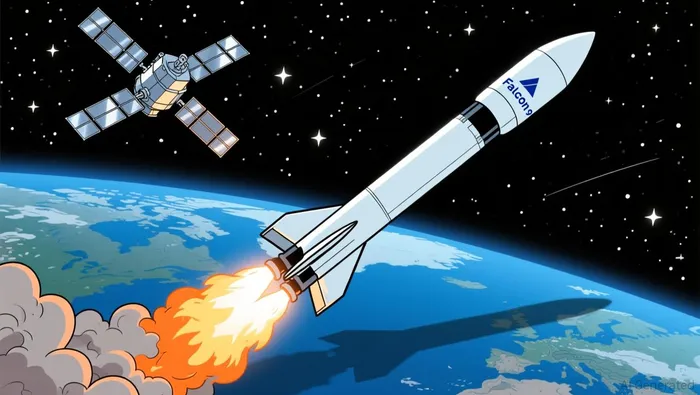
SpaceX's March 2026 rocket launch schedule was marked by two consecutive Falcon 9 missions: one from California and another from Florida, , respectively. These missions are part of a broader strategy to expand Starlink's global coverage, which aims to bring high-speed internet to remote and underserved regions. The rapid deployment is made possible by the Falcon 9's reusability, with each first-stage booster landing successfully on drone ships after liftoff.
What's particularly notable is the speed at which SpaceX operates. The company's ability to launch and land the same rocket booster within days—like the recent achievement of B1088— demonstrates a level of operational efficiency that is unmatched in the industry. This capability reduces costs significantly, which in turn allows for more frequent satellite deployments and faster time-to-market for Starlink services. For investors, this means SpaceX is not only scaling its network but also building a competitive moat through operational excellence.
Why Is the SpaceX Launch Today Generating Buzz Among Investors and Analysts?
The recent launch of the 10,000th Starlink satellite is generating buzz not just because of the scale but also because of what it represents for the broader satellite industry. SpaceX now controls nearly two-thirds of all active satellites in orbit— . This shift from government-led space missions to commercially driven mega-constellations is reshaping the landscape for global communications. Where once satellite internet was a niche service, it's now a rapidly expanding market, with SpaceX at the forefront.
The significance for investors lies in the potential revenue growth and market dominance. Starlink has the potential to generate billions in annual revenue, especially as it expands into markets with limited infrastructure. With the Starship rocket expected to enhance launch capabilities in the coming years, the pace of deployment could accelerate further. This makes SpaceX not just a space company but a key player in the global telecom infrastructure market.
How Is the Falcon 9's Turnaround Time Revolutionizing Rocket Launch Schedules and Satellite Deployment?
SpaceX's Falcon 9 rocket is not just a vehicle—it's a foundational asset in the company's strategy to make space travel affordable and routine. The rapid turnaround time between launches—nine days for some boosters—has dramatically increased the cadence of satellite deployments. This efficiency is critical for missions like Starlink, where hundreds of satellites must be launched in quick succession to form a functional global network.
The speed is made possible by advanced recovery systems and streamlined maintenance processes. Unlike traditional rockets, which are typically discarded after a single flight, the Falcon 9 is designed to be reused multiple times. This not only cuts costs but also allows for more frequent missions. The goal of achieving a 24-hour turnaround remains a work in progress, but the current capabilities already position SpaceX to lead in the new era of space commerce according to industry analysis.
What Should Investors Watch for in the Future of SpaceX's Launch Schedule and Starlink Expansion?
As SpaceX continues to push the boundaries of launch frequency and satellite deployment, investors should keep an eye on a few key indicators. First, the continued success of the Falcon 9 in terms of both launch cadence and cost efficiency will be a strong signal of the company's operational health. Second, the introduction of Starship, which is expected to carry significantly more payload and reduce launch costs further, could be a game-changer for the Starlink program.
Additionally, regulatory developments will play a role. The Federal Communications Commission () and other regulatory bodies are closely monitoring the expansion of mega-constellations, and any delays or restrictions could impact the pace of deployments. For now, however, SpaceX appears to be on a trajectory that could reshape the global communications landscape—offering a compelling long-term investment narrative for those willing to follow the rocket's path.

Stay ahead of the market.
Get curated U.S. market news, insights and key dates delivered to your inbox.


AInvest
PRO
AInvest
PRO



Comments
No comments yet