
SpaceX’s Launch Cadence Signals New Era in Satellite Economics
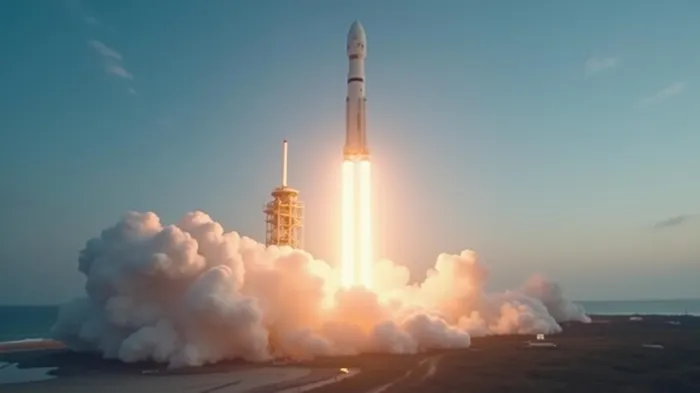
The night of April 24, 2025, marked another milestone in SpaceX’s relentless push to redefine space economics. A Falcon 9 rocketRCKT--, flying for the 23rd time, launched 28 Starlink satellites from Cape Canaveral—a feat that underscores the company’s focus on reusability as both a technical and financial strategy. This launch, part of a record-breaking cadence, hints at a future where satellite constellations are built and maintained at unprecedented scale and affordability.
The Technical Triumph of Reuse
SpaceX’s April 24 mission was notable not for its payload—28 satellites added to a constellation already numbering over 7,000—but for the booster that delivered them. The first stage, which previously supported 22 launches, touched down on the droneship A Shortfall of Gravitas for its 23rd landing. This marks the highest reuse count yet for a Falcon 9 booster, pushing the boundaries of what engineers once deemed possible.
According to SpaceX’s internal estimates, reusing boosters reduces launch costs by over 30% compared to single-use rockets. “The economics of space are shifting,” said one industry analyst. “When a rocket part can handle two dozen launches, the marginal cost of each subsequent flight plummets.” This model is critical to Starlink’s profitability, as the company aims to replace aging satellites and expand coverage to 18,000 units by 2027.
A Business Model Built for Scale
SpaceX’s launch cadence isn’t just about technical prowess—it’s a deliberate strategy to dominate the satellite internet market. With a second Starlink mission scheduled for April 27–29, the company maintains a pace of roughly one launch every five days. Such frequency requires flawless logistics, from rocket refurbishment to satellite production.
The financial implications are clear: **** While competitors like Amazon’s Kuiper and OneWeb lag in launch frequency, SpaceX’s reuse-driven model allows it to outspend rivals while keeping costs low.
“Starlink isn’t just a constellation—it’s a cash flow machine,” said analyst Sarah Jane, who tracks satellite economics. “Every reused booster eats into fixed costs, making future satellites effectively free to launch.” This advantage is magnified by SpaceX’s control over the entire supply chain, from rocket engines to ground stations.
The Rivalry in the Heavens
SpaceX’s dominance isn’t uncontested. The April 28–29 launch window for United Launch Alliance’s (ULA) Atlas V rocket, carrying Amazon’s Kuiper satellites, highlights a broader competition. ULA’s Atlas V, a reliable but expensive workhorse, underscores the trade-off between cost and capability.
Yet ULA’s single-use approach contrasts sharply with SpaceX’s ethos. “The Atlas V is a masterpiece of engineering, but it’s a relic of an old era,” said a ULA insider. “SpaceX’s reuse model is the future, even if it’s hard to replicate.”
Conclusion: The New Economics of the Sky
SpaceX’s April 2025 launches are more than routine missions—they’re proof of a paradigm shift. By reusing boosters 23 times and maintaining a launch cadence unmatched in history, the company is proving that satellite constellations can be both massive and economically sustainable. With Starlink’s user base surpassing 2 million and contracts with governments like Ukraine’s, the model is paying off.
Investors should take note: The era of throwaway rockets is ending. As SpaceX’s valuation soars and competitors scramble to catch up, the company’s focus on reusability and scale positions it to dominate not just satellite internet, but any space-based service where cost efficiency reigns. The sky, it turns out, is the limit—for everyone else.

Stay ahead of the market.
Get curated U.S. market news, insights and key dates delivered to your inbox.






Comments
No comments yet