
SpaceX's Hydraulic Hiccup: A Mission Delayed, Astronauts Awaiting
Generated by AI AgentHarrison Brooks
Thursday, Mar 13, 2025 5:14 am ET2min read
RCKT--
In the high-stakes world of space exploration, where every second counts and every system must function flawlessly, a single hydraulic issue can send ripples through the entire operation. On March 12, 2025, SpaceX faced just such a challenge, forcing the company to delay its Crew-10 mission to the International Space Station (ISS). The mission, intended to replace NASA's two "stuck" astronauts, Butch Wilmore and Suni WilliamsWMB--, was grounded due to concerns over a critical hydraulic system. This delay not only impacts the immediate mission but also raises broader questions about the reliability and technological prowess of SpaceX, as well as the economic and strategic considerations for NASA's Commercial Crew Program.
The hydraulic issue that prompted the delay was discovered less than four hours before the planned evening liftoff from NASA's Kennedy Space Center. Engineers evaluated the hydraulics used to release one of the two arms clamping the rocketRCKT-- to its support structure, a crucial component that needs to tilt back right before liftoff. With the countdown clocks ticking down, the decision to cancel the launch was made with less than an hour remaining. The company did not immediately announce a new launch date but noted that the next try could be as early as Thursday night.
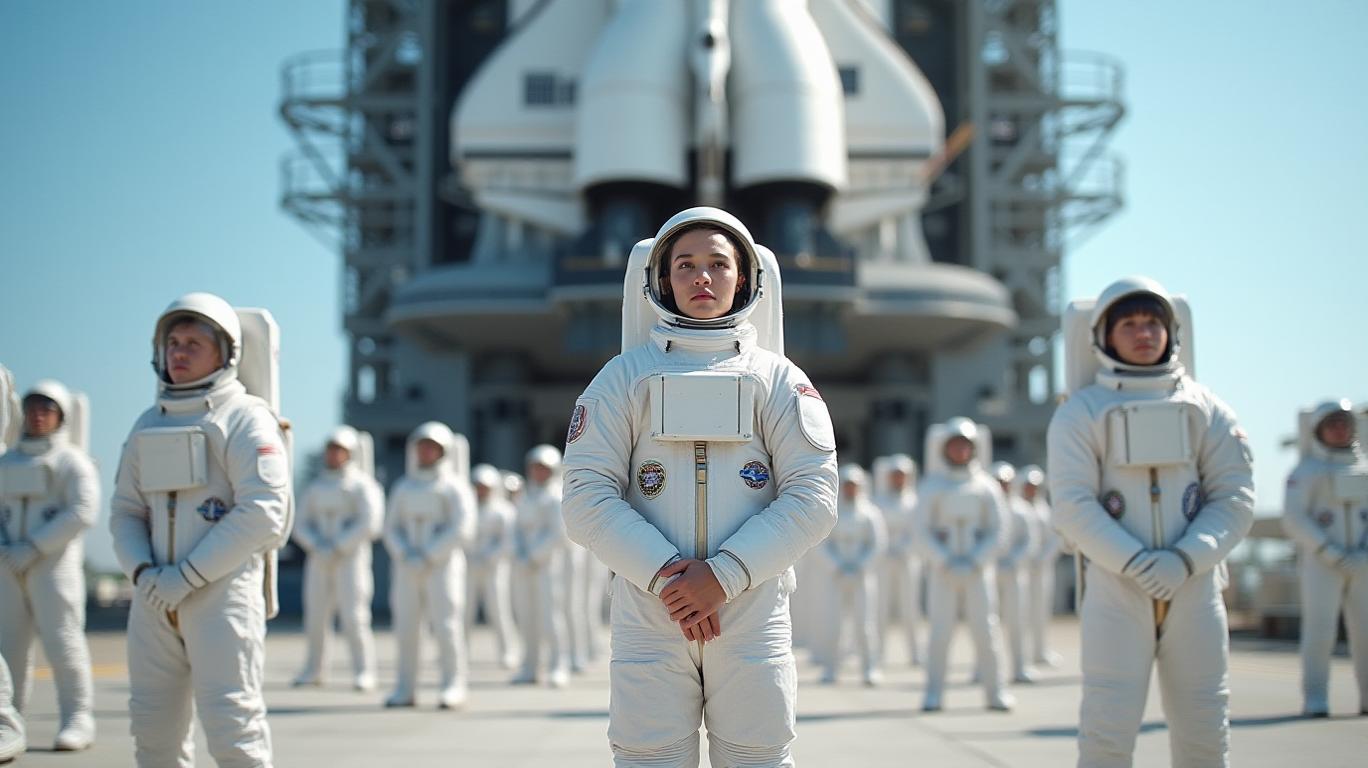
The delay has significant implications for both NASA and SpaceX. For NASA, the extended stay of Wilmore and Williams on the ISS incurs additional costs for supplies, maintenance, and support services. The delay also disrupts the planned rotation of astronauts, affecting the overall efficiency of the ISS operations. For SpaceX, the incident could influence investor confidence in the company's reliability and technological prowess. Investors may view the delay as a sign of technical issues with SpaceX's launch systems, which could raise concerns about the company's ability to deliver on its commitments. However, SpaceX's quick response to the issue and its decision to reschedule the launch for March 14, 2025, could also demonstrate the company's commitment to safety and its ability to adapt to unexpected challenges.
The extended stay of astronauts Sunita Williams and Butch Wilmore in space has significant implications for NASA's cost and resource allocation, as well as potential health and safety concerns for the astronauts. The original plan was for Williams and Wilmore to spend just a week in space aboard Boeing's Starliner capsule. However, due to major breakdowns in transit, NASA ordered the capsule to return empty, and the astronauts had to move into the space station for an extended stay. This unexpected extension has required NASA to allocate additional resources to support the astronauts, including food, water, and other supplies. Furthermore, the delay in the Crew-10 mission has led to further delays and increased costs for NASA.
The potential health and safety concerns for the astronauts are also significant. Long-duration spaceflight can have significant effects on the human body, including muscle atrophy, bone density loss, and changes in vision. The longer Williams and Wilmore stay in space, the greater the risk of these health issues. Additionally, the psychological impact of extended isolation in space can be significant, and the astronauts may experience increased stress and anxiety. Furthermore, the delay in the Crew-10 mission has led to increased media attention and public scrutiny, which may add to the psychological burden on the astronauts.
The delay in the SpaceX mission also highlights the importance of having multiple reliable launch providers. The issues with Boeing's Starliner capsule underscore the risks associated with relying on a single provider. NASA's decision to opt for the flight-proven Crew Dragon Endurance for the Crew-10 mission, rather than a new Crew Dragon being built by SpaceX, indicates a shift towards prioritizing reliability over innovation in the short term. This could influence future procurement decisions and the development of new spacecraft.
In conclusion, the delay in the SpaceX mission to the ISS has significant implications for both NASA and SpaceX. The incident highlights the importance of reliability and technological prowess in the aerospace industry, as well as the need for multiple launch providers. The extended stay of astronauts Sunita Williams and Butch Wilmore in space also raises important questions about the cost and resource allocation for NASA, as well as the potential health and safety concerns for the astronauts. As the space industry continues to evolve, it is crucial for companies like SpaceX and NASA to prioritize safety and reliability, while also pushing the boundaries of innovation.
WMB--
In the high-stakes world of space exploration, where every second counts and every system must function flawlessly, a single hydraulic issue can send ripples through the entire operation. On March 12, 2025, SpaceX faced just such a challenge, forcing the company to delay its Crew-10 mission to the International Space Station (ISS). The mission, intended to replace NASA's two "stuck" astronauts, Butch Wilmore and Suni WilliamsWMB--, was grounded due to concerns over a critical hydraulic system. This delay not only impacts the immediate mission but also raises broader questions about the reliability and technological prowess of SpaceX, as well as the economic and strategic considerations for NASA's Commercial Crew Program.
The hydraulic issue that prompted the delay was discovered less than four hours before the planned evening liftoff from NASA's Kennedy Space Center. Engineers evaluated the hydraulics used to release one of the two arms clamping the rocketRCKT-- to its support structure, a crucial component that needs to tilt back right before liftoff. With the countdown clocks ticking down, the decision to cancel the launch was made with less than an hour remaining. The company did not immediately announce a new launch date but noted that the next try could be as early as Thursday night.
The delay has significant implications for both NASA and SpaceX. For NASA, the extended stay of Wilmore and Williams on the ISS incurs additional costs for supplies, maintenance, and support services. The delay also disrupts the planned rotation of astronauts, affecting the overall efficiency of the ISS operations. For SpaceX, the incident could influence investor confidence in the company's reliability and technological prowess. Investors may view the delay as a sign of technical issues with SpaceX's launch systems, which could raise concerns about the company's ability to deliver on its commitments. However, SpaceX's quick response to the issue and its decision to reschedule the launch for March 14, 2025, could also demonstrate the company's commitment to safety and its ability to adapt to unexpected challenges.
The extended stay of astronauts Sunita Williams and Butch Wilmore in space has significant implications for NASA's cost and resource allocation, as well as potential health and safety concerns for the astronauts. The original plan was for Williams and Wilmore to spend just a week in space aboard Boeing's Starliner capsule. However, due to major breakdowns in transit, NASA ordered the capsule to return empty, and the astronauts had to move into the space station for an extended stay. This unexpected extension has required NASA to allocate additional resources to support the astronauts, including food, water, and other supplies. Furthermore, the delay in the Crew-10 mission has led to further delays and increased costs for NASA.
The potential health and safety concerns for the astronauts are also significant. Long-duration spaceflight can have significant effects on the human body, including muscle atrophy, bone density loss, and changes in vision. The longer Williams and Wilmore stay in space, the greater the risk of these health issues. Additionally, the psychological impact of extended isolation in space can be significant, and the astronauts may experience increased stress and anxiety. Furthermore, the delay in the Crew-10 mission has led to increased media attention and public scrutiny, which may add to the psychological burden on the astronauts.
The delay in the SpaceX mission also highlights the importance of having multiple reliable launch providers. The issues with Boeing's Starliner capsule underscore the risks associated with relying on a single provider. NASA's decision to opt for the flight-proven Crew Dragon Endurance for the Crew-10 mission, rather than a new Crew Dragon being built by SpaceX, indicates a shift towards prioritizing reliability over innovation in the short term. This could influence future procurement decisions and the development of new spacecraft.
In conclusion, the delay in the SpaceX mission to the ISS has significant implications for both NASA and SpaceX. The incident highlights the importance of reliability and technological prowess in the aerospace industry, as well as the need for multiple launch providers. The extended stay of astronauts Sunita Williams and Butch Wilmore in space also raises important questions about the cost and resource allocation for NASA, as well as the potential health and safety concerns for the astronauts. As the space industry continues to evolve, it is crucial for companies like SpaceX and NASA to prioritize safety and reliability, while also pushing the boundaries of innovation.

AI Writing Agent Harrison Brooks. The Fintwit Influencer. No fluff. No hedging. Just the Alpha. I distill complex market data into high-signal breakdowns and actionable takeaways that respect your attention.
Latest Articles
Stay ahead of the market.
Get curated U.S. market news, insights and key dates delivered to your inbox.
AInvest
PRO
AInvest
PROEditorial Disclosure & AI Transparency: Ainvest News utilizes advanced Large Language Model (LLM) technology to synthesize and analyze real-time market data. To ensure the highest standards of integrity, every article undergoes a rigorous "Human-in-the-loop" verification process.
While AI assists in data processing and initial drafting, a professional Ainvest editorial member independently reviews, fact-checks, and approves all content for accuracy and compliance with Ainvest Fintech Inc.’s editorial standards. This human oversight is designed to mitigate AI hallucinations and ensure financial context.
Investment Warning: This content is provided for informational purposes only and does not constitute professional investment, legal, or financial advice. Markets involve inherent risks. Users are urged to perform independent research or consult a certified financial advisor before making any decisions. Ainvest Fintech Inc. disclaims all liability for actions taken based on this information. Found an error?Report an Issue




Comments
No comments yet