
SpaceX's Growing Dominance in Satellite Internet and Orbital Logistics: Strategic Investment Opportunities in the New Space Economy


 Aime Summary
Falcon 9: The Backbone of Cost-Efficient Satellite Deployment
SpaceX's Falcon 9 rocket remains the linchpin of its commercial success. By leveraging reusable first-stage boosters, the Falcon 9 has drastically reduced the cost of accessing space, enabling large-scale satellite projects that were previously economically unfeasible. A notable example is Taiwan's 2025 homegrown satellite constellation, launched via Falcon 9, which underscores the rocket's role in supporting national space strategies according to a Nikkei report.
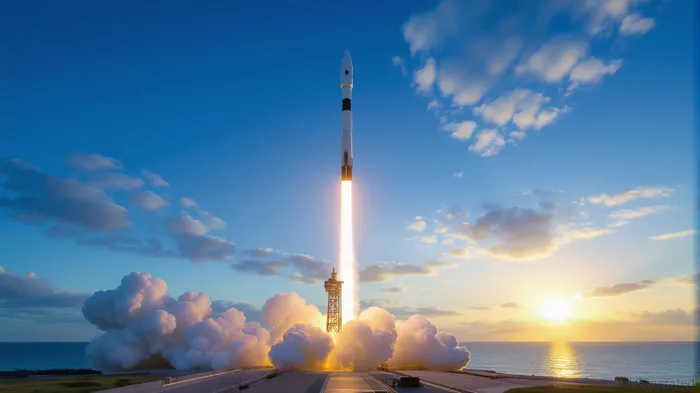
While specific 2025 payload capacity figures for the Falcon 9 remain undisclosed, industry projections highlight SpaceX's dominance in orbital logistics. According to Seeking Alpha, SpaceX is projected to carry approximately 90% of the world's payload mass to space in 2025. This market share is a testament to the Falcon 9's reliability and cost efficiency, which have outpaced competitors like Blue Origin's New Glenn rocket according to Morningstar analysis. For investors, the Falcon 9's continued dominance signals a robust infrastructure for deploying satellites, particularly for internet and defense applications.
Starlink's Global Expansion: Bridging the Digital Divide
Starlink's growth in 2025 has been nothing short of meteoric. The service now boasts over 6 million global subscribers, up from 4.6 million in 2024, with 2 million of those in the U.S. alone according to Yahoo Tech. This expansion has disrupted traditional satellite internet providers like HughesNet, which has seen subscriber declines as customers migrate to Starlink's low-latency, low-Earth orbit (LEO) network according to Yahoo Tech.
Strategic partnerships are amplifying Starlink's reach. T-Mobile, for instance, has integrated Starlink into its service offerings, providing $10/month satellite internet access as an add-on to its cellular plans according to Morningstar. Similarly, HughesNet's parent company, EchoStarSATS--, has adopted a referral partnership with SpaceX, redirecting customers to Starlink while retaining a share of the revenue according to Yahoo Tech. These collaborations highlight a broader trend: rather than displacing traditional telecom providers, satellite internet is serving as a complementary solution for rural and remote areas.
Technological advancements further solidify Starlink's competitive edge. In July 2025, SpaceX launched a direct-to-device service using 650 satellites to connect previously unreachable regions of the U.S. according to Morningstar. Meanwhile, AST SpaceMobile's planned LEO phased array, set to launch in 2026, aims to deliver cellular broadband directly to smartphones, a development that could expand Starlink's utility beyond fixed internet according to Morningstar.
Space Economics: A Win-Win for Investors and Traditional Providers
The economic implications of SpaceX's growth are nuanced. Citi analysts argue that satellite internet services like Starlink are not disruptive threats but rather enablers of market expansion according to Morningstar. Traditional telecom providers, including T-Mobile and Verizon, are leveraging satellite technology to extend coverage into rural areas where terrestrial infrastructure is cost-prohibitive. For example, T-Mobile's partnership with Starlink has already commercialized direct-to-device services, while AST SpaceMobileASTS-- plans to deliver space-based cellular broadband to Verizon customers in 2026 according to Morningstar.
From an investment perspective, this synergy between satellite and terrestrial networks creates a "win-win" scenario. While fiber and 5G remain superior in densely populated areas, LEO satellites offer a cost-effective solution for covering vast, sparsely populated regions. As Citi notes, the economics of satellite broadband are particularly compelling for large geographic markets, where the cost per unit of coverage is significantly lower than traditional infrastructure according to Morningstar.
Strategic Investment Opportunities in Aerospace Infrastructure
The commercialization of space is no longer a speculative concept-it is a $500 billion industry with clear pathways to profitability. For investors, the key opportunities lie in:
1. Orbital Logistics Providers: Companies like SpaceX, which dominate launch services and satellite deployment, are critical to the supply chain. According to Seeking Alpha, the Falcon 9's 90% market share in 2025 positions SpaceX as a must-own asset for exposure to the space economy.
2. Satellite Internet Infrastructure: Starlink's subscriber growth and partnerships with telecom providers indicate a scalable business model. The integration of direct-to-device technology and collaborations with AST SpaceMobile further diversify revenue streams according to Morningstar.
3. Cross-Industry Synergies: The convergence of aerospace and telecommunications is creating hybrid opportunities. For instance, T-Mobile's $10/month Starlink add-on demonstrates how satellite services can enhance traditional telecom offerings according to Morningstar.
Conclusion
SpaceX's dominance in orbital logistics and satellite internet is a cornerstone of the new space economy. The Falcon 9's cost efficiency and market share, combined with Starlink's rapid user growth and strategic partnerships, position the company as a leader in commercializing space. For investors, the key takeaway is clear: aerospace infrastructure and satellite internet are no longer niche sectors but foundational pillars of global connectivity. As the industry matures, strategic investments in companies like SpaceX-and their ecosystem of partners-will be essential for capitalizing on the next frontier of technological and economic growth.

Delivering real-time insights and analysis on emerging financial trends and market movements.
Latest Articles
Stay ahead of the market.
Get curated U.S. market news, insights and key dates delivered to your inbox.
AInvest
PRO
AInvest
PRO



Comments
No comments yet