
SpaceX's Geostationary Satellite Launches: A New Frontier for Telecom Investors
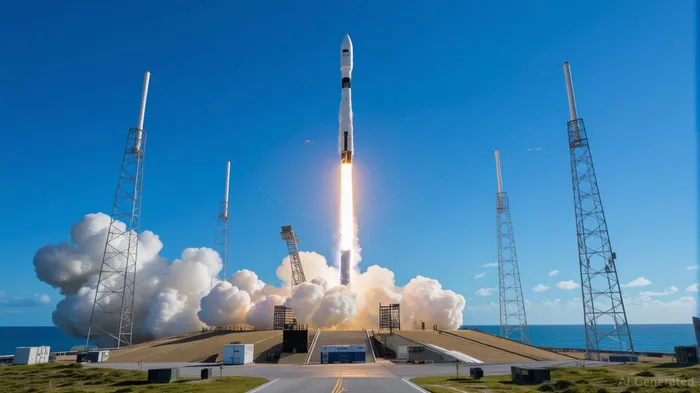
The successful launch of the Dror-1 satellite by SpaceX on July 13, 2025, marks a pivotal moment in the evolution of space-based telecommunications. This mission, which utilized a reused Falcon 9 rocket booster, underscores SpaceX's role in democratizing access to geostationary orbit (GEO) and signals a paradigm shift toward affordable, high-capacity space networks. For investors, this launch is more than a technical milestone—it's a harbinger of transformative opportunities in satellite-based telecom infrastructure.
The Technological Revolution: Dror-1 and Beyond
Dror-1, Israel's most advanced communications satellite to date, boasts modular "smartphone-like" capabilities, allowing it to adapt its functions via software updates. This flexibility is critical in an era where bandwidth demands are surging. The satellite's 2.8-meter antennas—the largest ever on an Israeli satellite—enhance its ability to support high-throughput services, from defense surveillance to global IoT connectivity. Crucially, its GEO positioning (36,000 km above Earth) ensures stable, continuous coverage over fixed regions, complementing SpaceX's existing Low Earth Orbit (LEO) Starlink constellation.
SpaceX's reusable rocket model further lowers barriers to entry. The Falcon 9 booster used for Dror-1 completed its 13th flight, reducing launch costs to <$3,500/kg to LEO—a fraction of historical rates. This cost efficiency enables even small nations and private firms to deploy sophisticated satellites, disrupting traditional telecom monopolies.
Market Dynamics: A $45B Opportunity by 2034
The global satellite-based telecom market is booming. Valued at $23.1 billion in 2024, it's projected to grow at a 12.3% CAGR through 2034, reaching $45.3 billion. Key drivers include:
- IoT Connectivity: The satellite IoT segment is expanding at a 26% CAGR, fueled by LEO constellations and applications like asset tracking and environmental monitoring.
- Defense Modernization: Governments are prioritizing secure, resilient networks. The EU's IRIS² initiative (€10.6 billion for 290 satellites by 2030) and China's Guowang/Qinfan constellations highlight this trend.
- 5G and Hybrid Networks: Satellite operators are integrating with terrestrial networks to provide seamless coverage, as seen in SES's $3.1 billion acquisition of Intelsat.
Competitive Landscape: Disruption Ahead
Traditional telecom giants like Viasat and Iridium face competition from SpaceX's scalable LEO/GEO hybrid model. Starlink's planned IoT expansion by late 2025 could further disrupt legacy players. However, niche opportunities exist in specialized segments:
- Modular Satellite Designers: Firms like Maxar Technologies (MAXR) and Thales Alenia Space benefit from demand for adaptable payloads.
- LEO Network Operators: SES (SESGF) and Eutelsat (ETL.PA) are leveraging multi-orbit strategies to compete with LEO newcomers.
- Defense Contractors: Partnerships with governments, such as Cobham Satcom's SAILOR XTR terminals for the U.S. Navy, offer recurring revenue streams.
Regulatory and Investment Considerations
- Spectrum Management: Governments are harmonizing spectrum use to avoid congestion. The 3GPP NTN standards (Release 17+), enabling satellite-cellular interoperability, are a regulatory tailwind.
- Space Debris Risks: Mitigation technologies (e.g., LeoLabs' tracking systems) are critical for long-term sustainability.
- Capital Intensity: Investors should favor firms with diversified revenue streams, like Viasat (VSAT), which combines satellite manufacturing with managed services.
Actionable Insights for Investors
- Target Hybrid Infrastructure Players: Companies like SES and Viasat, which blend LEO/MEO/GEO networks, are well-positioned to serve both commercial and defense sectors.
- Look to IoT and Defense Partnerships: Firms with contracts in secure communications, such as Anuvu (via Telesat's partnership), or IoT-focused operators like Spire Global, offer high-growth potential.
- Monitor SpaceX's Stock Performance: SpaceX's valuation (now over $137B) reflects investor confidence in its ecosystem play. Track its market cap growth and partnerships with governments for clues on scalability.
- Avoid Overexposure to Legacy GEO Players: Firms relying solely on aging GEO satellites (e.g., Hughes Network Systems) may struggle against cost-effective LEO competitors.
Conclusion: A New Orbit for Telecom Investors
SpaceX's Dror-1 launch isn't just a technical feat—it's a blueprint for the future of global connectivity. Investors should prioritize firms capable of adapting to hybrid networks, IoT demands, and defense modernization. While risks like regulatory hurdles and capital costs persist, the $45B+ opportunity in satellite telecom infrastructure promises rich rewards for those positioned to capitalize on this orbital revolution.
Final advice: Allocate 5–10% of tech/infrastructure funds to satellite plays, favoring those with hybrid networks and government contracts. Avoid pure-play GEO operators—the next frontier is already in motion.

Delivering real-time insights and analysis on emerging financial trends and market movements.
Latest Articles
Stay ahead of the market.
Get curated U.S. market news, insights and key dates delivered to your inbox.
AInvest
PRO
AInvest
PRO



Comments
No comments yet