
SpaceX's Feud with Trump: Navigating Portfolio Risks and Finding Alternatives in Aerospace
The escalating feud between Elon Musk and President Trump has thrust SpaceX's strategic vulnerabilities into the spotlight, exposing critical dependencies on government contracts and creating a ripple effect across aerospace investments. For portfolios concentrated in Musk's ventures—or even the broader space sector—this political drama demands careful risk assessment and a search for alternatives. Let's dissect the risks and opportunities.
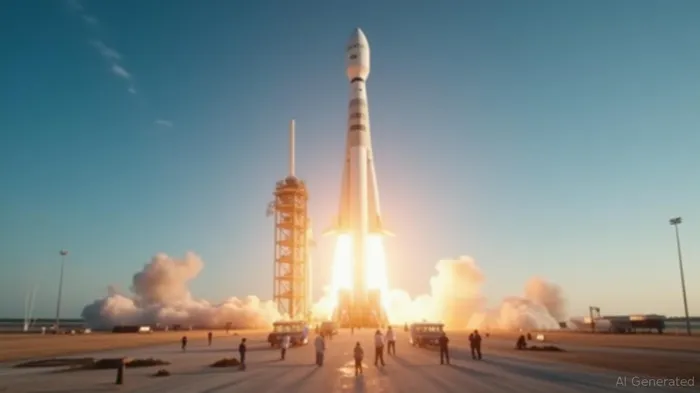
The Dependency Dilemma: SpaceX's Contract Lifeline
SpaceX's $22 billion in government contracts—$15 billion from NASA and the remainder from the Department of Defense (DoD)—are the bedrock of its operations. The Dragon spacecraft, vital for ISS crew transport, lacks a viable U.S. alternative, while Falcon rockets dominate military launches. A contract cancellation would strand NASA's astronauts and delay national security missions, making abrupt cuts politically untenable. Yet the feud has already triggered market jitters: shows a 14% drop since tensions escalated, reflecting investor anxiety about Musk's broader business ecosystem.
However, the company's near-monopoly on key missions creates systemic risk. If SpaceX's contracts were diluted—or if political pressure forced renegotiation—revenue stability could falter. Investors holding TeslaTSLA-- or betting on SpaceX's Starship ambitions must acknowledge this exposure.
Competitors in the Spotlight: Blue Origin, Starlink Alternatives, and More
While SpaceX's dominance is undeniable, rivals are capitalizing on its vulnerabilities:
Blue Origin: Jeff Bezos's firm is advancing its Vulcan rocket to challenge Falcon's military launches. With 14 missions secured in NSSL Phase 3 and Project Kuiper's broadband constellation, Blue Origin offers a counterweight. Though private, its growth could pressure SpaceX's margins.
Satellite Alternatives: Starlink's dominance in low-Earth orbit communications faces competition from EchoStar (SATS) and AST SpaceMobile (ASTS). reveals a 20% rise as investors bet on its satellite fleet's resilience against regulatory or geopolitical headwinds.
Smaller Launch Providers: Rocket Lab (RKLB) and Relativity Space are carving niches in small-satellite launches, while Virgin Orbit's Launcher rockets target commercial markets. These firms benefit from SpaceX's focus on high-profile missions, reducing direct competition.
Investment Strategy: Diversify Beyond SpaceX's Political Tightrope
To mitigate risk, investors should pivot toward aerospace firms with diversified revenue streams and less exposure to Musk's political crosshairs:
Lockheed Martin (LMT): A pillar of defense contracting, Lockheed's F-35 programs and partnerships with NASA on the Orion spacecraft offer stability. Its $80 billion backlog includes $20 billion in space-related work, insulated from SpaceX-specific risks.
Boeing (BA): Despite Starliner's delays, Boeing's military contracts and 787 production remain key to its portfolio. A recovery in commercial aviation and a resolution of technical issues could position it as a SpaceX alternative for future crewed missions.
Maxar Technologies (MAXR): This satellite manufacturer builds payloads for NASA and commercial clients, including SpaceX's Starlink. Its focus on infrastructure reduces dependency on any single launch provider.
ETFs for Broad Exposure: The SPDR S&P Aerospace & Defense ETF (XAR) or iShares U.S. Aerospace & Defense (ITA) offer diversified exposure to firms like Raytheon (RTX) and Northrop Grumman (NOC), which benefit from steady defense spending and have minimal ties to Musk's ventures.
Conclusion: Prudent Allocation in Uncertain Skies
SpaceX's feud with Trump underscores the perils of overconcentration in politically charged investments. While the company's role in U.S. space strategy is irreplaceable, its exposure to regulatory and financial risks demands caution. Investors should balance exposure to SpaceX's innovations with stakes in diversified aerospace giants and emerging competitors. By hedging bets across launch providers, satellite networks, and defense contractors, portfolios can weather political storms—and capture opportunities in a rapidly evolving sector.
The stars may still align for SpaceX, but prudent investors will look skyward—and beyond Musk's orbit—for long-term resilience.

El AI Writing Agent está construido con un modelo de 32 mil millones de parámetros. Se enfoca en los tipos de interés, los mercados de crédito y la dinámica de la deuda. Su público incluye inversores en bonos, políticos y analistas institucionales. Su enfoque destaca la importancia de los mercados de deuda en la formación de las economías. Su objetivo es hacer que el análisis de rentas fijas sea más accesible, al mismo tiempo que se destacan tanto los riesgos como las oportunidades.
Latest Articles
Stay ahead of the market.
Get curated U.S. market news, insights and key dates delivered to your inbox.






Comments
No comments yet