
SpaceX Fast-Traces One Million Satellite Orbital Data Center Plan
 Aime Summary
The Federal Communications Commission (FCC) has accepted SpaceX's application for a one million satellite Orbital Data Center system, initiating a public comment period.
The initiative aims to address the growing energy demands of AI computing by leveraging solar power and low-latency optical links between satellites.
SpaceX's plan involves integrating with its existing Starlink network to create a scalable, high-capacity computing infrastructure.
The Federal Communications Commission (FCC) has accepted SpaceX's application to deploy up to one million satellites for an Orbital Data Center system. This move seeks to relocate energy-intensive computing workloads into space, leveraging solar power and low-latency optical links between satellites. The FCC's quick response may reflect its strategic interest in accelerating satellite approvals to maintain U.S. leadership in space technology and counter China's growing dominance in the sector.
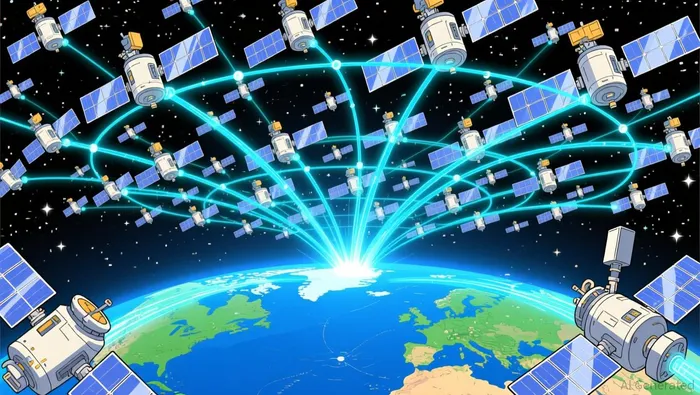
The Orbital Data Center system will operate in low-Earth orbit, utilizing optical inter-satellite links for high-speed data transmission and integrating with SpaceX's existing Starlink network to relay data to ground stations. The system is framed as a step toward achieving a Kardashev Type II civilization, which would harness the full energy output of the sun. The FCC has opened a public comment period, inviting feedback from competitors, environmental groups, and technical experts.
SpaceX has requested regulatory flexibility, including exemptions from standard deployment timelines and spectrum use rules, to accommodate the complexity of the proposal. The proposal also raises questions about long-term sustainability and the feasibility of managing a million satellites in low Earth orbit.
What Is the Strategic Motivation Behind the Orbital Data Center Plan?
The Orbital Data Center plan represents a strategic shift from internet-based satellite services to space-based computing infrastructure. The initiative aims to meet the growing global demand for AI computing by leveraging orbital solar energy and avoiding the limitations of Earth-based cooling and power systems.
SpaceX CEO Elon Musk has emphasized the importance of reducing the environmental impact of traditional data centers by shifting processing to space, where energy and cooling costs are minimal. The initiative is tied to the development of the Starship rocket, which SpaceX says will significantly lower launch costs and enable the deployment of large-scale, high-capacity satellite systems.
The proposed constellation would dramatically increase the number of satellites in orbit, raising concerns about space congestion and operational feasibility. The FCC approval is a prerequisite for moving forward, and SpaceX has requested flexibility in the deployment timeline.
What Are the Technical and Environmental Considerations of the Plan?
The proposed system would operate at altitudes between 310 and 1,240 miles, connected via laser-based optical links and integrated with the company's existing Starlink network. The system's potential to harness continuous solar power in space is positioned as a solution to the energy-intensive demands of AI training.
Orbital data centers aim to address the growing demand for AI processing by leveraging continuous solar power and eliminating terrestrial constraints such as energy and water use. This technology could reduce data transmission delays and alleviate pressure on Earth's overburdened infrastructure.
Experts argue that space-based solutions can provide a long-term solution to the energy and water-intensive needs of AI infrastructure. Companies like Google and Starcloud are already experimenting with orbital AI, with Google planning to launch two test satellites in the near future. While experts like David Bader acknowledge the engineering challenges, they see the potential for orbital AI to become a viable solution within three to five years.
What Are the Regulatory and Market Implications of the Plan?
The FCC's regulatory review will consider technical, environmental, and competition-related concerns, including the impact of a large satellite constellation on space debris and orbital congestion. The FCC acceptance does not imply approval, as the agency will assess submitted critiques before making a final decision.
The public comment period, open until March 6, will allow stakeholders to raise concerns about feasibility, environmental impact, and technical challenges. Potential concerns include orbital congestion, space debris, and the feasibility of managing a constellation of this scale.
SpaceX has emphasized the importance of its Starship rocket in reducing launch costs and enabling the deployment of large-scale, high-capacity systems. The proposed constellation is expected to operate with minimal environmental impact and would require no batteries for most of its operations. However, the plan raises concerns about space congestion, orbital plane competition, and the technical challenges of maintaining such a vast satellite network.
Amazon's satellite broadband initiative in Nigeria is progressing, but it must secure two additional licences—an ISP and an International Access Gateway licence—before it can deliver consumer and business internet services.
Amazon LEO has received a seven-year satellite landing permit from Nigeria's NCC, authorizing the use of Ka-band spectrum for Fixed Satellite Service (FSS), Mobile Satellite Service (MSS), and Earth Stations in Motion (ESIM) operations. However, Amazon will still need an Internet Service Provider and an International Access Gateway licence to deliver last-mile internet services to homes and businesses.
The ISP licence is required to sell internet access, while the Gateway licence is necessary for international connectivity and direct interconnection with global networks. Both licences have significant requirements, including proof of technical and financial capacity, market presence, and deployment plans. Nigeria's licensing framework is designed to ensure market oversight, competition, consumer protection, and service quality.
Nigeria's regulatory framework separates space-segment authorizations from last-mile and gateway permissions, ensuring that the NCC maintains control over market competition, consumer protection, and service quality. Amazon must comply with these requirements to operate at scale in Nigeria.
The FCC's regulatory review will consider technical, environmental, and competition-related concerns, including the impact of a large satellite constellation on space debris and orbital congestion. The FCC acceptance does not imply approval, as the agency will assess submitted critiques before making a final decision.
The public comment period, open until March 6, will allow stakeholders to raise concerns about feasibility, environmental impact, and technical challenges. Potential concerns include orbital congestion, space debris, and the feasibility of managing a constellation of this scale.
SpaceX has emphasized the importance of its Starship rocket in reducing launch costs and enabling the deployment of large-scale, high-capacity systems. The proposed constellation is expected to operate with minimal environmental impact and would require no batteries for most of its operations. However, the plan raises concerns about space congestion, orbital plane competition, and the technical challenges of maintaining such a vast satellite network.

Blending traditional trading wisdom with cutting-edge cryptocurrency insights.
Latest Articles
Stay ahead of the market.
Get curated U.S. market news, insights and key dates delivered to your inbox.






Comments
No comments yet