
SpaceX's Falcon 9 and Starlink: A Catalyst for Aerospace Valuation Upside


 Aime Summary
Falcon 9's Operational Efficiency: A New Benchmark
SpaceX's Falcon 9 rocket has become the gold standard for cost-effective and reliable satellite deployment. The company's recent achievement of launching two Falcon 9 missions within four hours from Florida's Space Coast on November 14, 2025-adding 87 Starlink satellites to its constellation-demonstrates unprecedented operational scalability. This rapid turnaround is a direct result of SpaceX's vertical integration strategy, where approximately 85% of rocket components are produced in-house, eliminating supply chain bottlenecks and reducing production costs.
Reusability remains the cornerstone of Falcon 9's efficiency. By landing, refurbishing, and relaunching the first-stage booster-the most expensive component-SpaceX has slashed launch costs . Internal estimates suggest the true cost per launch is as low as $28 million, far below the advertised $60 million, enabling projects like Starlink to achieve breakeven and profitability at scale.
Starlink Expansion: Meeting Global Broadband Demand
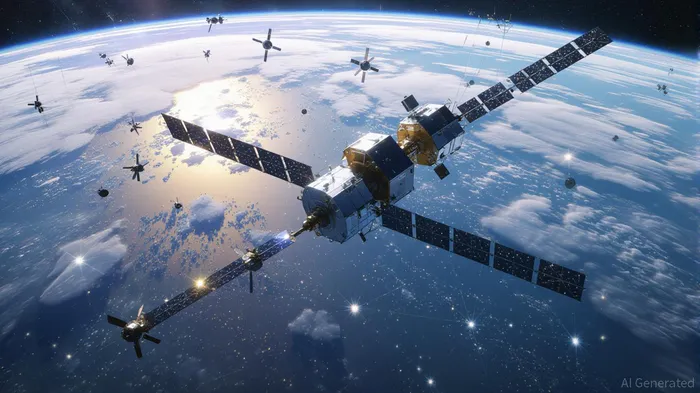 The rapid deployment of Starlink satellites underscores SpaceX's commitment to addressing the $1.5 trillion global broadband market, particularly in underserved regions. With over 5,000 satellites planned for its constellation, Starlink aims to provide low-latency, high-speed internet to rural and remote areas, a market segment where traditional terrestrial infrastructure is economically unviable.
This expansion is not just a technical feat but a strategic masterstroke. By leveraging Falcon 9's cost efficiency, SpaceX can amortize launch expenses across thousands of satellites, creating a virtuous cycle of scale and profitability. Analysts note that Starlink's potential .
Florida's Range Modernization: A Strategic Investment
in Florida's aerospace infrastructure, including the construction of a high-tech manufacturing facility dubbed the "Gigabay," is poised to amplify these gains. This expansion, expected to create 600 jobs by 2030, is more than a local economic boost-it's a strategic move to streamline production and launch operations. The state's business-friendly policies, existing launch infrastructure, and proximity to equatorial flight paths make it an ideal hub for scaling Starlink and other missions.
Modernizing Florida's Cape Canaveral Air Force Station and integrating automated systems for rapid turnaround further reduce downtime between launches. These improvements align with SpaceX's goal of achieving a launch every 2–3 days, a cadence that would dwarf competitors and solidify its dominance in the satellite deployment market.
Cost Reduction vs. Industry Realities: A Nuanced Debate
While SpaceX's cost-cutting strategies are widely lauded, some experts caution against overestimating the industry-wide impact. A study by Moon J. Kim, analyzing NASA's internal data from 1996 to 2024, found a 2.82% annual increase , attributing this to an oligopolistic market structure where efficiency gains are retained as profit rather than passed to customers. However, SpaceX's internal cost advantages-such as its proprietary manufacturing and rapid iteration processes-suggest that the company's financial discipline will outpace industry trends, particularly for proprietary projects like .
Investment Implications for Aerospace Firms
The ripple effects of SpaceX's advancements extend beyond its own balance sheet. The Florida expansion is expected to stimulate demand for suppliers, including manufacturers of , , and logistics services. Additionally, the state's emergence as an could attract competitors and complementary firms, fostering a cluster effect akin to .
For , SpaceX's cost reductions lower the barrier to entry for deploying constellations, accelerating innovation in , IoT, and defense applications. Investors should also monitor how traditional aerospace firms adapt-whether through partnerships, R&D investments, or regulatory lobbying-to remain competitive in a market increasingly dominated by agile, cost-driven players.
Conclusion
SpaceX's Falcon 9 and Starlink initiatives represent more than technological progress; they are catalysts for a new in aerospace. By combining , reusability, and strategic infrastructure investments, the company is not only reducing costs but redefining what's possible in and global connectivity. For investors, the strategic valuation upside lies in SpaceX's ability to scale these efficiencies while catalyzing a broader . As Florida's aerospace ecosystem matures and global broadband demand surges, the companies best positioned to capitalize on this shift-both within and beyond SpaceX's orbit-stand to reap significant rewards.

Delivering real-time insights and analysis on emerging financial trends and market movements.
Latest Articles
Stay ahead of the market.
Get curated U.S. market news, insights and key dates delivered to your inbox.






Comments
No comments yet