
SpaceX Falcon 9 Launch Drives Starlink Expansion and Investor Interest
 Aime Summary
- , 2026 from Vandenberg Space Force Base
- Falcon 9 rocket's first stage booster was used for the 10th time, highlighting reusability
- Two additional SpaceX Starlink launches are scheduled this week from Vandenberg, with dates on April 6 and April 9
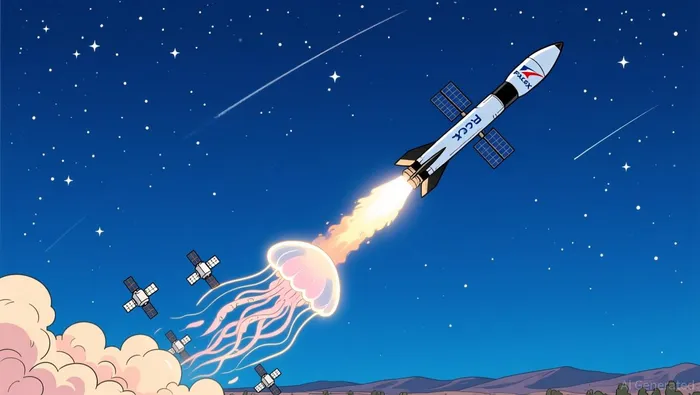
- Rocket plume effects, like the 'jellyfish plume' seen over Fresno, are common but can confuse onlookers
- Turkish companies such as Aselsan and Fergani Space are leveraging SpaceX launches to expand their space technology capabilities
SpaceX is rapidly advancing its vision of global broadband internet by launching 27 new Starlink satellites into low-Earth orbit from Vandenberg Space Force Base on Monday, April 6, 2026. The Falcon 9 rocket used in the mission was equipped with a first-stage booster that had previously supported nine other launches, a feature central to SpaceX's strategy of cost reduction and mission efficiency. The launch not only adds to the growing Starlink constellation but also demonstrates SpaceX's ability to reuse rocket components, a significant competitive advantage in the space industry.
Rocket launches from Vandenberg are becoming more frequent as SpaceX works to meet its Starlink deployment goals. Two additional Falcon 9 launches are scheduled for the week, with the first on April 6 and the second on April 9. These launches are part of a broader trend of commercial and national defense missions from the West Coast. For example, Northrop Grumman is also planning a national defense mission during the same week. While these missions are essential for expanding satellite-based broadband internet and defense capabilities, they also raise logistical and environmental questions, especially as launch frequency increases.
For some, the visual impact of these launches can be as memorable as the technological achievements. A SpaceX Falcon 9 launch created a striking 'jellyfish plume' effect in the skies over Fresno, leaving many residents initially confused or concerned about potential issues. These atmospheric phenomena, while harmless, highlight the growing presence of rocket launches in everyday life and the need for public education on space operations.
What Is the Status of SpaceX Launches This Week?
SpaceX is actively deploying Starlink satellites through two scheduled Falcon 9 launches from Vandenberg Space Force Base this week. The first of these launches took place on April 6 and involved 27 new Starlink satellites, while the second is set for April 9. Such a concentrated launch schedule underscores SpaceX's commitment to building out its broadband internet constellation. While the company has a proven track record of efficient and reliable rocket launches, delays are not uncommon in the aerospace industry, and launch schedules can shift due to technical or weather-related issues.
This week's launches are also significant in the broader context of SpaceX's operations. The Falcon 9 rocket has now completed its 10th mission with the same first-stage booster, a testament to its reusability and cost efficiency. Such performance is a key differentiator for SpaceX in a market where launch costs have traditionally been a major barrier to expansion.
Why Are Turkish Companies Using SpaceX for Satellite Launches?
Turkish companies like Aselsan and Fergani Space are leveraging SpaceX's Falcon 9 rocket to launch satellites that support space-based Internet of Things (IoT) solutions and communications infrastructure. Aselsan recently launched its second satellite, , from California aboard a SpaceX rocket. The satellite uses a dedicated LoRa communication system that provides wide-area coverage with low energy consumption, and all systems were developed in-house. This level of technological self-reliance is a strategic goal for Turkey's space industry, which aims to build an independent and competitive technology ecosystem.
FGN-100-D3, the latest satellite from Fergani Space, was also launched via a SpaceX mission. The satellite is equipped with communications and navigation capabilities, and it features systems developed entirely in-house, marking a milestone for the company's technological development. By partnering with SpaceX for satellite launches, Turkish companies are accelerating their presence in the space industry while maintaining control over their technological capabilities.
As SpaceX continues to expand its Starlink network and support international satellite launches, investors are closely watching the company's ability to scale its operations efficiently. The reusability of the Falcon 9 rocket, the frequency of Starlink deployments, and the growing involvement of international partners like Turkish technology firms all contribute to a dynamic and evolving space industry. For retail investors and those curious about the financial implications of space exploration, these developments represent more than just scientific progress—they signal a potential shift in how global communication and internet access are delivered, all from orbit.

Stay ahead of the market.
Get curated U.S. market news, insights and key dates delivered to your inbox.


AInvest
PRO
AInvest
PRO



Comments
No comments yet