
SpaceX's Dragon Dilemma: How Musk's Feud with Trump Could Shake the Stars
The geopolitical stakes of space exploration just got personal. In June 2025, Elon Musk's threat to decommission SpaceX's Dragon spacecraft—a move that would cripple NASA's operations and unsettle Pentagon contracts—highlighted the fragility of U.S. space dominance. The spat with President Trump, rooted in ideological clashes and financial leverage, has thrown into sharp relief both the strategic risks and opportunities tied to SpaceX's irreplaceable role in space. Here's what investors need to know.
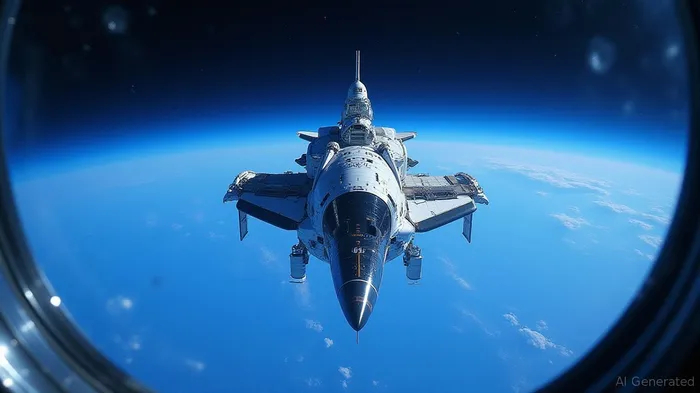
The Dragon's Strategic Importance: No Substitute in Sight
The Dragon spacecraft is NASA's only operational crew transport to the International Space Station (ISS). Since the Space Shuttle's retirement in 2011, SpaceX has been the sole U.S. provider for crewed missions, with Boeing's Starliner repeatedly delayed. With $843 million in contracts to deorbit the ISS by 2030 and $22 billion in Pentagon deals for military launches, the Dragon program isn't just a spaceship—it's the backbone of U.S. space strategy.
The Pentagon's reliance is equally stark. SpaceX accounts for 98% of U.S. military and commercial launches, thanks to its Falcon rockets. Even delays in ULA's Vulcan rocket certification mean SpaceX remains indispensable for critical payloads like spy satellites.
Musk's Threat and Retraction: A Political Bluff or Real Risk?
On June 5, Musk announced via X that SpaceX would “decommission Dragon immediately” in retaliation for Trump's threats to cancel government contracts. The markets reacted: shares of BoeingBA-- (BA) and Lockheed Martin (LMT)—SpaceX's closest rivals—briefly surged, while the NASDAQ Aerospace & Defense index dipped.
But within hours, Musk walked back the threat, citing “public appeals for cooler heads.” This flip-flop suggests the move was more about signaling leverage than a real exit. Still, the episode underscores two truths:
1. Geopolitical vulnerability: The U.S. lacks a backup plan for crewed missions or military launches.
2. Musk's negotiating power: His ability to weaponize SpaceX's indispensability could force better terms for contracts.
Geopolitical Implications: From ISS to the Moon
The feud's ripple effects extend far beyond short-term contract drama. NASA's Artemis program, relying on SpaceX's Starship for lunar landings, faces uncertainty if political tensions escalate. A delay or cancellation of Starship could jeopardize the 2027 Artemis III moonwalk, a linchpin of U.S. space prestige.
Meanwhile, Russia's Soyuz—NASA's backup—remains an option, but it's a politically fraught alternative given U.S.-Russia tensions. For Pentagon planners, losing SpaceX's launch capacity could stall critical national security missions, from missile warning satellites to GPS upgrades.
Investment Considerations: Riding the Volatility or Biding Time?
Investors face a paradox: SpaceX's dominance creates both risk and opportunity.
Risks:
- Contract cancellation fears: While actual termination is unlikely (the legal and operational hurdles are too high), periodic flare-ups could spook markets.
- Competitor disruption: If ULA's Vulcan finally clears certification, or Blue Origin secures Pentagon contracts, SpaceX's margins could compress.
Opportunities:
- Long-term stability: SpaceX's $22 billion pipeline and 60% share of NSSL Phase 3 contracts ($5.9 billion) suggest cash flow resilience.
- Musk's leverage: His willingness to threaten walkaways might pressure NASA and the Pentagon to offer favorable terms, boosting margins.
For public investors, the best proxies are:
1. Aerospace suppliers like Aerojet Rocketdyne (AJRD) or Ball Aerospace (BLL), which benefit from SpaceX's launches.
2. ETFs like the iShares U.S. Aerospace & Defense ETF (ITA), which track broader industry trends.
3. Tesla (TSLA): While not a direct play, Musk's public disputes often correlate with volatility in his ventures—monitor Tesla's stock for sentiment clues.
Conclusion: Buy the Dip, but Watch the Stars
SpaceX's Dragon program isn't just a spacecraft—it's a geopolitical linchpin. While Musk's posturing creates short-term market whiplash, the structural demand for SpaceX's services ensures long-term resilience. Investors should treat dips in aerospace stocks as buying opportunities, particularly if tied to overblown fears of contract cancellations.
However, the true risk lies in overestimating competitors' readiness. Until Vulcan or Starliner proves reliable at scale, SpaceX remains the only game in town. For now, the stars—and the contracts—still belong to Musk.
Investment advice: Consider overweighting aerospace ETFs during market dips caused by Musk-Trump drama. Avoid speculative bets on competitors until they demonstrate launch reliability.

Delivering real-time insights and analysis on emerging financial trends and market movements.
Latest Articles
Stay ahead of the market.
Get curated U.S. market news, insights and key dates delivered to your inbox.
AInvest
PRO
AInvest
PRO



Comments
No comments yet