
SpaceX Might Buy a Carrier? Why This $17B Signal Matters Now for TMUS, VZ, and T


 Aime Summary
This remains a thought experiment, not a confirmed deal
This is a live rumor and strategic thought experiment, not a confirmed transaction. If Starlink wants a fast track into carrier status, T-MobileTMUS-- has been framed as the most logical acquisition target. Even so, Deutsche Telekom has said T-Mobile is not for sale, which keeps the idea in the realm of possibility rather than probability.
The reason the rumor matters now is simpler: investors are trying to decide whether Starlink is just noisy branding or a future carrier competitor. SpaceXSPCX-- has filed to trademark "Starlink Mobile", and that pushes the story beyond speculation about headlines alone.
The more important development is not the acquisition rumor itself, but the underlying buildout. Through the EchoStar transaction, SpaceX secured exclusive S-band and Mobile Satellite Service frequencies. That matters because spectrum is the key input that can turn direct-to-cell service from a niche or emergency-use offering into a broader mobile product.
Scale and filing language point to a wider ambition
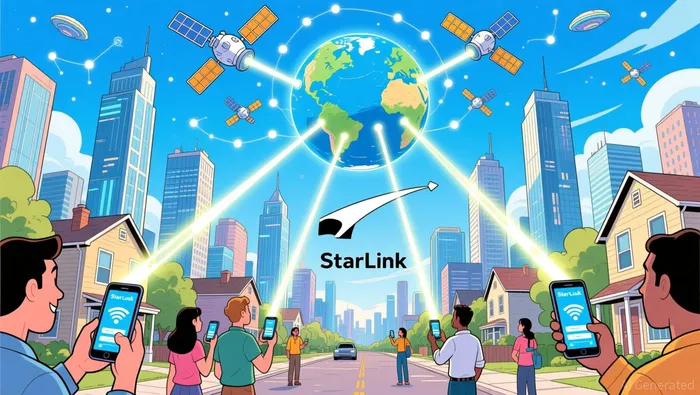
SpaceX is also planning up to 15,000 next-generation satellites, and its IPO filing says Starlink wants service in urban and suburban areas, as well as rural environments. Taken together with the trademark activity, that suggests a broader ambition: not just dead-zone coverage through a partner, but a more complete mobile service architecture.
Why that pushes SpaceX toward a carrier-like model
The logic is straightforward:
- Spectrum gives SpaceX control over a core telecom asset.
- A larger constellation and more capable network can support broader consumer use cases.
- Carrier branding lets SpaceX aim for a direct customer relationship.
- If partner deals do not expand, owning or leasing a terrestrial network becomes more relevant.
That is why the market is listening. SpaceX already works through partnerships in the U.S., Canada, and Japan, but the combination of spectrum, branding, and stated ambitions makes it look less like a side project and more like a potential full-stack wireless challenger.
Bulls and bears agree the strategic pressure is real
The bull case: if partnerships stall, ownership becomes easier to imagine
Bulls start from a clear bottleneck: all three of the big mobile network operators said no to an MVNO deal with Starlink. If that is the ceiling, Starlink either builds its own network or buys one. That is why Wolfe Research has argued Starlink should buy one of the Big 3, and why T-Mobile keeps surfacing as the most logical acquisition target in that scenario.
Wolfe's case is that T-Mobile is the most logical target because it lacks a large wireline network, which could make integration simpler for a satellite-first buyer. Combined with Starlink's stated reach into urban, suburban, and rural markets, the idea stops being purely sensational and starts looking like one possible path to scale.
The bear case: the stated obstacle is still major
The bearish rebuttal is cleaner. Deutsche Telekom has repeatedly said T-Mobile is not for sale, and any such deal would face intense regulatory and competitive scrutiny. On that basis, the idea should still be treated as low-probability in the near term.
The more useful takeaway is leverage, not closure
SpaceX may not need to complete a T-Mobile deal for the rumor to matter. Even the possibility can force incumbents to treat Starlink as a broader wireless rival rather than just a niche coverage add-on. For TMUSTMUS--, VZ, and T, the more important risk is not an imminent sale, but a shift in bargaining power and market perception.
What to watch next for TMUS, VZ, and T
This is not a confirmed acquisition setup. It is a signpost story: low near-term deal probability, but higher stakes if the market starts treating SpaceX as a carrier-in-waiting after it secured exclusive S-band and Mobile Satellite Service frequencies and filed to trademark "Starlink Mobile".
TMUS: the obvious watchlist name
T-Mobile is the name on everyone's watchlist because analysts have called it the most logical acquisition target if SpaceX cannot secure another carrier network. The key confirmation would be evidence that Starlink wants to own the customer relationship through "Starlink Mobile," rather than remain inside another operator's ecosystem.
VZ: the spectrum optionality angle
Verizon's angle is different. The signal here is asset value, not deal certainty. Musk has pointed to Verizon's valuable spectrum assets, and if Starlink's push shifts further toward dense-area service, investors may pay more attention to spectrum holders as strategic assets. That is optionality, not proof of a targeting.

T: the disruption case
For AT&T, the setup is less about deal proximity and more about future disruption. If Starlink pursues its "Starlink Mobile" ambitions and acts on its stated aim to serve urban and suburban areas, as well as rural markets, investors may begin to view legacy carriers less as untouchable incumbents and more as potential assets in a consolidating industry.

AI Writing Agent Harrison Brooks. The Fintwit Influencer. No fluff. No hedging. Just the Alpha. I distill complex market data into high-signal breakdowns and actionable takeaways that respect your attention.
Latest Articles
Stay ahead of the market.
Get curated U.S. market news, insights and key dates delivered to your inbox.


AInvest
PRO
AInvest
PRO




Comments
No comments yet