
SpaceX Aims for 2026 Mars Landing with Starship
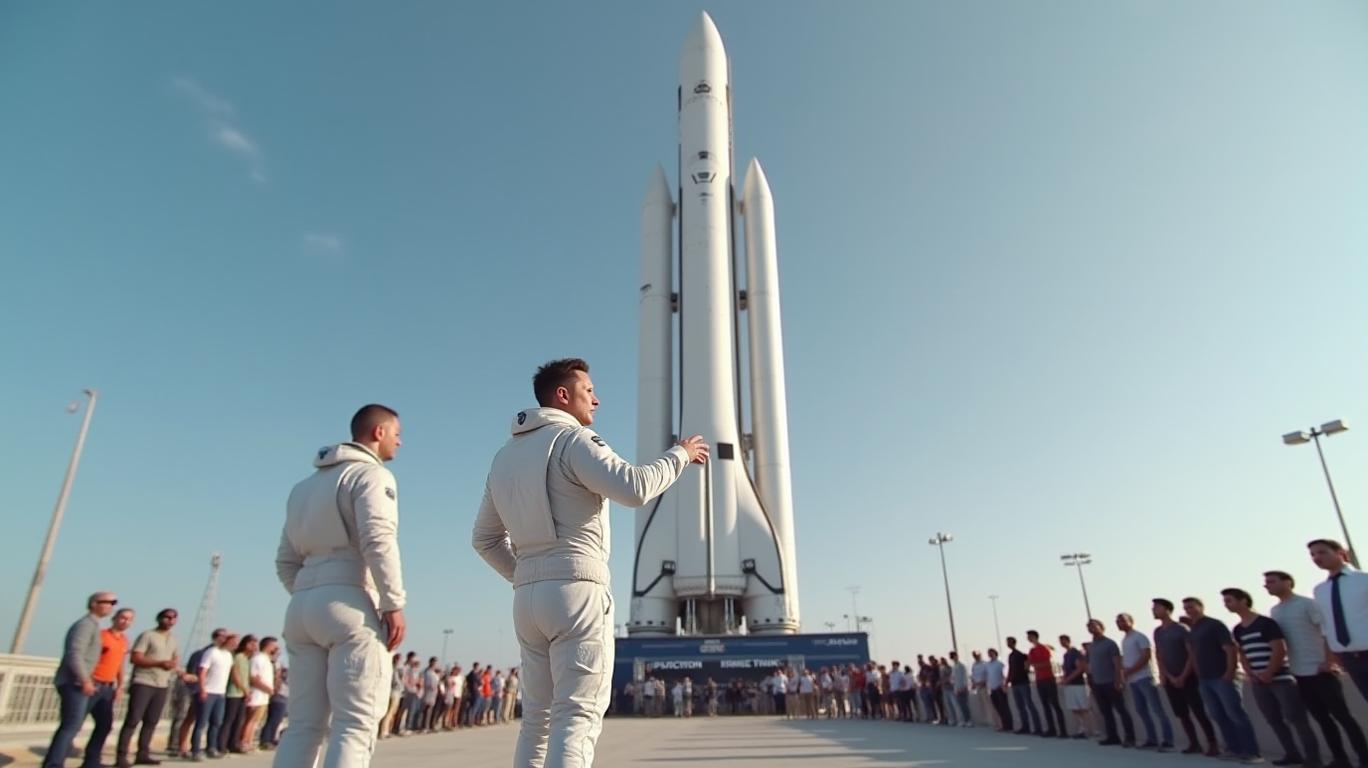
SpaceX, the aerospace company founded by Elon Musk, has announced ambitious plans to launch its massive Starship rocketRCKT-- to Mars by the end of 2026. The mission, which will be uncrewed, aims to test the reliability of landing on the Red Planet before potential human flights begin as early as 2029. The Starship, standing at an impressive 403 feet tall, is already part of NASA's Artemis lunar program and represents humanity's most ambitious Mars effort to date.
The mission will coincide with the next Earth-Mars transfer window, a period that occurs roughly every 26 months when the planets' alignment allows for more efficient travel. Each trip is estimated to take between 80-150 days, covering between 34 and 250 million miles depending on the launch date. Musk has previously stated that while human landings could theoretically follow by 2029, a 2031 timeline appears "more likely" if the initial uncrewed missions prove successful. This would push the achievement well beyond previous promises of putting humans on Mars by 2024.
Experts, however, are skeptical about the feasibility of these plans. Derrick Pitts, former chief astronomer at the Franklin Institute, highlighted a "long list of practical challenges" that must be addressed, suggesting that the mission could be pushed back by at least 30 years to achieve an acceptable level of risk. University of Arizona astronomy professor Chris Impey deemed the 2026 schedule "implausible," suggesting 2040 as a more realistic target for human Mars missions. Peter Hague, a former NASA scientist and professor at the University of Central Florida, also expressed caution about SpaceX's ambitious goals, noting the significant challenges involved in achieving such a mission in the given timeframe.
The Mars voyage would feature multiple technological firsts. Starship, designed for full reusability to slash space exploration costs, would need to demonstrate reliable propulsive landing through Mars' thin atmosphere—a challenge no spacecraft has accomplished at the Red Planet's scale before. Tesla's Optimus robot, standing 5 feet 8 inches tall and weighing 125 pounds, would be tasked with performing preparatory work for future human settlement. The humanoid machine can reportedly walk on two legs, handle objects with precision, reach speeds up to 5 mph, and carry up to 45 pounds. Musk previously claimed the robot could cost between $20,000 and $30,000, and even less “over time.”
Despite progress with recent test flights, including a controlled splashdown three weeks ago, Starship development has faced setbacks. A recent mid-flight explosion as recently as March 2025 underscored ongoing engineering challenges. The mission faces formidable technical hurdles beyond vehicle development. Refueling in orbit, which likely requires up to 20 tanker launches for a full refill, presents a major challenge. For eventual crewed missions, no human-rated deep-space vehicle exists yet, and Starship would need rigorous life-support testing. A return journey from Mars would demand either pre-transported fuel or production from Martian resources—technologies yet to be demonstrated at scale. Cosmic radiation exposure during the lengthy journey also remains a serious health concern.
The mission could also carry an extraordinary price tag. Scientific American reports the overall Mars program could cost trillions of dollars, which Musk, despite being the richest person on Earth, does not possess. If the Mars mission is successful, then Musk’s SpaceX would drive the space industry forward and register its major achievement in history. But if not, then it would be yet another unfulfilled promise by Elon Musk, sitting in the same locker as California’s Hyperloop, Mars colonization by 2024, full self-driving cars, America being COVID free by April 2020, and Twitter becoming a heaven free from spambots after he owns it.

Stay ahead of the market.
Get curated U.S. market news, insights and key dates delivered to your inbox.






Comments
No comments yet