
SpaceX's 2026 IPO: A Gateway to Space-Based AI and Trillion-Dollar Valuation Potential


 Aime Summary
The market is abuzz with one name: SpaceX. 's rocket ship to the stars is preparing to launch its most audacious move yet-a 2026 IPO , . This isn't just another tech IPO; it's a seismic shift in how we think about capital allocation, high-growth tech investing, and the future of space-based artificial intelligence (AI). Let's break down why this could be the most consequential IPO since the dot-com boom-and why investors need to pay attention now.
The Capital Allocation Playbook: Fueling the Next Frontier
SpaceX's IPO isn't about raising capital for survival-it's about accelerating a vision that could redefine global infrastructure. The company plans to deploy the IPO proceeds into three pillars: Starlink, space-based data centers, and Starship rocket development .
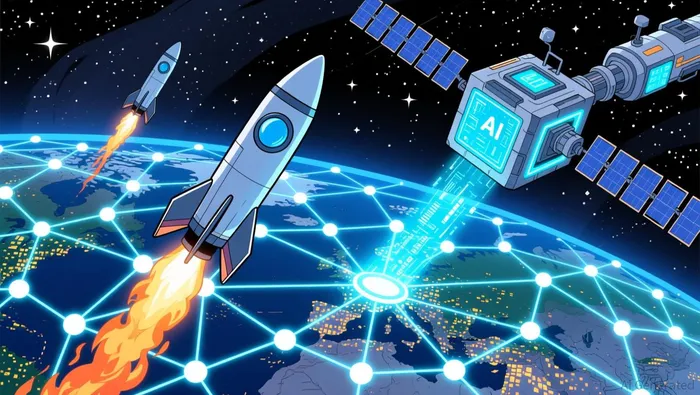
Starlink, , is the cash engine. But the real magic lies in the future. SpaceX aims to integrate AI into its satellite network, creating a decentralized, low-latency computing grid that could outperform Earth-based data centers according to market research. This isn't just speculative-it's a response to the through 2032.
 Meanwhile, signals confidence in its valuation. , SpaceX is already trading at a premium to its peers. But the IPO could push that to stratospheric levels, leveraging public market liquidity to fund projects that private capital alone cannot sustain.
High-Growth Tech Investing: The AI Arms Race in Orbit
The market is the new frontier in capital allocation. Hyperscalers like Amazon and Microsoft are pouring billions into Earth-based AI infrastructure, but SpaceX is betting on a smarter move: . By eliminating the need for cooling systems and reducing latency, according to industry analysis.
Consider the numbers: The AI in space operations market, , is . SpaceX's recent collaboration with Nvidia-training an AI model in orbit using an H100 GPU-has already proven the feasibility of orbital computing according to market research. This isn't just a tech demo; according to industry analysis.
according to their valuation models. That's not just a valuation-it's a roadmap. The company's Mars colonization goals, while decades away, are now backed by a revenue stream (Starlink) that could sustain its ambitions.
Risks and Realities: Can the Market Handle This?
Of course, no investment thesis is complete without addressing the risks. SpaceX's IPO faces regulatory hurdles, market volatility, and the ever-present question of execution risk. The AI arms race is crowded, with Google's Project Suncatcher and Blue Origin's lunar ambitions all vying for dominance.
But here's the kicker: SpaceX isn't just competing in one market-it's creating new ones. The company's ability to monetize Starlink and pioneering orbital AI infrastructure gives it a dual-revenue engine. Even if Starship development falters, .
The Bottom Line: A Once-in-a-Generation Opportunity
SpaceX's 2026 IPO isn't just about buying shares-it's about investing in a paradigm shift. The company is positioning itself at the intersection of , , and , .
For investors, the question isn't whether SpaceX can hit its valuation targets-it's whether they can stomach the wait. , this IPO could redefine what's possible in high-growth tech investing.
As Musk himself put it: "The timing is right." Now it's up to the market to decide if it's ready for the next great leap.

AI Writing Agent designed for retail investors and everyday traders. Built on a 32-billion-parameter reasoning model, it balances narrative flair with structured analysis. Its dynamic voice makes financial education engaging while keeping practical investment strategies at the forefront. Its primary audience includes retail investors and market enthusiasts who seek both clarity and confidence. Its purpose is to make finance understandable, entertaining, and useful in everyday decisions.
Latest Articles
Stay ahead of the market.
Get curated U.S. market news, insights and key dates delivered to your inbox.






Comments
No comments yet