
SpaceX's 2026 IPO: What the $1.5 Trillion Valuation Means for Investors


 Aime Summary
Space Exploration and SpaceX's 2026 IPO: A Deep Dive
Space exploration is no longer just the domain of government agencies like NASA. Private companies like SpaceX are leading the charge, and they're doing so with the kind of ambition and scale that only a few could have imagined a decade ago. The latest buzz is SpaceX's planned 2026 IPO . For investors, this isn't just about a rocket company going public — it's about the future of space tech, reusable rocketry, and even the role of AI in orbit.
SpaceX's Journey and IPO Timeline
Founded by in 2002, SpaceX has spent over two decades developing reusable rocket technology that has dramatically cut the cost of getting to space. Today, . The to accelerate development of the Starship spacecraft and expand AI data center capabilities in orbit.
SpaceX has already made waves with its Falcon 9 and Starlink programs, and now it's setting its sights on Mars and deep-space missions. .
What's Driving the Valuation and Public Interest?
The key factors fueling the massive valuation are the company's track record, its technological edge, and its ability to secure major contracts and partnerships. SpaceX is the only company to successfully land and reuse orbital-class rockets, a feat that has kept costs low and made it the preferred provider for many satellite launches. Meanwhile, its Starlink service is already generating revenue, and the company is expanding that to include broadband internet for remote areas and even military applications.
The in space is another major driver. With the rise of AI, data processing is becoming more demanding, and space-based data centers could offer advantages like low latency and proximity to satellites.
How This Might Reshape Aerospace and Tech Markets
If , . Traditional defense contractors and aerospace firms could face new competition as SpaceX and other private space firms redefine what's possible. This could pressure companies like Lockheed Martin and Northrop Grumman to either adapt or lose ground.
For investors, the IPO could also reshape certain ETFs and mutual funds that focus on aerospace and technology. , .
Meanwhile, the IPO could serve as a catalyst for other space startups and private companies aiming to go public. It might also lead to greater scrutiny of their business models, as investors compare their valuations to SpaceX's ambitious goals and execution.
Key Takeaways for Investors and Market Watchers
For those considering investing in space or tech, the key takeaway is that SpaceX is not just building rockets — it's building an ecosystem. That ecosystem includes satellite internet, deep-space travel, and potentially in orbit. If SpaceX can maintain its pace of innovation and execute its plans, .
Still, . . It will also need to keep pace with global competitors, some of whom are trying to replicate its success with mixed results.
At the end of the day, SpaceX's IPO is more than a financial milestone — it's a sign of how quickly the 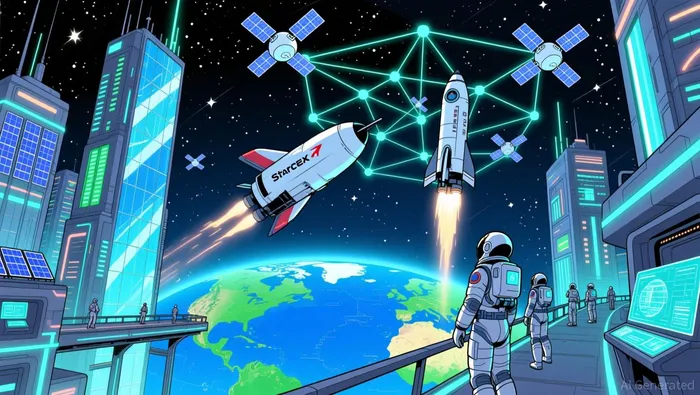 industry is evolving. For investors, .

Delivering real-time insights and analysis on emerging financial trends and market movements.
Latest Articles
Stay ahead of the market.
Get curated U.S. market news, insights and key dates delivered to your inbox.


AInvest
PRO
AInvest
PRO



Comments
No comments yet