
SpaceX's 2025 Launch Surge and Its Implications for the Commercial Space Sector


 Aime Summary
The Market Catalyst: SpaceX's Starlink and the $1.8 Trillion Opportunity
SpaceX's Starlink service, , according to market data. This growth is not an isolated success but a harbinger of a $1.8 trillion space market by 2035, according to industry forecasts. according to market trends. Such trends are creating a virtuous cycle: cheaper access to space drives more satellites, which in turn demand robust infrastructure and supply chains.
The aerospace supply chain is already adapting. , while innovations like reusable rockets and commercial space stations are lowering barriers to entry according to industry reports. This infrastructure expansion is not just technical but financial, according to a recent release.
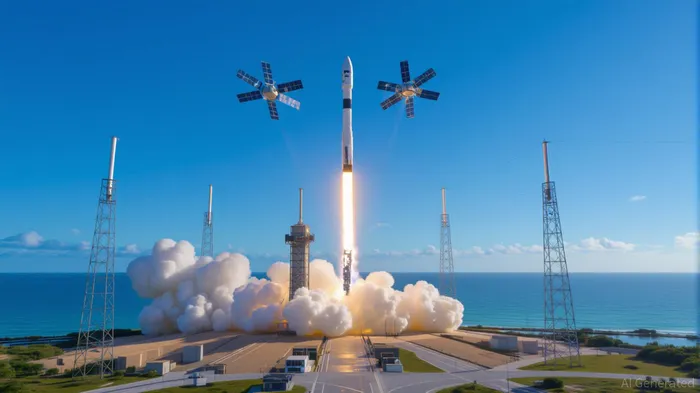
Investment Opportunities: Satellite Infrastructure and Supply Chain Innovators
The surge in demand has spotlighted companies addressing critical gaps in satellite connectivity, propulsion, and in-space manufacturing. Here are three high-conviction opportunities:
- Apolink: Bridging LEO Connectivity Gaps
Apolink, a Y Combinator-backed startup, is tackling the persistent issue of dead zones in low Earth orbit (LEO) satellite communication. By deploying a hybrid radio-optical network, the company aims to achieve . , led by oversubscribed demand, according to a recent report. For context, , validating its market potential.
Varda Space Industries: Manufacturing in Space
Varda Space Industries, according to a press release, is pioneering in-space manufacturing. Its W-5 mission, launched in October 2025, unattainable on Earth. With partnerships in biotech and advanced materials, .Benchmark Space Systems: Propulsion for the New Space Era
, a propulsion specialist, . As satellite constellations (like Starlink) require frequent orbit adjustments, companies like Benchmark are becoming indispensable. Their focus on cost-effective, high-performance propulsion systems .
Regional Hubs and Strategic Alliances
Investment is not confined to startups. Regional ecosystems are emerging as strategic assets. North Carolina's aerospace platform, for instance, combines workforce training with pre-certified industrial sites to attract firms in satellite manufacturing and logistics according to a recent article. Similarly, Ohio's hypersonic and autonomous defense hubs reflect the dual-use potential of aerospace technologies, appealing to both commercial and government clients according to a tech analysis. Investors should monitor these hubs for early-stage opportunities.
Risks and the Path Forward
While the sector's momentum is undeniable, risks persist. Regulatory hurdles, technical delays, and the capital intensity of space ventures remain challenges. However, companies demonstrating clear pathways to commercialization-like Apolink's 2026 demo mission or Varda's pharmaceutical trials-are better positioned to navigate these risks.
For investors, the key is to align with firms that bridge innovation and scalability. As SpaceX's launch surge accelerates the commercialization of space, the winners will be those who build the infrastructure to sustain it.

Delivering real-time insights and analysis on emerging financial trends and market movements.
Latest Articles
Stay ahead of the market.
Get curated U.S. market news, insights and key dates delivered to your inbox.






Comments
No comments yet