
SpaceX's 2025 Launch Surge and Its Implications for the Commercial Space Economy


 Aime Summary
Technical Advancements: The Starlink v2 Mini Satellite
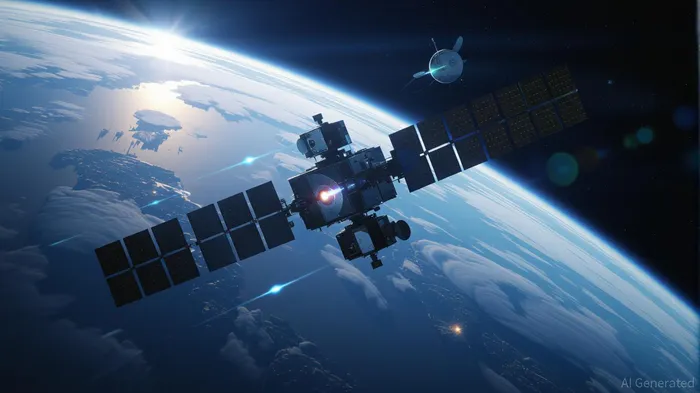
The satellites driving this expansion, the Starlink v2 Mini, represent a leap in satellite design and functionality. , , along with to deliver high-bandwidth connectivity. Their optical intersatellite links, , enable a seamless global mesh network. These technical specifications not only enhance user experience but also reduce operational costs, as before controlled deorbiting.
Economic Impact: Cost Reduction and Market Expansion
SpaceX's launch surge has slashed the cost of accessing orbit, . This cost reduction has democratized space access, enabling universities, startups, and smaller nations to participate in satellite deployment. According to a report by , , driven by SpaceX's role in normalizing frequent, low-cost launches. Starlink itself is already a revenue powerhouse, .
The economic ripple effects extend beyond SpaceX. The satellite broadband market, , , fueled by demand for connectivity in remote, maritime, and aviation sectors. Suppliers of propulsion systems, antennas, and ground station hardware are benefiting from this growth, while SpaceX's -such as dynamic beamforming and edge computing-open new avenues for enterprise and government applications.
Supply Chain Transformations: Vertical Integration and Competitor Adaptations
SpaceX's supply chain strategy, , has set a new industry benchmark. This hybrid model balances cost control with flexibility, enabling rapid iteration and scaling. By 2025, , a feat made possible by streamlined manufacturing. Competitors are now forced to adapt. Traditional satellite operators like Eutelsat and Intelsat are pivoting to multi-orbit strategies, combining geostationary (GEO), medium-earth orbit (MEO), and low-earth orbit (LEO) capabilities to compete with Starlink's low-latency advantages.
New entrants are also emerging. Amazon's Project Kuiper, set to launch in late 2025, aims to challenge SpaceX with similar low-cost broadband services. Meanwhile, international rivals such as China's Space Pioneer and Cosmoleap are leveraging government support and recovery technologies to enter the market. Even established players like Blue Origin and Rocket LabRKLB-- are developing cost-effective launch solutions to counter SpaceX's dominance.
Long-Term Implications: A Reshaped Space Economy
The long-term economic impact of SpaceX's 2025 activities is twofold. First, the company's advancements in reusable rocketry and satellite production are accelerating the transition from low-volume, high-cost aerospace manufacturing to mass satellite production. By 2025, of all satellites in orbit, . Second, the integration of space-based technologies-such as Earth observation and positioning, navigation, and timing (PNT) systems-is revolutionizing supply chain and transportation management. The World Economic Forum estimates .
For investors, the key takeaway is clear: SpaceX is not merely a space transportation company but a foundational infrastructure player in the emerging space economy. Its ability to drive down costs, scale rapidly, and innovate technologically positions it to dominate the satellite broadband and launch services markets for years to come. However, the rise of competitors and regulatory challenges-particularly for Starship's deep-space ambitions-will shape the trajectory of this growth.
Conclusion
SpaceX's 2025 launch surge exemplifies the transformative power of vertical integration, reusability, and strategic supply chain management. By redefining the economics of satellite deployment, the company has not only expanded global connectivity but also spurred a wave of innovation and competition across the aerospace industry. For investors, . As SpaceX continues to push the boundaries of what is possible, its role as a cornerstone of the commercial space economy will only solidify.

Delivering real-time insights and analysis on emerging financial trends and market movements.
Latest Articles
Stay ahead of the market.
Get curated U.S. market news, insights and key dates delivered to your inbox.




Comments
No comments yet