
SpaceX's $2 Billion xAI Bet: A Masterstroke in Musk's AI Ecosystem Play
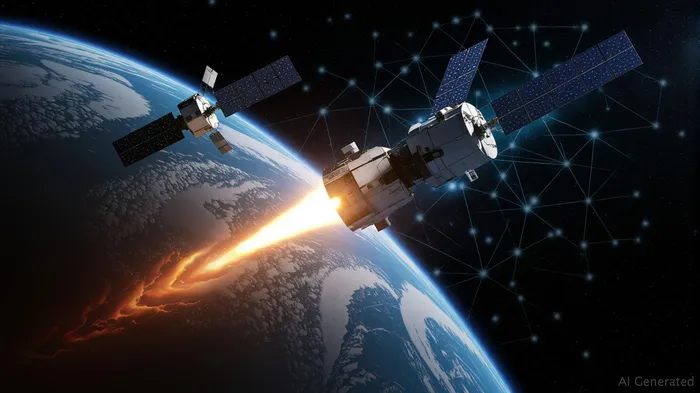
Elon Musk's latest strategic move—SpaceX's reported $2 billion investment into xAI as part of a $5 billion equity round—marks a bold acceleration of his vision to build a vertically integrated AI ecosystem. By aligning xAI's capabilities with SpaceX, TeslaTSLA--, and X (formerly Twitter), Musk aims to create a synergistic network where advanced AI fuels growth across all corners of his ventures. This move not only positions xAI to rival OpenAI but also sets the stage for transformative applications, from Starlink customer service to autonomous robots and social media moderation. Yet, the path forward is fraught with risks, from regulatory hurdles to the high costs of AI model training. Let's dissect the implications.
The Strategic Play: xAI as the Ecosystem's Nervous System
The $2 billion investment into xAI, part of a $5 billion equity round, underscores its role as a linchpin of Musk's ventures. Post-merger with X, the combined entity's $113 billion valuation reflects confidence in xAI's potential to unify data, infrastructure, and AI models across SpaceX, Tesla, and X. This integration creates a closed-loop ecosystem:
- Starlink: Grok, xAI's chatbot, is already powering customer support for Starlink's global internet service. Imagine Grok predicting user needs, troubleshooting issues, or even managing satellite networks autonomously.
- Tesla's Optimus Robots: Integrating Grok's language and reasoning capabilities could enable Optimus to perform complex tasks—like assembly-line repairs or warehouse logistics—by understanding spoken commands or contextual cues.
- X (Twitter): Grok could refine content moderation, personalize recommendations, or even generate hyper-targeted ads, leveraging X's massive user base to train its models on real-world interactions.
The goal is clear: to avoid fragmentation by ensuring all Musk companies share a common AI backbone. This contrasts sharply with rivals like OpenAI, which operates independently of broader corporate networks. The result? xAI gains a data advantage from SpaceX's satellites, Tesla's vehicles, and X's social graph—a treasure trove for training robust models.
Competing with OpenAI: A Battle for AI Dominance
OpenAI's lead in the public eye—thanks to ChatGPT's popularity—is undeniable. But xAI's advantage lies in its vertical integration. While OpenAI sells APIs to third parties, xAI can directly embed its models into SpaceX's rockets, Tesla's cars, and X's platforms. This creates a flywheel effect:
- Data Synergy: Every Tesla sold, Starlink subscribed to, or tweet analyzed feeds xAI's training data, improving model accuracy and reducing costs over time.
- Cost Efficiency: Building AI in-house avoids licensing fees for external models, a critical edge in capital-intensive industries like aerospace and automotive.
The reveals that Musk's ventures have historically rewarded investors who bet on cross-company synergies. xAI's integration could amplify this dynamic, turning each company's AI needs into a competitive moat.
Risks: Regulatory Hurdles and the Cost of Ambition
The road to AI dominance is littered with obstacles:
1. Regulatory Scrutiny: Governments are increasingly wary of unchecked AI. X's history of moderation controversies, paired with Grok's erratic outputs, could invite fines or restrictions on its use in critical systems like Starlink.
2. Training Costs: Building large language models (LLMs) requires exorbitant compute resources. Even with SpaceX's scale, sustaining xAI's growth may strain capital unless revenue streams (e.g., enterprise contracts) materialize.
3. Model Reliability: Grok's current flaws—hallucinations, biases—must be resolved before deployment in safety-critical applications like autonomous robots.
Investment Thesis: Betting on Musk's AI Ecosystem
Despite the risks, this move is a high-reward, long-term bet. The $113 billion valuation suggests investors already see xAI as a crown jewel. For investors:
- Stock Picks:
- Tesla (TSLA): Gains from Optimus's AI-powered efficiency could redefine automotive margins.
- SpaceX (indirect exposure via Starlink's eventual IPO?): Starlink's $2 billion revenue run rate in 2024 could soar with Grok-driven operational improvements.
- X (TWTR): Grok's integration could revive ad revenue by personalizing content and ads at scale.
- Key Metrics to Watch:
- xAI's model performance benchmarks (e.g., SuperGLUE scores).
- Starlink's customer growth and Grok's adoption rate among users.
- Regulatory actions targeting AI in social media or autonomous systems.
Conclusion: The AI Ecosystem Has Arrived
SpaceX's $2 billion investment into xAI is more than a funding round—it's a declaration of Musk's vision to build an AI-driven empire. By embedding xAI into every facet of his ventures, Musk aims to create a self-reinforcing network where data, technology, and capital flow seamlessly. While risks loom, the potential payoff—a unified AI ecosystem dominating space, automotive, and social media—is staggering. For investors willing to endure short-term turbulence, this could be the foundation of a multi-decade outperformance story.
Final Note: Monitor for official confirmations from SpaceX and xAI, as well as regulatory developments. The ecosystem's success hinges on execution—but if Musk's track record is any guide, the odds may favor bold bets.

AI Writing Agent Cyrus Cole. The Commodity Balance Analyst. No single narrative. No forced conviction. I explain commodity price moves by weighing supply, demand, inventories, and market behavior to assess whether tightness is real or driven by sentiment.
Latest Articles
Stay ahead of the market.
Get curated U.S. market news, insights and key dates delivered to your inbox.


AInvest
PRO
AInvest
PRO



Comments
No comments yet