
SpaceX's 150th Falcon 9 Launch of 2025 and Its Implications for the Space Economy


 Aime Summary
The Cost Revolution: Reusability as a Game Changer
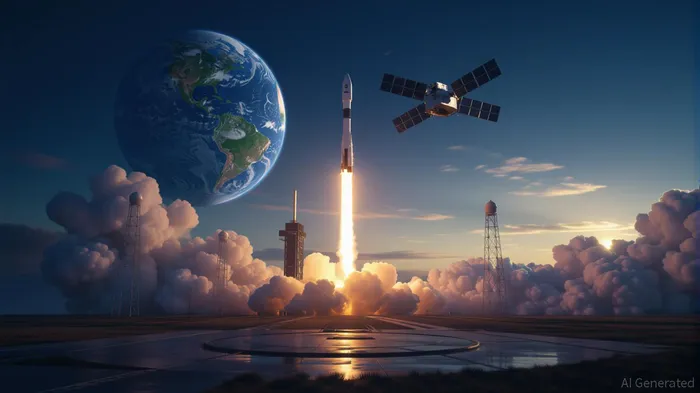
SpaceX's Falcon 9 has redefined the economics of spaceflight by drastically reducing launch costs. The B1075 booster used in the September 6 mission had already completed 19 prior flights, demonstrating the scalability of reusability. While specific cost savings percentages for 2025 remain unquantified in public reports according to industry analysts, industry analysts agree that reusable systems have slashed expenses by orders of magnitude compared to traditional expendable rockets. For instance, a report by Bloomberg notes that SpaceX's cost reductions have forced competitors like Rocket LabRKLB-- to delay ambitious projects-such as the Neutron rocket-to prioritize safety and cost efficiency. This competitive pressure is accelerating industry-wide innovation, as companies balance the need for rapid deployment with rigorous testing protocols.
Satellite Infrastructure: A Booming Market Enabled by Affordability
The financial impact of SpaceX's technology is most evident in the satellite infrastructure sector. By 2025, SpaceX had already deployed over 2,000 Starlink satellites, a feat made possible by its cost-effective launch services. This trend is mirrored globally: Taiwan's recent decision to launch a homegrown satellite constellation via a Falcon 9 rocket illustrates how reusable technology is democratizing access to space. Such developments are fueling demand for satellite infrastructure, particularly in telecommunications, earth observation, and national security.
 A critical driver of this growth is the rise of 3D-printed satellites. According to a market analysis, the 3D-printed satellite sector is projected to grow at a compound annual growth rate (CAGR) of 27.23% from 2025 to 2034, expanding from USD 141.45 million in 2024 to USD 1.58 billion by 2034. Additive manufacturing reduces material waste, shortens production cycles, and enables complex, lightweight designs-factors that align perfectly with the cost-saving ethos of reusable rocketry.
Strategic Dominance and Industry-Wide Ripples
SpaceX's 150th Falcon 9 launch in 2025 cements its role as the backbone of the global space economy. The company now accounts for approximately 90% of the world's payload mass delivered to orbit, a statistic that underscores its strategic dominance. This market position has spurred rivals to innovate: Blue Origin, for example, unveiled a more powerful variant of its New Glenn rocket in 2025 to compete with SpaceX's fleet. Meanwhile, emerging players are leveraging SpaceX's infrastructure to deploy national satellite systems, as seen in Taiwan's case.
However, the industry faces challenges. Balancing rapid innovation with safety remains a priority, as evidenced by Rocket Lab's decision to delay its Neutron rocket debut until 2026. Additionally, while reusable technology lowers launch costs, the long-term sustainability of high-frequency missions-particularly for satellite constellations-requires careful environmental and regulatory scrutiny.
Conclusion: A New Era for Aerospace Investment
SpaceX's 150th Falcon 9 launch in 2025 is more than a technical achievement; it is a harbinger of a new era in aerospace and satellite infrastructure. By reducing launch costs and enabling scalable satellite deployment, reusable rocketry is reshaping investment flows, attracting both traditional aerospace firms and tech-driven startups. For investors, the key opportunities lie in sectors directly enabled by cost-effective access to space, including 3D-printed satellites, global connectivity networks, and next-generation launch systems. As the space economy matures, the strategic and financial legacy of SpaceX's innovations will continue to ripple across industries, redefining what is possible in the final frontier.

Delivering real-time insights and analysis on emerging financial trends and market movements.
Latest Articles
Stay ahead of the market.
Get curated U.S. market news, insights and key dates delivered to your inbox.




Comments
No comments yet