
U.S. Space Force Launches L3Harris-Built NTS-3 Satellite with United Launch Alliance Vulcan Rocket.
ByAinvest
Wednesday, Aug 13, 2025 9:13 pm ET2min read
LHX--
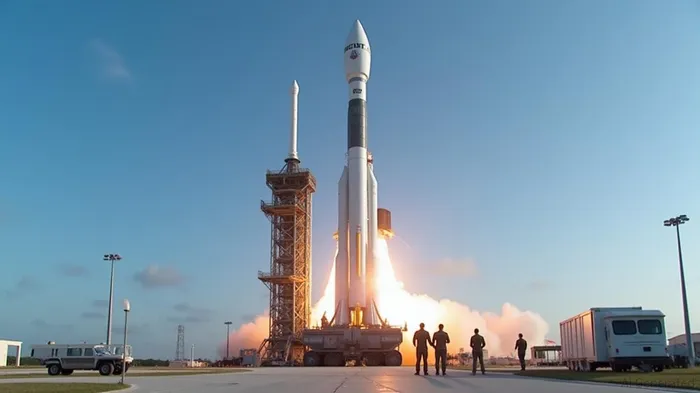
The NTS-3 satellite, which was built by L3Harris Technologies (NYSE: LHX), launched on August 12, 2025, from the Cape Canaveral Space Force Station. The satellite is equipped with advanced technologies that will allow it to perform a variety of experiments, including testing on-orbit, next-generation technologies that assist warfighters in contested environments. This marks the first experimental navigation satellite system for the Department of Defense in nearly 50 years.
Ed Zoiss, President of Space and Airborne Systems at L3Harris, emphasized the importance of accurate and uninterrupted PNT for modern warfare. "The need for accurate and uninterrupted PNT has never been more essential to our warfighters who operate in GPS-denied environments," he said. "The successful launch of the NTS-3 system is the first step in updating 20th century technology to help address current threats to our national security."
L3Harris delivered the NTS-3 satellite three times faster and at a lower cost than similar programs by leveraging industry standard form factors and interfaces. The satellite is also smaller and lighter than traditional PNT satellites and will operate at a higher altitude. Once on-orbit, the satellite will perform experiments to shape the future of U.S. space-based PNT capabilities.
The ULA Vulcan rocket used for this launch was critical in delivering the NTS-3 satellite to a precise orbit. The rocket used two L3Harris RL10 engines, providing a combined total thrust of nearly 48,000 pounds. The rocket also used 12 MR-107 thrusters to help steer the upper stage and helium tanks that are essential to the rocket’s operation. Key company spaceflight avionics include controllers, data acquisition units, and the T-740U Transmitter, which are crucial for vehicle control and data relay during launch.
The successful launch of the NTS-3 satellite is a significant milestone for the U.S. Space Force and L3Harris Technologies. It marks the end of a decade-long transition away from Russian-made engines and solidifies ULA's role alongside SpaceX in securing U.S. space access. The mission also underscores the importance of investing in advanced technologies to enhance GPS precision and resilience, supporting strategic advancements in navigation and space-based infrastructure protection.
References:
[1] https://www.morningstar.com/news/business-wire/20250811400089/us-space-force-successfully-launches-l3harris-built-nts-3-satellite
[2] https://www.l3harris.com/newsroom/press-release/2025/08/us-space-force-successfully-launches-l3harris-built-nts-3-satellite
[3] https://www.ainvest.com/news/vulcan-rocket-set-launch-ussf-106-mission-reliance-russian-engines-2508/
The US Space Force has successfully launched the L3Harris-built Navigation Technology Satellite-3 (NTS-3) on a United Launch Alliance Vulcan rocket from Cape Canaveral Space Force Station. The satellite aims to provide accurate and uninterrupted positioning, navigation, and timing (PNT) in GPS-denied environments, addressing current threats to national security. This is the first step in updating 20th-century technology to support warfighters in these environments.
The US Space Force has successfully launched the L3Harris-built Navigation Technology Satellite-3 (NTS-3) on a United Launch Alliance (ULA) Vulcan rocket from Cape Canaveral Space Force Station. The satellite aims to provide accurate and uninterrupted positioning, navigation, and timing (PNT) in GPS-denied environments, addressing current threats to national security. This is the first step in updating 20th-century technology to support warfighters in these environments.The NTS-3 satellite, which was built by L3Harris Technologies (NYSE: LHX), launched on August 12, 2025, from the Cape Canaveral Space Force Station. The satellite is equipped with advanced technologies that will allow it to perform a variety of experiments, including testing on-orbit, next-generation technologies that assist warfighters in contested environments. This marks the first experimental navigation satellite system for the Department of Defense in nearly 50 years.
Ed Zoiss, President of Space and Airborne Systems at L3Harris, emphasized the importance of accurate and uninterrupted PNT for modern warfare. "The need for accurate and uninterrupted PNT has never been more essential to our warfighters who operate in GPS-denied environments," he said. "The successful launch of the NTS-3 system is the first step in updating 20th century technology to help address current threats to our national security."
L3Harris delivered the NTS-3 satellite three times faster and at a lower cost than similar programs by leveraging industry standard form factors and interfaces. The satellite is also smaller and lighter than traditional PNT satellites and will operate at a higher altitude. Once on-orbit, the satellite will perform experiments to shape the future of U.S. space-based PNT capabilities.
The ULA Vulcan rocket used for this launch was critical in delivering the NTS-3 satellite to a precise orbit. The rocket used two L3Harris RL10 engines, providing a combined total thrust of nearly 48,000 pounds. The rocket also used 12 MR-107 thrusters to help steer the upper stage and helium tanks that are essential to the rocket’s operation. Key company spaceflight avionics include controllers, data acquisition units, and the T-740U Transmitter, which are crucial for vehicle control and data relay during launch.
The successful launch of the NTS-3 satellite is a significant milestone for the U.S. Space Force and L3Harris Technologies. It marks the end of a decade-long transition away from Russian-made engines and solidifies ULA's role alongside SpaceX in securing U.S. space access. The mission also underscores the importance of investing in advanced technologies to enhance GPS precision and resilience, supporting strategic advancements in navigation and space-based infrastructure protection.
References:
[1] https://www.morningstar.com/news/business-wire/20250811400089/us-space-force-successfully-launches-l3harris-built-nts-3-satellite
[2] https://www.l3harris.com/newsroom/press-release/2025/08/us-space-force-successfully-launches-l3harris-built-nts-3-satellite
[3] https://www.ainvest.com/news/vulcan-rocket-set-launch-ussf-106-mission-reliance-russian-engines-2508/
Stay ahead of the market.
Get curated U.S. market news, insights and key dates delivered to your inbox.
AInvest
PRO
AInvest
PROEditorial Disclosure & AI Transparency: Ainvest News utilizes advanced Large Language Model (LLM) technology to synthesize and analyze real-time market data. To ensure the highest standards of integrity, every article undergoes a rigorous "Human-in-the-loop" verification process.
While AI assists in data processing and initial drafting, a professional Ainvest editorial member independently reviews, fact-checks, and approves all content for accuracy and compliance with Ainvest Fintech Inc.’s editorial standards. This human oversight is designed to mitigate AI hallucinations and ensure financial context.
Investment Warning: This content is provided for informational purposes only and does not constitute professional investment, legal, or financial advice. Markets involve inherent risks. Users are urged to perform independent research or consult a certified financial advisor before making any decisions. Ainvest Fintech Inc. disclaims all liability for actions taken based on this information. Found an error?Report an Issue


ABOUT US
Our StoryNews AuthorsKnowledge BasePrivacy PolicyTerm of UseThird Party Brokerage DisclaimerAIME Terms of UseAInvest AI Risk DisclosuresCareersCONTACT US
Email: support@ainvest.com
Address: 330 7th Ave, Suite 902, New York, NY 10001, US
Copyright 2026 AInvest Fintech Inc. All rights reserved.


Comments
No comments yet