
Space X Falcon 9 Launch Advances U.S. Military's Quantum Navigation and Laser Communication
 Aime Summary
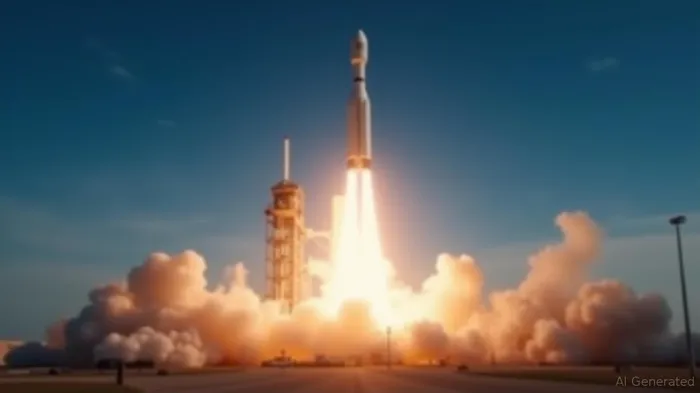
A SpaceX Falcon 9 rocket successfully launched from Cape Canaveral, Florida, Thursday night, initiating a classified mission for the U.S. military's X-37B space plane. The flight represents the eighth mission for the X-37B program, which started in 2010. Built by BoeingBA--, this reusable orbital test vehicle (OTV) serves primarily as a platform for experimenting with new technologies and testing innovations, including advanced communications and navigation tools.
The launch was executed from Launch Complex 39A at NASA's Kennedy Space Center and marked only the beginning of the X-37B's latest mission, a military endeavor managed under the United States Space Force's National Security Space Launch (NSSL) program. SpaceX's role was to provide safe delivery into orbit, an area where Falcon 9 rockets have routinely excelled. This particular mission, designated USSF-36, was part of SpaceX's second order year within its NSSL Phase 2 contract with the Space Force.
Separation of the spacecraft took place merely hours after liftoff, which occurred at 11:50 p.m. EDT. An integral part of the mission involved assessing laser communication technologies and quantum navigation systems. According to Space Force officials, the laser communications demonstration aims at enhancing data transport speeds and improving the security and resilience of military satellite communications.
Quantum navigation systems are expected to provide revolutionary navigation capabilities independent of traditional GPS networks. These systems employ a quantum inertial sensor to measure movements with high accuracy, assisting navigation in environments where GPS signals may be unavailable or compromised. Such technology could prove invaluable for both Earth-based operations and missions extending further into outer space, including potential future missions to the Moon and beyond.
While the Space Force has disclosed some details regarding the aims of this mission, much of its specifics remain classified. The sheer secrecy of the X-37B program underscores its strategic importance and the potentially transformative nature of these technological experiments. Historically, X-37B missions have varied significantly in duration, lasting anywhere from months to several years. The exact timeline for this mission remains undisclosed.
Notably, the first stage of the Falcon 9 performed well during Thursday night's launch, successfully landing back at the Cape Canaveral Space Force Station following its sixth flight. This achievement underscores SpaceX's proficient reuse of its rocket technology, marking the 66th landing in Florida and contributing to a total of 490 successful recoveries thus far.
SpaceX continues to increase its launch frequency under the NSSL program to meet growing demands for national security payloads. The synergy with Space Force operations fosters the effective and efficient deployment of innovative space capabilities that enhance U.S. warfighting abilities and overall space domain strength.
Two operational X-37B spaceplanes currently exist, facilitating the program's various missions. During this flight, specific focus has been placed on demonstrating the quantum inertial sensor's capabilities. In expanding operational resilience, the U.S. aims to improve navigation capabilities for its spacecraft in GPS-compromised or denied environments, crucially supporting missions beyond traditional Earth orbits.
Despite the scarcity of details, the nature of the X-37B’s operations and its ability to conduct extended missions independently continues to offer strategic advantages to the U.S. military. With advancements in quantum technologies and superior inter-satellite communications, the X-37B remains a linchpin in the ongoing push to fortify America’s presence and operational capacity in space.
The successful execution of this mission not only attests to the evolving capabilities of the Falcon 9 and the robust performance of the X-37B but also underscores the continuing transformation in military and aerospace technologies. While current tests focus on immediate applications, the insight gleaned will no doubt proliferate, influencing both strategic military operations and future space exploration initiatives.

Manténgase al tanto de las últimas noticias de Wall Street en tiempo real.
Latest Articles
Stay ahead of the market.
Get curated U.S. market news, insights and key dates delivered to your inbox.




Comments
No comments yet