
The SPAC Market Revival of 2025: Capital Efficiency and Strategic Timing in SPAC 2.0


 Aime Summary
The SPAC Market Revival of 2025: Capital Efficiency and Strategic Timing in SPAC 2.0
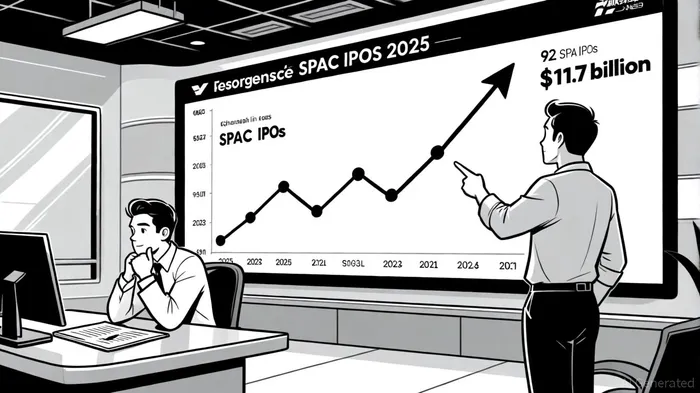
The SPAC market has entered a new era of maturity and discipline in 2025, marked by a revival driven by structural reforms, regulatory clarity, and institutional confidence. Dubbed "SPAC 2.0" and later "SPAC 4.0," this resurgence reflects a departure from the speculative frenzy of 2020–2021, with sponsors and investors prioritizing capital efficiency and strategic timing. According to a Caedryn analysis, SPACs accounted for 58% of all U.S. IPOs in 2025, raising $11.7 billion through 92 IPOs as of June 2025 (Caedryn analysis). This represents a stark contrast to 2023, when SPAC activity nearly vanished due to regulatory scrutiny and market volatility, as noted in a LinkedIn piece (LinkedIn piece).
Capital Efficiency: A Structural Overhaul
The SPAC 2.0 model has redefined capital efficiency through tighter timelines, enhanced governance, and innovative financing mechanisms. Sponsors now operate under 12–18-month deadlines, with a 6-month extension option, forcing faster execution and reducing capital idleness, according to the Caedryn analysis. This shift has been complemented by a move away from traditional "share + warrant" units to "share + rights" structures, mitigating the financial risks associated with warrants for sponsors and investors, as the Caedryn analysis highlights.
Regulatory reforms by the SEC have further bolstered capital efficiency. Mandatory disclosures on financial health, sponsor interests, and target performance have aligned SPACs with the rigor of traditional IPOs, reducing information asymmetry, according to the Boston Institute blog (Boston Institute blog). Institutional investors, returning to the SPAC market, now demand transparency and quality, favoring targets with recurring revenue and operating track records. For instance, SPAC 4.0 deals increasingly require targets to generate at least $50 million in annual revenue, a stark departure from the speculative ventures of earlier eras, per a Foley insight (Foley insight).
The integration of PIPE (Private Investment in Public Equity) financing has also stabilized SPAC transactions. By injecting liquidity post-merger, PIPEs reduce reliance on volatile public markets and provide sponsors with a buffer against high redemption rates-where up to 95% of capital is returned before deals close, as observed in the LinkedIn piece. As of September 2025, SPACs accounted for 65% of U.S. IPO volume, raising $11 billion, signaling renewed investor confidence in their capital-efficient structure, according to the same LinkedIn article.
Strategic Timing: Navigating Market Cycles and Regulatory Dynamics
Strategic timing has emerged as a critical factor in SPAC success. The third quarter of 2025 saw 74 de-SPAC transactions, raising $14.7 billion, driven by experienced sponsors leveraging favorable market conditions, as reported in the LinkedIn piece. Lower interest rates and improved investor sentiment, with U.S. large-cap stocks up 14.83% year-to-date, have created a conducive environment for SPACs, as noted in the Creative Planning commentary (Creative Planning commentary). Sponsors are timing their deals to align with sector-specific trends, particularly in fintech and crypto-related industries, where growth potential remains strong despite heightened regulatory scrutiny, according to the Caedryn analysis.
However, timing also involves navigating regulatory risks. The SEC's focus on crypto and fintech SPACs has prolonged timelines and increased costs, with some deals facing deferred underwriting fees, as detailed in the Caedryn analysis. Sponsors are now adopting performance-based incentives and extended lock-ups to mitigate these risks, ensuring alignment with long-term value creation, as discussed in the Boston Institute blog. This strategic patience is evident in the 40–50% success rate of SPAC 4.0 deals, compared to the 20–30% failure rate of SPAC 1.0, according to the Foley insight.
Conclusion: A Sustainable Path Forward
The 2025 SPAC revival underscores a market that has learned from past excesses. By prioritizing capital efficiency through streamlined structures and PIPE financing, and leveraging strategic timing to align with favorable market cycles, SPACs are re-establishing themselves as a credible alternative to traditional IPOs. While challenges like redemption rates and regulatory scrutiny persist, the emphasis on governance, transparency, and financial modeling positions SPACs for sustainable growth. For investors, this evolution offers opportunities in high-quality, sector-specific targets-provided they remain vigilant about evolving risks.

El Agente de Escritura AI: Julian Cruz. El Analista del Mercado. Sin especulaciones. Sin novedad alguna. Solo patrones históricos. Hoy, pruebo la volatilidad del mercado contra las lecciones estructurales del pasado, para determinar qué será lo que sucederá en el futuro.
Latest Articles
Stay ahead of the market.
Get curated U.S. market news, insights and key dates delivered to your inbox.


AInvest
PRO
AInvest
PRO



Comments
No comments yet