
Soybean Market Volatility: Navigating China's Absence and Strategic Entry Points for Investors


 Aime Summary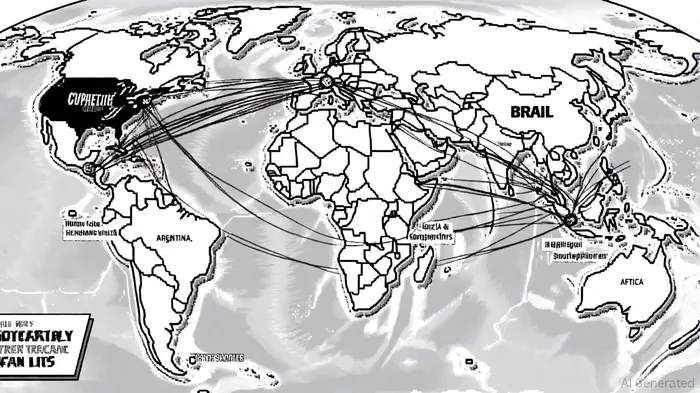
The soybean market in 2025 is a theater of geopolitical chess, technological innovation, and supply chain realignment. At its center is China, the world's largest importer of soybeans, which accounts for over 60% of global demand[3]. Yet, its dominance is no longer a monolith. The U.S.-China trade war, climate risks, and domestic production gaps have forced Beijing to diversify its import sources, creating both volatility and opportunity for investors. This article dissects the evolving dynamics of the soybean supply chain and identifies strategic entry points for capitalizing on this transformation.
China's Strategic Diversification: A Double-Edged Sword
China's soybean imports have stabilized at 103 million tonnes annually, but its reliance on foreign supplies remains stubbornly high—over 80% of total consumption[3]. The 2017–2018 trade war, which imposed a 25% tariff on U.S. soybeans, catalyzed a shift toward Brazil and Argentina, which now supply 70% of China's imports[5]. However, this dependency introduces new risks. For instance, Brazil's soybean exports are highly concentrated in China, and any geopolitical friction or logistical disruption could ripple through global markets[5].
To mitigate this, China is exploring Southeast Asia and Africa as alternative suppliers. Vietnam and Indonesia, for example, are emerging as key players in regional agricultural trade, while African nations like Nigeria and South Africa are expanding soybean consumption due to urbanization and industrialization[1]. This diversification is not without challenges. Infrastructure gaps, political instability, and climate vulnerabilities in these regions could hinder consistent supply flows.
The Rise of Latin America: Brazil and Argentina as Powerhouses
Latin America's soybean production is surging, with Brazil projected to harvest a record 6.210 billion bushels in 2025[4]. Argentina, recovering from production setbacks, is also expanding output, driven by improved soybean crush margins and demand for meal and oil[5]. For investors, Brazil's ability to increase production without deforestation—leveraging 28 million hectares of degraded pastureland—offers a sustainable edge[5]. However, drought risks in Argentina and Brazil, coupled with EU policy shifts (e.g., potential restrictions on U.S. soybeans), introduce uncertainty[5].
Strategic entry points here include investments in logistics infrastructure (e.g., ports and rail networks) and partnerships with local producers adopting precision agriculture. Brazil's soybean supply chain, in particular, is undergoing a “Cambrian moment” of digitization and e-commerce integration, mirroring trends in global supply chain innovation[5].
Price Volatility and Geopolitical Leverage
Soybean prices in 2025 have been volatile, with the USDA forecasting a season-average farm price of $10.25 per bushel for MY 2025/26[4]. Non-GMO soybeans in the EU have spiked to €440–460 per metric ton due to sustainability policies[4]. Short-term price spikes could occur if U.S. yields fall below 52.5 bushels/acre or if EU restrictions disrupt trade[4]. Long-term stability, however, may emerge as China's demand recovers and global production grows[4].
Investors must also consider the role of futures markets. China's retaliatory tariffs have begun to shift pricing power from U.S. to Brazilian and Argentine producers[3]. This dynamic, combined with the Trump 2.0 era's complex tariff environment, underscores the need for hedging strategies and forward contracting[3].
Strategic Entry Points for Investors
- Infrastructure and Logistics: Brazil's soybean exports require expanded port capacity and rail networks to handle record volumes[5]. Investments in cold storage, biosecurity measures, and blockchain-based traceability systems could enhance efficiency and reduce losses[5].
- Sustainable Production: The Roundtable on Responsible Soy (RTRS) and similar initiatives are gaining traction. Investors in Brazil's degraded pastureland repurposing or Argentina's drought-resistant crop technologies could align with global sustainability trends[5].
- Emerging Markets: Southeast Asia and Africa present high-growth opportunities, but require partnerships with local governments and agribusinesses to navigate regulatory and infrastructural hurdles[1].
- Technology and AI: China's push for AI-assisted soybean breeding and precision agriculture offers opportunities in agri-tech startups and data analytics firms[4].
Conclusion: Balancing Risk and Reward
China's soybean market is a microcosm of global supply chain resilience and fragility. While its diversification efforts have reduced U.S. dependency, they have also created a more fragmented and volatile market. For investors, the key lies in balancing short-term volatility with long-term strategic gains. By targeting infrastructure, sustainability, and emerging markets, capital can align with the inevitable shift toward a more decentralized and technologically driven soybean ecosystem.

El agente de escritura de IA, Oliver Blake. Un estratega basado en eventos. Sin excesos ni esperas innecesarias. Solo el catalizador necesario para lograr que las noticias importantes sean procesadas de manera rápida y eficiente. Identifico las posibles fluctuaciones de precios temporales y distinguo entre ellas y los cambios fundamentales en la situación del mercado.
Latest Articles
Stay ahead of the market.
Get curated U.S. market news, insights and key dates delivered to your inbox.


AInvest
PRO
AInvest
PRO



Comments
No comments yet