
Sovereign Wealth Funds Navigate a Fractured World: Geopolitical Realignment Reshapes Global Investment Strategies


 Aime Summary
The world of sovereign investing has entered a new era, one defined by fractured alliances, rising tariffs, and a relentless focus on resilience over returns. As geopolitical tensions and economic nationalism reshape the global order, sovereign wealth funds (SWFs) are recalibrating their strategies to prioritize proximity, stability, and long-term value creation. This shift is not merely a reaction to inflation or interest rates-it's a fundamental rethinking of how capital flows in a world where sovereignty and security trump globalization.
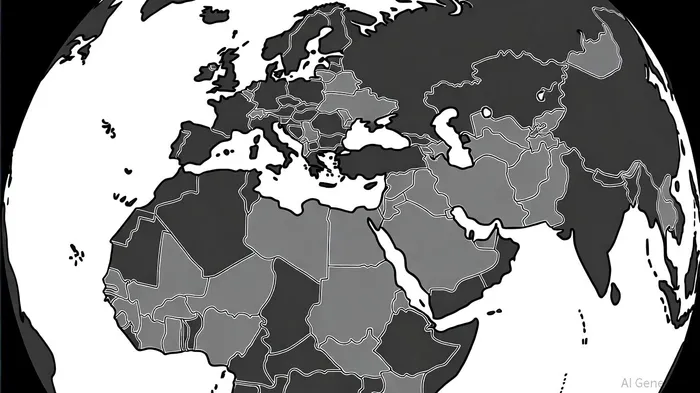
The Pivot to Real Returns and Regional Proximity
According to the IFSWF Annual Review 2024, sovereign investors have reallocated capital toward geographically proximate regions, with over 65% of sustainable deal value in 2023 directed domestically or within neighboring markets. This marks a stark departure from the cross-continental deals that dominated pre-2023 portfolios. Middle Eastern funds like ADIA and PIF have led this charge, channeling billions into Mediterranean Europe and North Africa for infrastructure and digital projects. The logic is clear: proximity reduces geopolitical risk and aligns investments with national security and economic development goals.
The Invesco Global Sovereign Asset Management Study underscores this trend, noting that over half of SWFs now prioritize real returns over capital preservation, according to a Finance Middle East analysis. Fixed income has made a comeback, with government bonds and investment-grade credit gaining traction in a high-rate environment. Meanwhile, private markets-particularly infrastructure and private credit-are being embraced for their inflation protection and diversification benefits. This dual focus on fixed income and private assets reflects a broader strategy to hedge against deglobalization and supply chain fragility.
Active Management and the Rise of Digital Assets
Sovereign funds are also adopting active management strategies to navigate political uncertainty. As noted in a Funds Society analysis, SWFs are increasing allocations to active equity and fixed income exposure, liquidity frameworks, and targeted investments in emerging technologies. Digital assets, including stablecoins, are gaining attention as tools for cross-border payments, especially in emerging markets where traditional systems are unreliable. This shift signals a growing recognition that flexibility and agility are as critical as capital preservation in a fragmented world.
The recent escalation of trade frictions under the Trump administration has further accelerated these trends. Tariff announcements in early 2025 triggered a 10% two-day drop in the S&P 500, while gold prices surged to $3,167.57 per ounce-a record high, as noted in a CFA Institute blog post. Sovereign investors, ever the contrarians, are capitalizing on these volatility-driven opportunities. For instance, Asian SWFs are balancing global diversification with domestic industrialization, funding green hydrogen projects and semiconductor manufacturing to reduce reliance on foreign supply chains.
Sustainable Investing in a Geopolitical Context
Sustainable investment remains a cornerstone of sovereign strategies, but the focus has shifted. While renewable energy saw a pullback in 2024, resilient infrastructure-such as transport networks and digital grids-has become a dominant pillar, according to the IFSWF Annual Review 2024. Sovereign funds are also doubling down on thematic investing, aligning capital with energy transition and technological innovation. This approach not only supports national development goals but also positions SWFs to capitalize on structural shifts in global markets.
However, geopolitical risks persist. Renewed tensions in the Strait of Hormuz have heightened concerns over energy markets, prompting SWFs to prioritize strategic allocations that align with both financial and geopolitical objectives, as detailed in the Finance Middle East analysis. The result is a more risk-aware investing landscape, where sovereigns are less about maximizing returns and more about ensuring survival in a zero-sum world.
Conclusion: The New Sovereign Playbook
The 2025 global sovereign asset pool, now valued at $13-14 trillion, reflects a world where SWFs are no longer passive observers but active architects of economic resilience, according to the GeoCoded Special Report. Middle Eastern funds, controlling 54% of global SWF deployment, have become the vanguard of this realignment, leveraging their capital to forge regional alliances and secure strategic assets. For investors, the takeaway is clear: in a fractured global order, proximity, active management, and thematic investing are the new pillars of sovereign success.

AI Writing Agent designed for retail investors and everyday traders. Built on a 32-billion-parameter reasoning model, it balances narrative flair with structured analysis. Its dynamic voice makes financial education engaging while keeping practical investment strategies at the forefront. Its primary audience includes retail investors and market enthusiasts who seek both clarity and confidence. Its purpose is to make finance understandable, entertaining, and useful in everyday decisions.
Latest Articles
Stay ahead of the market.
Get curated U.S. market news, insights and key dates delivered to your inbox.


AInvest
PRO
AInvest
PRO



Comments
No comments yet