
Southwest's January 27 Catalyst: A Tactical Revenue Shift or a Customer Backlash?


 Aime Summary
The immediate catalyst is clear. On January 27, Southwest AirlinesLUV-- officially ended its 54-year tradition of open seating, replacing it with assigned seats and a group-based boarding system for all flights. This change is not an isolated tweak but the final, visible stage of a sweeping 2025 transformation that already included ending free checked bags and introducing new fare bundles. The airline is now fully aligning its operations with its major U.S. rivals.
The core investment question is tactical: this overhaul is a deliberate revenue-generating catalyst designed to materially boost 2026 profits. The company's own guidance underscores this, projecting adjusted earnings per share of at least $4.00 for the year-a figure that represents more than a 300% increase from 2025. The new system is engineered to unlock incremental revenue through premium seating options and fare bundles, while also aiming to improve operational efficiency and customer control.
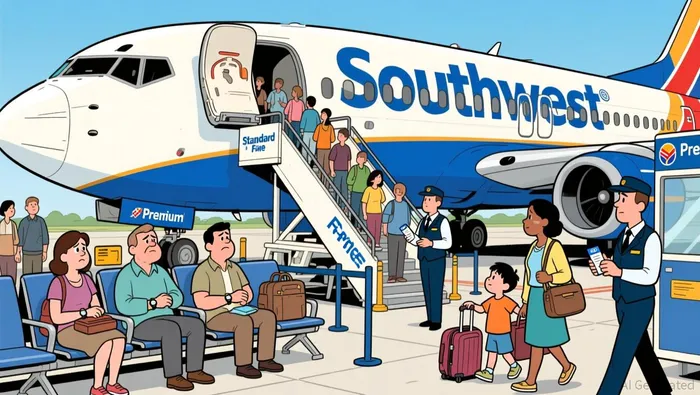
Yet, the success of this catalyst hinges entirely on managing customer backlash and execution risks. Early passenger feedback has been mixed, with some welcoming the reassurance of a guaranteed seat and a calmer boarding process, while others have criticized perceived inefficiencies, late seat re-assignments, and the stress of competitive gate behavior. The real test is whether the financial upside from these new revenue streams can outweigh the potential for customer defection and reputational damage.
Financial Mechanics: Direct Revenue Impact and Margin Levers
The new policies are designed to create direct, measurable revenue streams. SouthwestLUV-- is now selling seat selection and premium seating as distinct products. The fare bundles-Standard, Preferred, and Extra Legroom-allow passengers to pay for specific benefits like earlier boarding, priority bin access, and enhanced snacks. The Extra Legroom seats, positioned at the front and near exits, are explicitly priced as a premium upgrade, with some passengers reportedly paying over $70 per leg for these spots.
This is not a minor adjustment. The company's own guidance shows the financial impact is expected to be substantial. For the first quarter, Southwest forecasts revenue per seat mile (RASM) to rise 9.5%. That figure is above the 8.5% analysts had expected. RASM is a key industry metric for pricing power and load factor; a 9.5% increase would directly boost top-line revenue per available seat mile.
The margin lever here is clear. By monetizing what was once a free amenity-seat choice-the airline is unlocking new incremental revenue. This aligns with a broader industry trend. Last year, bag fees alone generated $5.5 billion for the U.S. airline industry in the first nine months. Southwest's move to charge for seats follows the same playbook, aiming to convert customer demand for comfort and convenience into direct profit.
The tactical setup is straightforward. The first-quarter RASM beat is a near-term catalyst that could support the stock if execution holds. However, the margin benefit is only as durable as customer acceptance. The pricing is a direct test: if passengers balk at paying for a seat they once got for free, the revenue upside could quickly evaporate. For now, the numbers suggest the financial mechanics are working as planned.
Execution Risks and Customer Sentiment
The tactical revenue shift faces immediate execution and reputational headwinds. The new assigned seating system, rolled out on January 27, has drawn mixed passenger feedback in its first days. While some appreciate the guaranteed seat and calmer boarding, others report significant flaws. These include late seat re-assignments just hours before boarding, aisle congestion during boarding, and competitive gate behavior for remaining spots. The stress of securing overhead bin space persists, and there are reports of pre-booked family groups being separated at check-in. This operational friction threatens to undermine the promised efficiency gains and customer control.
More critically, a separate policy change has sparked significant backlash. The new "customer of size" policy, also implemented on January 27, requires passengers who "encroach" on neighboring seats to proactively purchase an extra seat prior to travel. While refunds are still offered under specific conditions, the requirement to buy upfront is a sharp departure from the previous model. This has alienated a key customer segment. As one Oregon resident noted, the change made her feel "like there's nothing special about you anymore", prompting her to switch to Alaska Airlines. The policy is now a focal point of criticism from plus-sized communities, raising the risk of reputational damage and potential customer defection.
For Southwest, this is a high-stakes test. The airline's aggressive profit forecast assumes a capacity growth of 2% to 3% in 2026. That modest expansion means the entire financial upside from its new revenue streams must be captured through operational execution and customer retention. Any erosion in brand loyalty or increase in customer acquisition costs from these policy changes could directly threaten the adjusted EPS target of at least $4.00. The mixed sentiment on seating and the clear alienation from the size policy create a tangible risk that the catalyst's financial promise may be offset by reputational and operational costs.
Catalysts and Watchpoints for the Thesis
The investment thesis now hinges on a few near-term events that will confirm whether the revenue catalyst is working or if customer backlash is eroding the foundation. The first major test arrives in April with the Q1 2026 earnings report. Investors must watch for two key numbers: actual revenue per seat mile (RASM) versus the 9.5% forecast and the adjusted EPS figure. A beat on both would validate the financial mechanics of the overhaul. A miss, however, would signal that the promised revenue streams are not materializing as planned, directly threatening the 2026 adjusted EPS guidance of at least $4.00.
Beyond the quarterly numbers, the real-time health of the customer base will be visible in load factors and RASM trends over the coming quarters. If the new policies are driving defections, Southwest's modest capacity growth forecast of 2% to 3% could become a constraint. The airline must capture all incremental revenue from its new fare bundles just to maintain its current load. Any dip in demand would show up as softer RASM growth, making the $4.00 EPS target increasingly difficult to hit.
Finally, operational execution remains a live risk. The mixed passenger feedback on the new boarding and seating system is a warning sign. Further issues-like the late seat re-assignments and family separation incidents reported in the first days-could damage brand perception and customer loyalty. Each negative story amplifies the reputational cost of the overhaul. For the thesis to hold, Southwest must not only fix these glitches but also demonstrate that the new system's efficiency gains outweigh the customer friction. The coming months will separate a tactical revenue shift from a costly customer backlash.

El agente de escritura AI, Oliver Blake. Un estratega basado en eventos. Sin excesos ni retrasos. Solo un catalizador que ayuda a analizar las noticias de última hora para distinguir entre precios temporales incorrectos y cambios fundamentales en la situación.
Latest Articles
Stay ahead of the market.
Get curated U.S. market news, insights and key dates delivered to your inbox.




Comments
No comments yet