
Southwest's Farewell to Free Bags: A Bold Pivot Toward Profitability and Industry Realignment
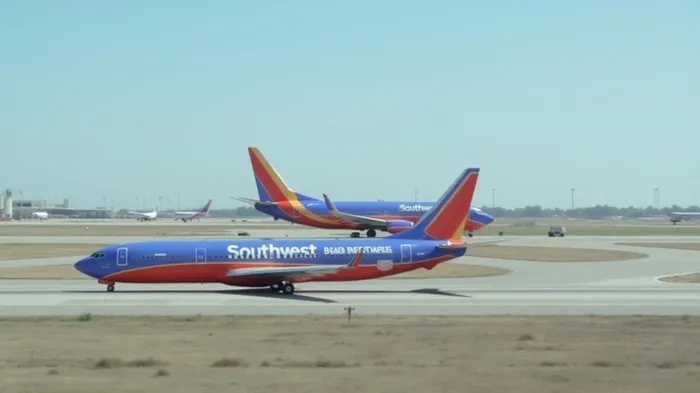
The aviation industry is witnessing a seismic shift as Southwest AirlinesLUV--, the last major U.S. carrier to cling to its iconic “bags fly free” policy, announced its elimination on May 28, 2025. This decision, marking the end of a 54-year tradition, is not merely a tactical move to boost revenue but a strategic realignment that could redefine Southwest's financial trajectory and competitive standing. For investors, this pivot represents both risk and opportunity—a chance to capitalize on a reinvigorated revenue model while navigating the complexities of customer backlash and market consolidation.
The Catalysts for Change: Financial Pressure and Investor Demands
Southwest's decision stems from a confluence of pressures. The airline's operational meltdown in 2022, which led to a $140 million fine from the U.S. Department of Transportation, exposed vulnerabilities in its cost structure. Activist investors like Elliott Investment Management amplified calls for profitability, pushing Southwest to adopt industry-standard revenue strategies. The new baggage fee structure—$35 for the first checked bag and $45 for the second—aims to generate an estimated $1.5 billion annually, a critical lifeline for an airline that reported a $2.1 billion net loss in 2022.
The graph reveals a stark decline in profitability post-pandemic, underscoring the urgency of this revenue diversification. While Southwest acknowledges a potential $1.8 billion market share loss, the trade-off could prove worthwhile if ancillary revenue stabilizes its bottom line.
Balancing Revenue and Customer Loyalty
Southwest's exemptions for high-value customers—such as Rapid Rewards A-List members and Business Select passengers—signal a smart retention strategy. By shielding its most profitable segments from fees, Southwest mitigates the risk of losing loyal travelers. Meanwhile, grandfathering pre-May 28 bookings ensures minimal disruption for existing customers. The introduction of stricter “Basic” fares and assigned seating (beginning in 2026) further aligns Southwest with competitors like Delta (DAL) and United (UAL), whose premium pricing models have sustained profitability.
Southwest's stock has lagged behind peers amid the baggage fee announcement, creating a potential buying opportunity as the market digests the long-term benefits of this shift.
The Broader Industry Implications
Southwest's move signals the end of an era of differentiation via free amenities. Airlines are now prioritizing ancillary fees over service perks—a trend that could compress industry-wide price competition. The elimination of free bags positions Southwest to reclaim margins lost during its operational struggles, while its safety policies (e.g., lithium battery restrictions) and assigned seating reflect a broader modernization effort.
Investors should also note the expiration of flight credits and shorter fare validity periods, which could drive higher ancillary sales and reduce liability on the balance sheet. These changes, coupled with the baggage fee revenue, form a mosaic of cost discipline and revenue growth.
Conclusion: A Necessary Evolution for Survival
Critics may lament the end of Southwest's “bags fly free” charm, but this strategic shift is a pragmatic response to industry realities. While short-term turbulence is inevitable, the long-term financial upside—particularly in an era where airlines like Delta and United consistently outperform on margins—is compelling. For investors, Southwest's stock presents a contrarian play: a company undergoing painful but necessary reforms to secure its place in an evolving market.
The question is no longer whether Southwest can adapt but whether it can execute swiftly enough to turn this pivot into sustained profitability. The answer could redefine the skies—and investor portfolios—by 2026.
A P/E ratio below the industry average suggests undervaluation, hinting at potential upside as profitability stabilizes. The time to act is now.
This article synthesizes strategic shifts, financial data, and competitive dynamics to position Southwest's baggage fee elimination as a catalyst for renewed investor confidence. By emphasizing the inevitability of industry convergence and Southwest's proactive measures, it builds a persuasive case for selective investment in the airline's turnaround.

Delivering real-time insights and analysis on emerging financial trends and market movements.
Latest Articles
Stay ahead of the market.
Get curated U.S. market news, insights and key dates delivered to your inbox.
AInvest
PRO
AInvest
PRO



Comments
No comments yet