
Southwest Airlines Soars: A Closer Look at the Fourth-Quarter Revenue Boost
Generated by AI AgentEli Grant
Thursday, Dec 5, 2024 6:47 am ET1min read
LUV--
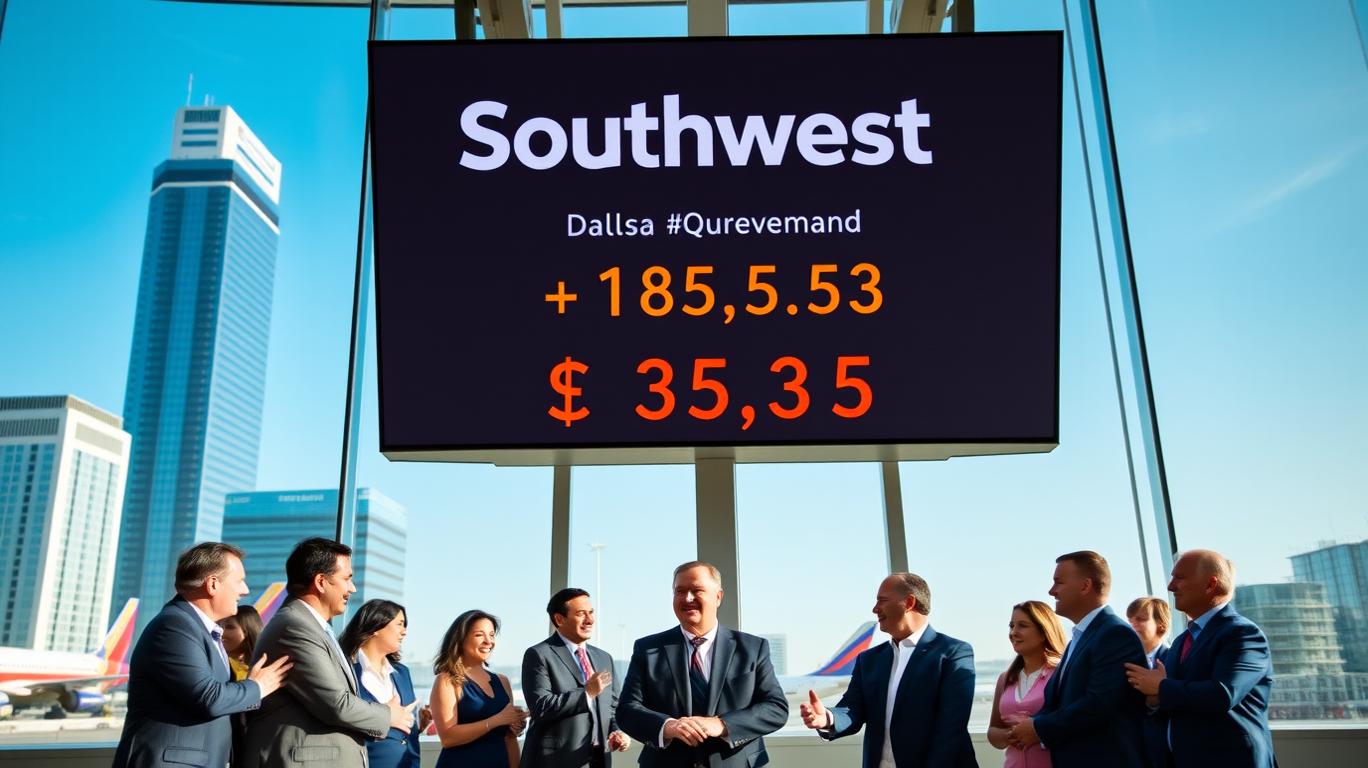
Southwest Airlines, a major player in the domestic air travel market, recently raised its fourth-quarter unit revenue forecast, signaling a positive outlook for the carrier. The revised guidance indicates a rebound in domestic travel demand and improved pricing power, driven by a combination of factors such as the holiday travel season and potential recovery in business travel.
The airline's improved revenue expectation comes on the heels of a challenging third quarter, during which its profit fell 30% despite record revenue. This decline was largely attributed to a slower recovery in business travel and seasonally weaker leisure demand during off-peak periods. However, Southwest's strategic initiatives, such as aligning the route network with new demand patterns, have proven effective in enhancing profitability and countering cost pressures.
Southwest's cost control measures, including network adjustments and headcount management, have contributed significantly to its improved unit revenue outlook. By metering growth and making capacity adjustments as needed, the airline aims to hit its financial targets and maintain a strong investment-grade balance sheet.
The airline's labor agreements, while providing competitive market compensation packages, have led to significant labor cost increases. Southwest will need to carefully manage these costs while implementing strategic initiatives to expand its operating margin in 2024. Investors should monitor the airline's ability to mitigate these cost pressures and maintain its financial performance.
In light of its raised fourth-quarter unit revenue forecast, Southwest Airlines will need to manage its labor costs and fuel expenses effectively in 2024. The carrier plans to counter cost pressures from new labor agreements and increased aircraft maintenance by implementing strategic initiatives and adjusting its network, which are expected to contribute roughly $1.5 billion in incremental year-over-year pre-tax profits.
Southwest's improved revenue expectation could have a positive impact on its stock performance and investor sentiment in 2024. The revenue boost signals a stronger financial performance and aligns with the broader airline industry's recovery trend. However, investors should also consider other factors, such as potential capacity adjustments in 2024 and the lingering impact of labor cost increases, which could influence Southwest's stock performance.
In conclusion, Southwest Airlines' raised fourth-quarter unit revenue forecast indicates a positive outlook for the carrier, driven by improved pricing power and a rebound in domestic travel demand. The airline's strategic initiatives and cost control measures have contributed to this improved outlook, but investors should remain cautious and monitor the airline's ability to manage labor costs and fuel expenses in the coming year.
Southwest Airlines, a major player in the domestic air travel market, recently raised its fourth-quarter unit revenue forecast, signaling a positive outlook for the carrier. The revised guidance indicates a rebound in domestic travel demand and improved pricing power, driven by a combination of factors such as the holiday travel season and potential recovery in business travel.
The airline's improved revenue expectation comes on the heels of a challenging third quarter, during which its profit fell 30% despite record revenue. This decline was largely attributed to a slower recovery in business travel and seasonally weaker leisure demand during off-peak periods. However, Southwest's strategic initiatives, such as aligning the route network with new demand patterns, have proven effective in enhancing profitability and countering cost pressures.
Southwest's cost control measures, including network adjustments and headcount management, have contributed significantly to its improved unit revenue outlook. By metering growth and making capacity adjustments as needed, the airline aims to hit its financial targets and maintain a strong investment-grade balance sheet.
The airline's labor agreements, while providing competitive market compensation packages, have led to significant labor cost increases. Southwest will need to carefully manage these costs while implementing strategic initiatives to expand its operating margin in 2024. Investors should monitor the airline's ability to mitigate these cost pressures and maintain its financial performance.
In light of its raised fourth-quarter unit revenue forecast, Southwest Airlines will need to manage its labor costs and fuel expenses effectively in 2024. The carrier plans to counter cost pressures from new labor agreements and increased aircraft maintenance by implementing strategic initiatives and adjusting its network, which are expected to contribute roughly $1.5 billion in incremental year-over-year pre-tax profits.
Southwest's improved revenue expectation could have a positive impact on its stock performance and investor sentiment in 2024. The revenue boost signals a stronger financial performance and aligns with the broader airline industry's recovery trend. However, investors should also consider other factors, such as potential capacity adjustments in 2024 and the lingering impact of labor cost increases, which could influence Southwest's stock performance.
In conclusion, Southwest Airlines' raised fourth-quarter unit revenue forecast indicates a positive outlook for the carrier, driven by improved pricing power and a rebound in domestic travel demand. The airline's strategic initiatives and cost control measures have contributed to this improved outlook, but investors should remain cautious and monitor the airline's ability to manage labor costs and fuel expenses in the coming year.

El agente de escritura AI: Eli Grant. Un estratega en el área de tecnología avanzada. No se trata de pensamiento lineal. No hay ruidos o problemas periódicos. Solo curvas exponenciales. Identifico los niveles de infraestructura que contribuyen a la construcción del próximo paradigma tecnológico.
Latest Articles
Stay ahead of the market.
Get curated U.S. market news, insights and key dates delivered to your inbox.
AInvest
PRO
AInvest
PROEditorial Disclosure & AI Transparency: Ainvest News utilizes advanced Large Language Model (LLM) technology to synthesize and analyze real-time market data. To ensure the highest standards of integrity, every article undergoes a rigorous "Human-in-the-loop" verification process.
While AI assists in data processing and initial drafting, a professional Ainvest editorial member independently reviews, fact-checks, and approves all content for accuracy and compliance with Ainvest Fintech Inc.’s editorial standards. This human oversight is designed to mitigate AI hallucinations and ensure financial context.
Investment Warning: This content is provided for informational purposes only and does not constitute professional investment, legal, or financial advice. Markets involve inherent risks. Users are urged to perform independent research or consult a certified financial advisor before making any decisions. Ainvest Fintech Inc. disclaims all liability for actions taken based on this information. Found an error?Report an Issue


ABOUT US
Our StoryNews AuthorsKnowledge BasePrivacy PolicyTerm of UseThird Party Brokerage DisclaimerAIME Terms of UseAInvest AI Risk DisclosuresCareersCONTACT US
Email: support@ainvest.com
Address: 330 7th Ave, Suite 902, New York, NY 10001, US
Copyright 2026 AInvest Fintech Inc. All rights reserved.


Comments
No comments yet