
Southwest Airlines Rethinks Hub Strategy: What Investors Should Know
 Aime Summary
, 2026. - The decision is part of the airline's broader network refinement strategy to focus on higher-performing routes. - Passengers affected can rebook to nearby airports or receive full refunds, including optional fees like bag charges. - The move reflects the airline's shift to reduce operational complexity and improve profitability. - Employees impacted will have opportunities to apply for positions elsewhere in Southwest's network. - The airline will redirect flights to Midway and Reagan National airports, where it has stronger market positions. - This is among the most significant strategic changes in Southwest's network in decades.
In an unexpected shift, Southwest AirlinesLUV-- is overhauling its route network by ending service at two major U.S. airports, Chicago O'Hare International (ORD) and Washington Dulles International (IAD), , . This move is part of the airline's broader strategy to streamline operations, reduce complexity, and focus on more profitable routes. Passengers with tickets affected by the change can rebook flights or seek full refunds, including optional fees.
Why Is SouthwestLUV-- Airlines Ending Service at O'Hare and Dulles?
Southwest's decision to cut ties with O'Hare and Dulles marks a major strategic shift for the airline. While the company did not explicitly detail the reason for the move, it cited the need to refine its network and optimize operations. At O'Hare, Southwest struggled with underperforming expansion efforts, particularly during the pandemic, and has already cut service to four other markets. The airline also faces increased competition from United and American Airlines at O'Hare, as well as potential FAA-imposed flight caps due to congestion.
Dulles, on the other hand, , with only one consistent route to Denver. By shifting its focus to Midway International Airport in Chicago and Reagan National Airport in Washington, Southwest aims to consolidate its operations in more efficient and less congested environments. The airline emphasized that this move aligns with its broader "Southwest 2.0" initiative, which prioritizes profitability and customer convenience over maintaining high-profile hubs.
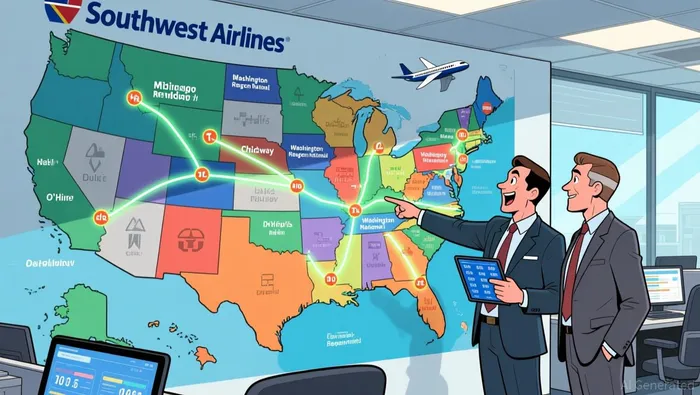
For retail investors and airline observers, Southwest's decision offers both strategic insight and cautionary lessons. The move reflects the airline's increasing emphasis on cost control and operational efficiency, which are critical in a post-pandemic travel environment still navigating shifting demand and regulatory pressures.
One of the key implications for investors is that Southwest is no longer simply chasing geographic presence. Instead, it's prioritizing market strength and route profitability. The company's exit from congested hubs like O'Hare may also be a response to regulatory trends, such as the FAA's proposed flight caps and concerns about airport delays. These dynamics could influence not just Southwest but the broader airline industry, where competition for gate space and customer loyalty is intensifying.
Moreover, the airline's shift to —like Midway and Reagan National—highlights a growing trend among carriers to reduce dependence on large, expensive, and complex hubs. This could lead to more efficient operations and, in theory, better margins. Still, the move also carries risks. For example, travelers who rely on O'Hare and Dulles for direct flights may now face longer layovers or additional costs, which could affect customer satisfaction and loyalty.
What to Watch Next for Southwest Airlines
Investors should monitor how Southwest executes its network transition. Key factors to watch include the airline's performance on the newly optimized routes, the success of its customer-facing initiatives like assigned seating and bag fees, and its ability to retain market share in the Chicago and Washington D.C. markets. Additionally, regulatory developments—such as the final decision on FAA flight caps at O'Hare—could have further implications for Southwest and other carriers.
Another area to keep an eye on is employee impact. While Southwest has indicated that affected employees can bid for open positions within the airline, workforce transitions can be complex and costly. Any disruptions in operations or employee morale could delay the full benefits of the network shift.
Ultimately, Southwest's decision to exit O'Hare and Dulles is a clear signal of its evolving business model. For investors, the key question is whether this strategic shift will translate into sustained profitability in an increasingly competitive and volatile industry.

Stay ahead of the market.
Get curated U.S. market news, insights and key dates delivered to your inbox.
AInvest
PRO
AInvest
PRO



Comments
No comments yet