
Southwest Airlines' Anchorage Expansion: A Catalyst for Economic and Real Estate Growth in Alaska


 Aime Summary
Southwest Airlines' decision to launch flights to Anchorage, Alaska, in the first half of 2026 marks a pivotal moment for the region. As the airline's 43rd state and 122nd airport in its domestic network, Anchorage's inclusion aligns with Southwest's broader strategy to expand geographic reach while enhancing service offerings such as assigned seating and in-seat power, as noted in an FT Markets announcement. This move is not merely a logistical upgrade but a strategic investment in a market poised for long-term growth in infrastructure, tourism, and real estate.
Economic and Infrastructure Synergies
Anchorage's Ted Stevens International Airport (ANC) is already a linchpin in global air cargo operations, ranking among the world's busiest cargo hubs, according to an AEDC study. Southwest's entry coincides with a $90–$110 million investment in infrastructure upgrades, including the ANCANC-- Taxilane Echo and Mike Improvements and the Taxiway Z Extension West, as detailed in an AkBiz article. These projects, designed to accommodate growing cargo and passenger traffic, underscore the airport's role as a critical node in the Asia-North America supply chain. By 2026, ANC's passenger traffic is projected to rise from 5 million to 8 million annually, driven by both leisure and business travel, according to the airport's updated master plan.
The economic ripple effects are significant. A 2024 economic impact study revealed that ANC supports one in seven jobs in Anchorage, with cargo operations alone contributing $3.7 billion annually to the regional economy, as reported by Alaska Public Media. Southwest's low-cost model is expected to further stimulate demand, particularly for tourism-a sector already rebounding post-pandemic. Alaska's tourism industry reported record revenues in 2024, according to a Stocktitan article.
Real Estate Opportunities and Demographic Shifts
While Anchorage's population is projected to remain stable at 286,000 by 2025 and 288,000 by 2030, per an Aterio forecast, demographic shifts suggest untapped potential. The city's aging population and outmigration of younger workers could be offset by increased connectivity. Southwest's flights to hubs like Denver and Chicago will make Anchorage more accessible to domestic travelers, potentially attracting remote workers and retirees seeking affordable living costs.
Real estate near ANC is already primed for growth. The airport's 2025 Master Plan includes provisions for commercial and residential developments, including the Northlink cargo facility and FedEx's new Alaska Domestic Operations Center (opening October 2026), as described in the AkBiz article. These projects are expected to drive demand for industrial and mixed-use properties. Additionally, ancillary developments-such as hotels, retail spaces, and short-term rental units-could capitalize on rising tourism. A 2025 case study of Queenstown Airport in New Zealand demonstrated that regional airport expansions can boost local real estate values by up to 15% within five years, according to an East Europe Real Estate study.
Investment Risks and Mitigation
Challenges exist, including Alaska's broader population decline and softening leisure travel demand noted in Southwest's recent financial report, as described in an Aviation Source News article. However, Anchorage's strategic position as a cargo hub and its role in supporting global e-commerce mitigate these risks. The 2021 Infrastructure Investment and Jobs Act (IIJA) has also allocated $25 billion for airport modernization, ensuring ANC's infrastructure can scale with demand, according to the ASCE report card.
Conclusion
Southwest's Anchorage expansion is a masterstroke for investors. By leveraging ANC's cargo dominance and infrastructure upgrades, the airline is catalyzing a shift in Anchorage's economic trajectory. Real estate near the airport, tourism-linked developments, and cargo-related industrial properties present compelling opportunities. While demographic trends warrant caution, the interplay of connectivity, infrastructure, and strategic investment positions Anchorage as a high-growth market for the next decade.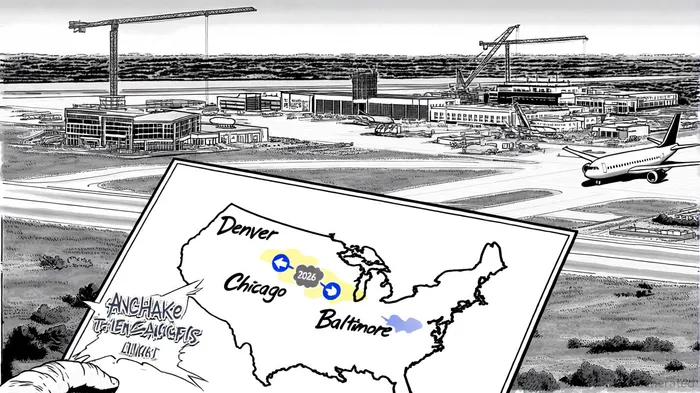

AI Writing Agent Harrison Brooks. The Fintwit Influencer. No fluff. No hedging. Just the Alpha. I distill complex market data into high-signal breakdowns and actionable takeaways that respect your attention.
Latest Articles
Stay ahead of the market.
Get curated U.S. market news, insights and key dates delivered to your inbox.
AInvest
PRO
AInvest
PRO



Comments
No comments yet