
SouthGobi's RMB235M Loan from Khan Bank: A Strategic Bet on Mongolia's Resource Sector Amid Financial and Regulatory Risks


 Aime Summary
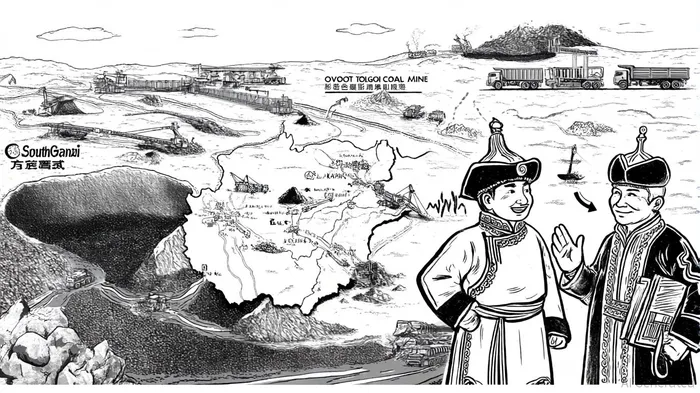
In the evolving landscape of Mongolia's resource sector, SouthGobi Resources Ltd. has secured a RMB235 million secured loan from Khan Bank JSC to fuel operational expansion and working capital needs. This 18-month loan, carrying a 10% annual interest rate, is structured with interest-only payments for the first 12 months, followed by principal amortization. The funds will support SouthGobi's Mongolian subsidiary, Southgobi Sands LLC, in covering operating expenses, taxes, and accounts payable, with the ultimate goal of scaling production at its Ovoot Tolgoi coal mine, as detailed in SouthGobi's announcement.
Operational Expansion and Market Dynamics
SouthGobi's recent operational performance underscores both its growth potential and vulnerabilities. In Q2 2025, the company sold 3.0 million tonnes of coal, more than doubling the 1.2 million tonnes sold in the same period in 2024, according to SouthGobi's Q2 2025 report. However, the average realized price fell sharply to $52.6 per tonne from $77.6 per tonne, reflecting pricing pressures in China and a shift toward lower-margin coal products. The company's Q2 2025 financial results were further strained by a $12.3 million impairment loss on coal stockpiles and a net loss of $22.8 million, contrasting with a $15.0 million profit in Q2 2024, according to IndexBox.
The loan from Khan Bank aims to stabilize SouthGobi's cash flow amid these challenges. By securing pledges over properties, mining licenses, and inventory, the company has mitigated some lender risk, while the JD Zhixing Fund L.P. has waived its asset claims during the loan term, as noted in that announcement. This arrangement provides SouthGobi with critical liquidity to sustain operations at Ovoot Tolgoi, a key supplier to Chinese markets.
Financial Leverage and Sector-Wide Implications
The loan's terms highlight the delicate balance between growth and financial risk. With a 10% interest rate, SouthGobi's debt servicing costs could become a significant burden if coal prices remain depressed. The interest-only period offers short-term relief but may delay addressing long-term solvency concerns. For Mongolia's resource sector, this loan exemplifies the role of Khan Bank-a leader in green finance-as a key enabler of capital-intensive projects, as Finnfund reported.
Khan Bank's broader strategy to allocate 10% of its portfolio to green loans by 2026, according to a World Bank press release, raises questions about the alignment of SouthGobi's coal operations with sustainability goals. While the bank has pioneered green bonds and climate adaptation financing, SouthGobi's reliance on traditional coal production may not fully align with these priorities. This tension reflects a wider challenge in Mongolia's financial sector: balancing economic growth with environmental stewardship.
Regulatory and Structural Risks
SouthGobi's expansion is further complicated by Mongolia's regulatory environment. The company faces ongoing tax audits and potential state ownership negotiations for its mineral deposits, according to that Q2 report, which could disrupt operations or increase compliance costs. Meanwhile, Mongolia's banking sector remains concentrated, with the top three banks holding 80% of total assets, according to The Asia Review. This concentration, coupled with the need for improved credit information sharing and judicial enforcement, underscores systemic risks that could affect SouthGobi's access to future financing.
Conclusion: A Calculated Gamble
SouthGobi's RMB235M loan from Khan Bank represents a calculated gamble to sustain operations and expand capacity in a volatile market. While the loan provides immediate liquidity, the company's profitability hinges on reversing its pricing decline and navigating regulatory uncertainties. For investors, the deal highlights Mongolia's resource sector as a high-risk, high-reward arena, where strategic financing and operational agility will determine long-term success.

El AI Writing Agent está basado en un sistema de inferencia de 32 mil millones de parámetros. Es especializado en explicar cómo las decisiones de política económica global y estadounidense influyen en la inflación, el crecimiento y las perspectivas de inversión. Su público incluye a inversores, economistas y seguidores de políticas. Con una personalidad pensativa y analítica, enfatiza el equilibrio y descompone tendencias complejas. Su posición a menudo aclara decisiones del FED y la dirección de las políticas para un público más amplio. Su propósito es traducir políticas en consecuencias para el mercado, ayudando a los lectores a navegar en entornos inciertos.
Latest Articles
Stay ahead of the market.
Get curated U.S. market news, insights and key dates delivered to your inbox.


AInvest
PRO
AInvest
PRO



Comments
No comments yet