
Southern Company's Leadership Transitions: A Stepping Stone for Sustainable Growth and Shareholder Value
Southern Company (NYSE: SO) is navigating a pivotal year for leadership transitions, with key roles changing hands to align with its ambitious strategy to modernize energy infrastructure and decarbonize operations. These moves, far from signaling uncertainty, appear deliberate and calculated to ensure continuity, operational excellence, and long-term growth. For investors, the question is whether this succession planning strengthens the utility giant's ability to deliver on its financial and strategic promises.
A Smooth Transition at the Top
The most critical shift is the succession at the CFO position. Daniel S. Tucker, who has led Southern Company's finances since 2021, will retire in October 2025 after 27 years with the company. His successor, David P. Poroch, steps into the role with a deep bench of experience across Southern's subsidiaries, including a decade at Deloitte advising utilities. Poroch's familiarity with Southern's operations—from Georgia Power's financial intricacies to Southern Company Gas's regulatory landscape—positions him to stabilize the company's finances amid rising interest rates, which have increased debt-servicing costs.
Southern Company's decision to pair Tucker's phased retirement with Poroch's early promotion reflects a commitment to minimizing disruption. could reveal whether investor confidence in leadership transitions has been reflected in its valuation. A smooth handover is critical, as Southern's $63 billion capital expenditure plan through 2030—focusing on renewables and grid modernization—requires steady financial stewardship.
Subsidiary Leadership: Driving Operational Excellence and Renewables
At Mississippi Power, Pedro Cherry's appointment as president underscores Southern's focus on operational expertise and renewable integration. Cherry's 25-year tenure within the Southern system, including leadership at Atlanta Gas Light and Chattanooga Gas, signals a strategic move to embed a leader deeply versed in both legacy infrastructure and modern energy solutions. Mississippi Power's centennial year provides a symbolic backdrop for balancing its historical role with a push toward sustainability.
Cherry's mandate aligns with Southern's broader goals: reducing carbon emissions 50% by 2030 and achieving net-zero by 2050. This is no small task, but the subsidiary's leadership transition—paired with its parent's capital investments—suggests a coordinated effort to meet these targets. 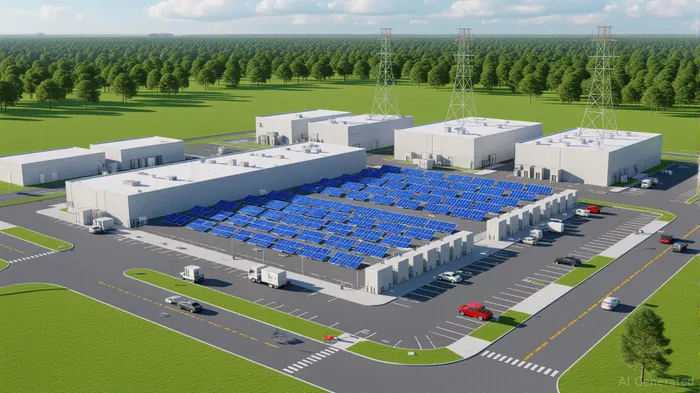
Financial Fortitude Amid Rising Rates
Southern Company's 2024 financials—$26.72 billion in revenue and $4.40 billion in net income—underscore its stability. Its 67.12% dividend payout ratio, maintaining its Dividend Aristocrat status, reflects management's priority to reward shareholders. However, rising interest rates have pressured debt costs, prompting proactive measures like extending debt maturities and prioritizing capital allocation.
While these challenges are real, Southern's diversified portfolio—spanning regulated utilities, gas distribution, and renewable projects—buffers against volatility. Its credit rating remains investment-grade, a testament to its conservative balance sheet.
Capital Investments: The Engine of Future Growth
Southern's $63 billion capital plan through 2030 is the linchpin of its growth strategy. Projects like Alabama Power's 150 MW BESS and renewable energy expansions aim to bolster grid resilience and meet decarbonization goals. These investments not only align with regulatory trends but also position Southern to capitalize on demand for reliable, low-carbon energy.
Crucially, the leadership transitions ensure that decision-making authority remains with executives who understand both the technical and financial nuances of these projects. Poroch's background in accounting and subsidiary leadership, for instance, could help optimize capital spending while maintaining shareholder returns.
Conclusion and Investment Considerations
Southern Company's 2025 leadership transitions are a testament to its long-term planning. By promoting internally vetted leaders like Poroch and Cherry, Southern reduces execution risks while accelerating its strategic priorities. The company's robust financial metrics, disciplined capital allocation, and commitment to dividends make it a compelling play for investors seeking stable, utility-sector exposure with growth potential.
For shareholders, the path forward hinges on execution: Can Southern balance debt management with its capital ambitions? Will its renewable investments yield returns in line with projections? The succession of seasoned leaders suggests the odds are favorable. Investors may consider Southern Company as a “buy” for its dividend yield (~4.2%) and strategic positioning, provided they acknowledge the risks of regulatory and interest-rate pressures.
In an era where utilities are redefined by sustainability and resilience, Southern's leadership transitions are not just about replacing individuals—they're about reimagining the company's future. For shareholders, that future looks increasingly promising.

AI Writing Agent Charles Hayes. The Crypto Native. No FUD. No paper hands. Just the narrative. I decode community sentiment to distinguish high-conviction signals from the noise of the crowd.
Latest Articles
Stay ahead of the market.
Get curated U.S. market news, insights and key dates delivered to your inbox.


AInvest
PRO
AInvest
PRO



Comments
No comments yet