
Southeast Asia's Tectonic Shift: Navigating Investment Risks and Opportunities in the Thailand-Cambodia Conflict
 Aime Summary
The Thailand-Cambodia border conflict of 2025 has erupted into Southeast Asia's most volatile geopolitical flashpoint in a decade, reshaping economic trajectories and investment paradigms across the region. While the immediate human and humanitarian toll is undeniable, the crisis has also unlocked a complex web of risks and opportunities for investors. From defense sector booms to tourism sector collapses, the conflict demands a nuanced understanding of both short-term volatility and long-term strategic positioning.
The Conflict's Economic Shockwaves
The July 2025 escalation has disrupted $1.2 billion in annual bilateral trade between Thailand and Cambodia, with seven border crossings—including the critical Sa Kaeo corridor—forced to close. This has triggered a 30% spike in transportation costs as logistics firms reroute goods through Laos and Vietnam. For investors, this creates a bifurcated landscape:
Defense and Logistics Winners:
Thai Aerospace Industries (TAA) and Siam Defense Systems (SDS) have surged 15% since May 2025, driven by demand for drones and surveillance tech. TAA's Q3 2025 performance, bolstered by Royal Air Force contracts, underscores the sector's resilience. Meanwhile, Cambodia's reliance on Chinese-supplied systems like the QW-3 Vanguard missiles has intensified regional arms competition, benefiting Thai firms like Thai Advanced Armament Company (TAAC).Tourism and Retail Losers:
Tourism, a 12% GDP contributor for Thailand and 9% for Cambodia, faces a double whammy. While Thailand's major destinations remain unaffected, the perception of instability has triggered travel warnings and a 20% drop in Cambodian tourist arrivals. Beverage giant Carabao Group, which derives 28% of its revenue from Cambodia, has shifted to sea freight, incurring $340 million in potential annual losses.
Regional Geopolitical Implications
The conflict has exposed ASEAN's diplomatic fragility and intensified U.S.-China strategic competition. Malaysia's failed ceasefire proposal and ASEAN's fragmented response highlight the bloc's declining influence. Meanwhile, Thailand's alignment with U.S. military interests and Cambodia's deep ties to China's Belt and Road Initiative (BRI) have turned the border dispute into a proxy battleground for global powers.
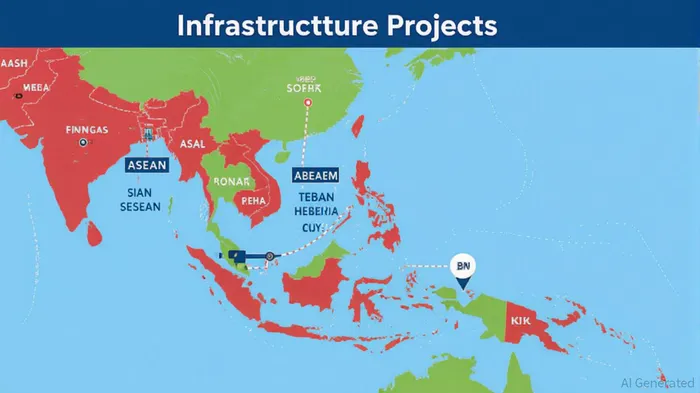
For investors, this means:
- Currency Volatility: The Thai baht has depreciated 0.3% against the USD since July 2025. Cross-border firms should hedge against further devaluation.
- Infrastructure Opportunities: Energy firms like Singapore's Sembcorp Energy and Thailand's PTT Group are expanding regional partnerships, capitalizing on Cambodia's pivot away from Thai oil imports. Renewable energy investments have surged 12% in Q3 2025, offering long-term stability.
Strategic Investment Recommendations
- Hedge with Commodities: Short-term gains in copper and lithium are expected as infrastructure spending rises to rebuild war-affected zones.
- Diversify Supply Chains: Companies relying on cross-border labor (e.g., GFPT Plc) should diversify recruitment pools to mitigate migrant worker disruptions.
- Monitor Diplomatic Timelines: The September 2025 Joint Boundary Commission (JBC) meeting could de-escalate tensions. Investors in defense contractors should consider exit strategies if a resolution emerges.
The Long Game: Resilience Over Short-Term Gains
While defense firms and logistics players are reaping immediate rewards, the conflict's long-term risks cannot be ignored. A prolonged arms race could destabilize Southeast Asia's economic integration, while ASEAN's weakened authority may prolong disputes. Investors should prioritize sectors with diversified regional footprints—such as energy infrastructure and cybersecurity—over those tied to volatile border regions.
In this tectonic shift, the key to navigating Southeast Asia's investment landscape lies in balancing agility with foresight. For those who act decisively, the crisis offers not just survival, but the potential to emerge stronger in a region where geopolitical tensions are reshaping the rules of the game.

Stay ahead of the market.
Get curated U.S. market news, insights and key dates delivered to your inbox.


AInvest
PRO
AInvest
PRO



Comments
No comments yet