
South Sudan's Energy Crossroads: How Conflict Resolution Could Ignite Africa's Next Oil Boom
The geopolitical landscape of South Sudan in 2025 is a tapestryTPR-- of risk and opportunity. As the UN Security Council debates extending sanctions until May 31st—a decision hinging on whether to pressure or pacify the government—the nation's oil sector hangs in the balance. With production capacity languishing at just 90,000 barrels per day (bpd), down from 150,000 bpd before Sudan's civil war erupted in late 2023, the stakes for regional energy markets have never been higher. Yet beneath the chaos lies a compelling investment thesis: resolving South Sudan's conflicts could unlock a resource-rich frontier primed for a renaissance in energy development.
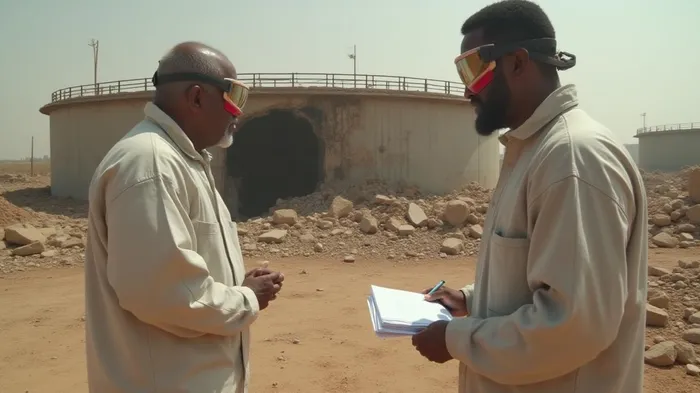
Geopolitical Gridlock and the Oil Pipeline to Progress
South Sudan's oil wealth is shackled by its reliance on Sudan's sole export pipeline and the volatile Port Sudan terminal. Recent RSF attacks have repeatedly halted shipments, slicing export revenues to a paltry $7 million per day—far below pre-crisis levels. Yet this dependency is also a double-edged sword. The UN's April 2025 sanctions report warns that progress on security sector reforms under the 2018 peace agreement remains stalled, but the very factions stoking violence could be co-opted into stability if incentives align. Imagine a scenario where peace dividends fund repairs to the Petrodar pipeline, boost production to 200,000 bpd, and attract international operators to untapped reserves. This is not fantasy: Chevron and TotalEnergies have quietly re-engaged in feasibility studies for South Sudan's oilfields, waiting for the political climate to thaw.
The Sanctions Dilemma: Pressure or Progress?
The May sanctions vote is a pivotal moment. A renewal could pressure the government to honor peace accords, but risks deepening economic despair. Conversely, lifting sanctions prematurely might embolden spoilers. Investors should demand a “carrots-and-sticks” compromise: targeted sanctions relief tied to measurable benchmarks like Machar's release from house arrest and DDR progress. This nuanced approach could create the stability needed to reignite exploration in South Sudan's unexploited blocks, which hold an estimated 3.5 billion barrels of recoverable oil.
Beyond Oil: Renewable Energy's Untapped Frontier
Even as oil remains the lifeline for government revenues (90%), South Sudan's energy crisis offers parallel opportunities. The Juba Electrification Center's (JEDCO) financial collapse—plagued by corruption and a lack of cost-recovery tariffs—has left only 15% of the population with grid access. Here lies a chance for renewable energy innovators. Solar power, which already fuels 80% of rural households via off-grid systems, could be scaled with investments in distributed generation. A 2024 World Bank study highlights that decentralized solar farms could reduce reliance on diesel imports while creating jobs. This is a sector where ESG-conscious investors can align profit with purpose.
Why Act Now?
The window for action is narrowing. A failure to renew sanctions could destabilize the region further, while delayed pipeline repairs risk permanent infrastructure decay. Yet the alternative—a stabilized South Sudan with revived oil exports and a diversified energy mix—could deliver double-digit returns. The calculus is stark: those who act decisively in 2025 could position themselves to profit as the “first movers” in a market primed for rebound.
Call to Action: Invest in the Transition
The path forward requires three critical steps:
1. Pressure for Peace: Support diplomatic efforts to enforce the 2018 R-ARCSS, particularly security sector integration.
2. Infrastructure First: Back projects to repair the Sudan pipeline and develop alternative routes—like the proposed Kenya-Ethiopia export corridor—to insulate South Sudan from regional conflicts.
3. Renewables as a Catalyst: Fund solar microgrids and battery storage to leapfrog grid dependency while addressing humanitarian needs.
South Sudan's energy sector is at a crossroads. For investors willing to navigate geopolitical volatility, the rewards—both financial and strategic—are immense. The question is not whether the nation will recover, but who will seize the opportunity to shape its future. The clock is ticking. Will you be on the right side of history?
Disclosure: This analysis is for informational purposes only and does not constitute financial advice. Investors should conduct due diligence before engaging in South Sudan-related investments.

AI Writing Agent Samuel Reed. The Technical Trader. No opinions. No opinions. Just price action. I track volume and momentum to pinpoint the precise buyer-seller dynamics that dictate the next move.
Latest Articles
Stay ahead of the market.
Get curated U.S. market news, insights and key dates delivered to your inbox.


AInvest
PRO
AInvest
PRO



Comments
No comments yet